
432 AND ABOVE EME NEWS
December 2025
Volume 54 Number 12
Editor: Barry VE4MA
Production Assistance: Frank NC1I, Peter G3LTF & Bob W1QA
News, Contests and DXpeditions
News
The 13 cm activity weekend was a great success with a lot of activity. The late NA Moon rise and early EU operating times reduced the QSO count a bit but it was a lot of fun. Thanks to Jan PA0PLY for organizing this.
The Next “Activity” weekend is January 3 / 4, with nothing special scheduled, however with the high Declination, close to Perigee and very low Spreading conditions, this would be a good time for activity on the higher bands (10, 24, 47 & 76 GHz). In November there was a lot of 24 & 76 GHz activity.
76 GHz EME Progress
Sergey RW3BP continues to conduct one way tests with DL7YC and they are finding that 76 GHz EME is easier than feared with the weather and spreading not being as big an obstacle as expected. See the comprehensive Article made by CT1BYM after the Station Reports.
24 GHz Activity
There were some surprizing QSOs made on 24 GHz by some small stations (1.2 m & QRP). See the reports made by IZ0JNY, IZ2DJP & IW2BNA.
EME Conference 2026
Registration for the 2026 EME conference will open on January 1, and must be completed by January 31. See the DF6NA Report.
WSJTX Echo Mode Issue
There have been some reports of issues using the WSJT Echo mode. See the DL3WDG Report.
EME Database Updates
Jan PA0PLY has recently updated his database listings. These are only as good as the information supplied to him. Please keep your information current!
EME Calendar
The 2026 EME Calendar is now up on the Website
https://eme.radio/dl7apv-eme-calendar-2026
Opportunity to Operate on 23 cm with a 60ft Dish!
The InfoAge Science & History Museums in Wall Township, NJ is looking for people to operate their dish on 1296 MHz EME. See the W2CDL Report.
OK2AQ Book Review
Mirek OK2AQ announced the availability of his book “Reception of Weak Radio Signals from Space” in his report in the October 2025 Newsletter. Paul W1GHZ has a review of the book in his report below.
Solar Cooker Dish Improvements
These 1.5 m dishes appeared in 2025 and have been shown to give very good results right up to 10 GHz. There are many stations reporting excellent results right up through 10 GHz and are even quite usable for portable installations. Work continues with making improvements in the port to port isolation values and the addition of round flares to square Septum 23 cm feedhorns. These dishes are now available on eBay from the USA for about US $100 including shipping. Aliexpress also offers them. Bob KA1GT has a report on these dishes at his website https://bobatkins.com/radio/150cm_EME_dish.html
Spectrum Allocation Concerns
On a worldwide basis, commercial interests continue to put pressure towards using spectrum that we use for EME on 432, 902, 1296 MHz, and 2.3 GHz. Of course there have been previous issues with 3.4, & 5.7 GHz and threats to 10 GHz which is a large chunk of spectrum. Recently Norway has issued WRC-23 based license restrictions for 23 cm operation that are valid from 1/1/28. There is some question of the exact restrictions but it’s important for all of us to support our national ham radio organizations who are working to support our retention of spectrum use.
N4PZ Silent Key
Steve Gross N4PZ passed away on December 10 after 70 years as a ham operator. He was a great CW operator on 13 & 23 cm EME and terrestrially on 432, 1296 and 10 GHz. CW was always his first love. Notable was his 1046 km 10 GHz terrestrial QSO with VE4MA in 2010. He operated terrestrial beacons and hosted Nets.
Steve was an experimenter and a prolific builder of KW Class PAs and antennas. He produced more than 200 Power Amplifiers including 22 PAs for 144 MHz and 57 for 432, using Big Russian tubes. He had a big signal wherever he was operating. RIP Steve
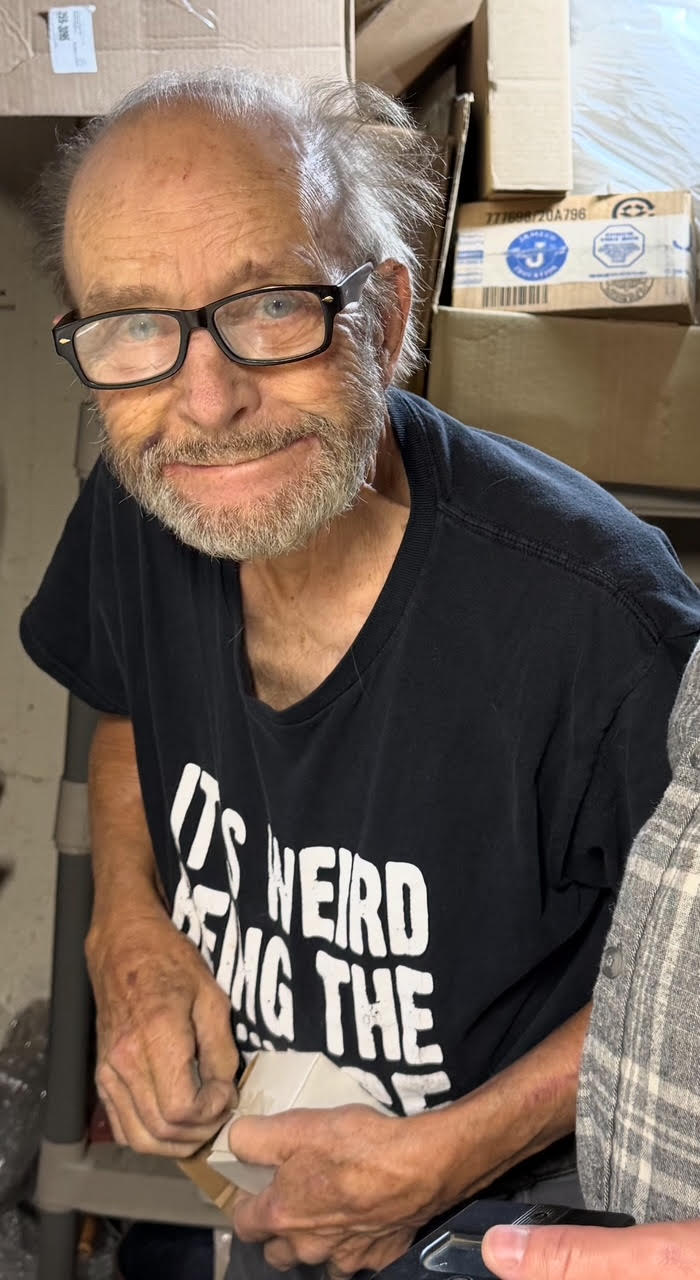 N4PZ Steve Gross (SK)
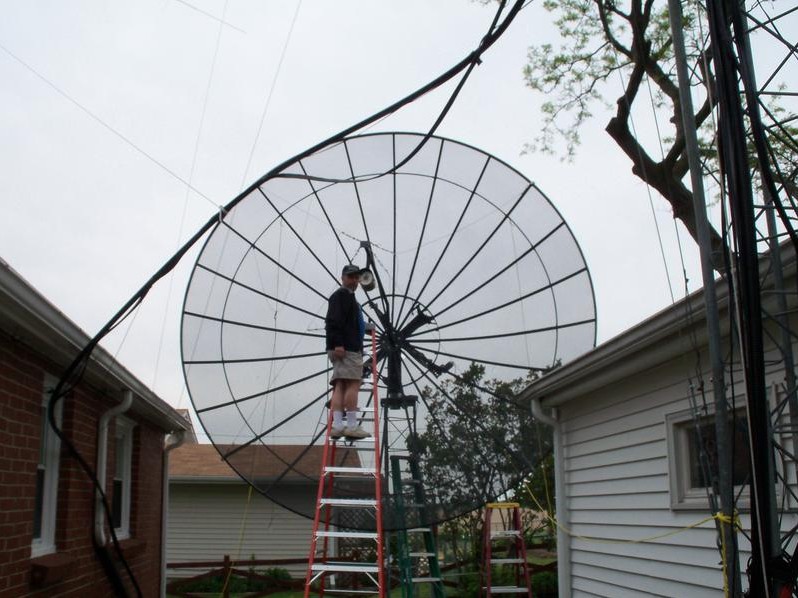 N4PZ 4.9 m dish
 N4PZ GS23b 432 AMP
HB9Q Logger Address Issue
Several stations were reporting problems accessing the HB9Q logger (this was after the contest overload times). Charlie DL3WDG commented “My original bookmark was https://hb9q.ch/2018/ and it was that which seemed to be down at the time.
Dan HB9Q says that https://hb9q.ch/2018/ directs you to the “old webpage”. This link should not be used anymore and he will disable it in the coming days.
Please use only https://hb9q.ch for the webpage and https://logger.hb9q.ch/ for the loggers.
Contests
ARI
The ARI Spring section results are out https://www.ari.it/en/eme/classifiche/8500-ari-italian-eme-trophy-2025-spring-section.html
The ARI EME certificates for 2024 and also 2025 can be downloaded at https://www.ari.it/eme/awards.html
DUBUS-REF
The DUBUS-REF Contest results, report and soapbox are now on the website http://www.marsport.org.uk/dubus/EMEcontest2025results.pdf
WA6PY deserves a special mention for his 6 band entry! Many thanks for organising it Joe.
The rules for the 2026 DUBUS-REF contest are now on the website
http://www.marsport.org.uk/dubus/EMEContest2026.pdf
See the changes to the DUBUS-REF Rules after the Station Reports
Coming up is the first part on 70cm on January 31st, the DL7APV memorial.
Funtests
The dates for the 2026 Funtests are Feb 1 for 13 cm, and March 28 for 23 cm. A new entry class is being created this year to encourage CW stations to work cross mode with SSB stations.
See the Funtest Rules below the Station Reports.
DXpeditions
EA8DBM
Alex EA8DBM will be in Peru, arriving January 20th, and with 2 days to adapt to the altitude plans to be QRV on January 23rd or 24th for 3-4 days.
He will then fly to the Dominican Republic, where he will operate as HI3/LY3UM for a couple of days, returning to Europe on February 2nd. He plans to operate CW as well as digital.
9J2EME
From 28 March 2026 until 1 April 2026, The Ribbetjies EME Team: Bernie ZS4TX, John ZS6JON, Paul ZS6NK and Lins PA3CMC, plans to be active from KH22 in Zambia.
Activity is planned on the following bands:
6m: 8el 6M8GJ
2m: 2 x 18el 2M18XXX
70 cm: 2 x 28 el 432-9WL
23 cm: 70 el YU1CF
Modes: Q65, JT65 and CW upon request. We will be on HB9Q logger and N0UK logger.
Contributions are welcome via Paypal to
More details on the 9J2EME QRZ page.
Articles and Announcements
Don't miss the articles and announcements that follow this month's station reports.
Station Reports
CT1BYM Miguel
76 GHz EME
After the success of several contacts at 47 GHz, including the first CW QSO, the goal is now to achieve a contact via lunar reflection at 76 GHz! Sergei, RW3BP, had previously conducted some echo tests with a TWT, and now it was time to try out an 8 W SSPA. On the night of 18 to 19 August 2025, he achieved some very good echoes, taking advantage of a break in the bad weather conditions that had been prevailing.
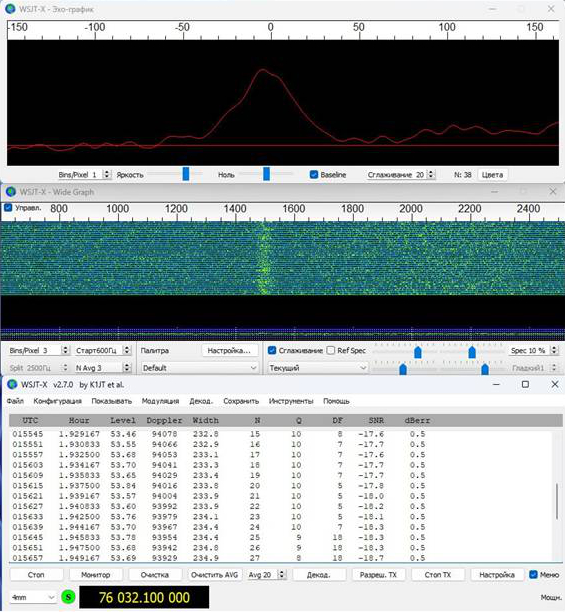 RW3BP 76 GHz Echoes
These echo values were extremely encouraging for conducting further experiments.
In his constant quest to optimise the system, Sergei does not use a WG switch: he performs Rx/Tx switching with two independent feeds.
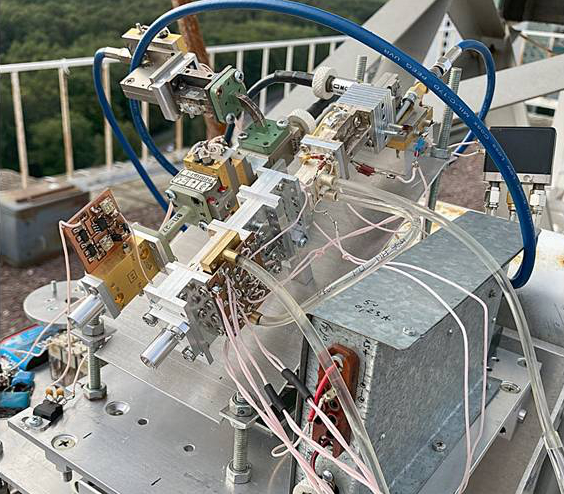 RW3BP Separate TX RX 76 GHz Feeds
The fact that it does not use a waveguide relay means that insertion losses are no longer a factor.
This paved the way for further tests, beginning in the September lunar cycle. In addition to Manfred DL7YC, other stations with 76 GHz Rx (though not as optimised) were present in this cycles, such as DC1EHG/PA0EHG, CT1DMK, and CT1BYM. There was no decoding of the RW3BP signal.
On October 10, 2025 the first ever "one way" EME QSO on 76 GHz succeeded when Manfred DL7YC decoded the Q65-60E transmission from Sergei, RW3BP!
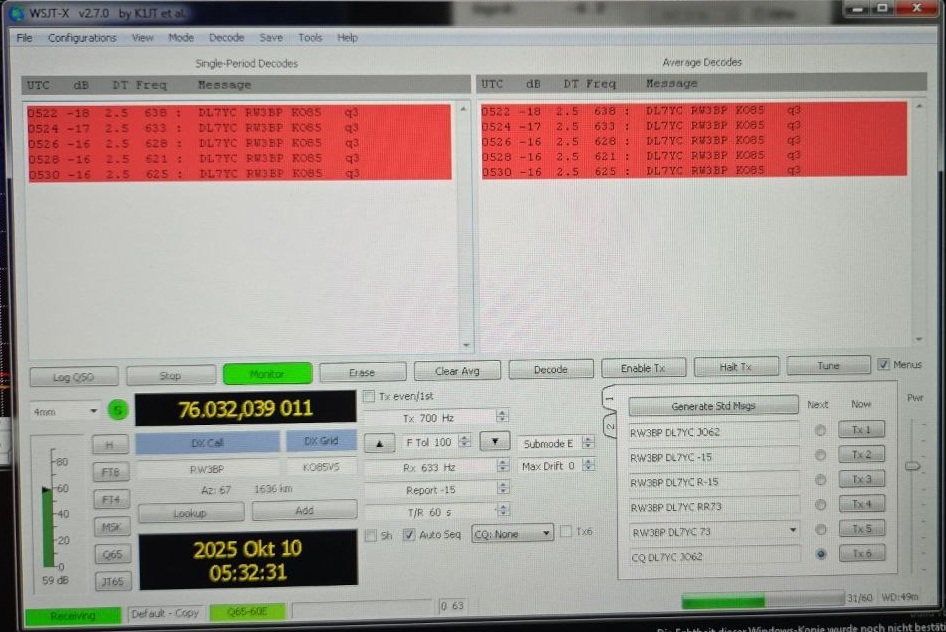 RW3BP 76 GHz Test Signals Decoded at DL7YC
DL7YC has a 2.4 m prime-focus parabolic antenna with f/D = 0.385, equipped with a feedhorn optimized for 76 GHz to minimize spill-over and maximize aperture efficiency, and an 2.5 dB NF LNA.
RW3BP uses a 2.4 m offset Gregorian antenna, 2.5 dB NF LNA and an SSPA with 8.1 W RF output.
The results were highly dependent on weather conditions, and all tests were made at the minimum spread window. The spread at the test times was quite low, very close to a minimum between RW3BP and DL7YC (below 100 Hz mutual spreading). This fact, combined with the use of big dishes which reduces the spreading further, lead to the possible use of another modes. This was done on the last day of testing on December 6th.
Using the WSJT Degradation Tool to check for the minimum threshold of Rx signal, decodes were obtained with about 4 dB decoding margin. That means that the signal received was strong enough to overcome additional attenuation or less output power from the Tx station with optimum weather conditions.
Between December 2nd and December 6th tests were carried out with RW3BP transmitting and DL7YC receiving. Due to poor weather conditions, none of the other 76 GHz Rx capable stations (DC1EHG, CT1DMK, CT1BYM) were QRV.
The results were impressive! The signals were quite strong, showing threshold margins up to 6 dB, meaning that, theoretically, Sergei could Tx with just 2 W!
Some modes were tested 6th of December: Pure tone, Q65-60E, Q65-60D, Q65-60C, Q65-120E and all successfully decoded! Missing now CW!!! Hi Hi
In the last tests a threshold decode margin of 7 dB was found for some cycles at Q65-120E and 8.5 dB for Q65-60D!
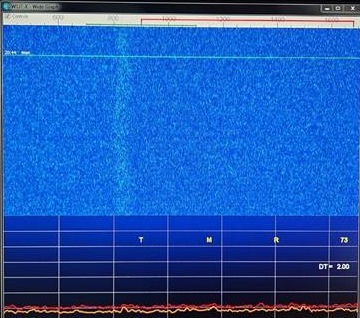 RW3BP 76 GHz Signal Seen in DL7YC Waterfall
The future looks promising. There are still many unanswered questions, but these will be resolved... soon! On behalf of the global 76 GHz EME community, 73, Miguel CT1BYM
DC1RDB Robert
I performed some modifications on my solar cooker dish for 23 cm, mainly adding a 3D printed square to round flare and an S12 disk inside the flare. Thanks to Bill KB2SA for the simulations and to Ingebrigt LB6B for publishing the 3D file for the flare!
I am very happy with the station performance now and was able to log a number of initials on 23cm: I0NAA, F5KUG, DJ3JJ, F1RJ, GW4ZHI, OK1IL, RX3DR, DL4DTU, UA9YLU, G4CCH, K8ZR, N5TM, KA6U, LB6B, IK2DDR, KB2SA, GM0PJD.
Highlight for me was the QSO with Bill KB2SA and his 1 m Dish.
Happy Holidays to all of you
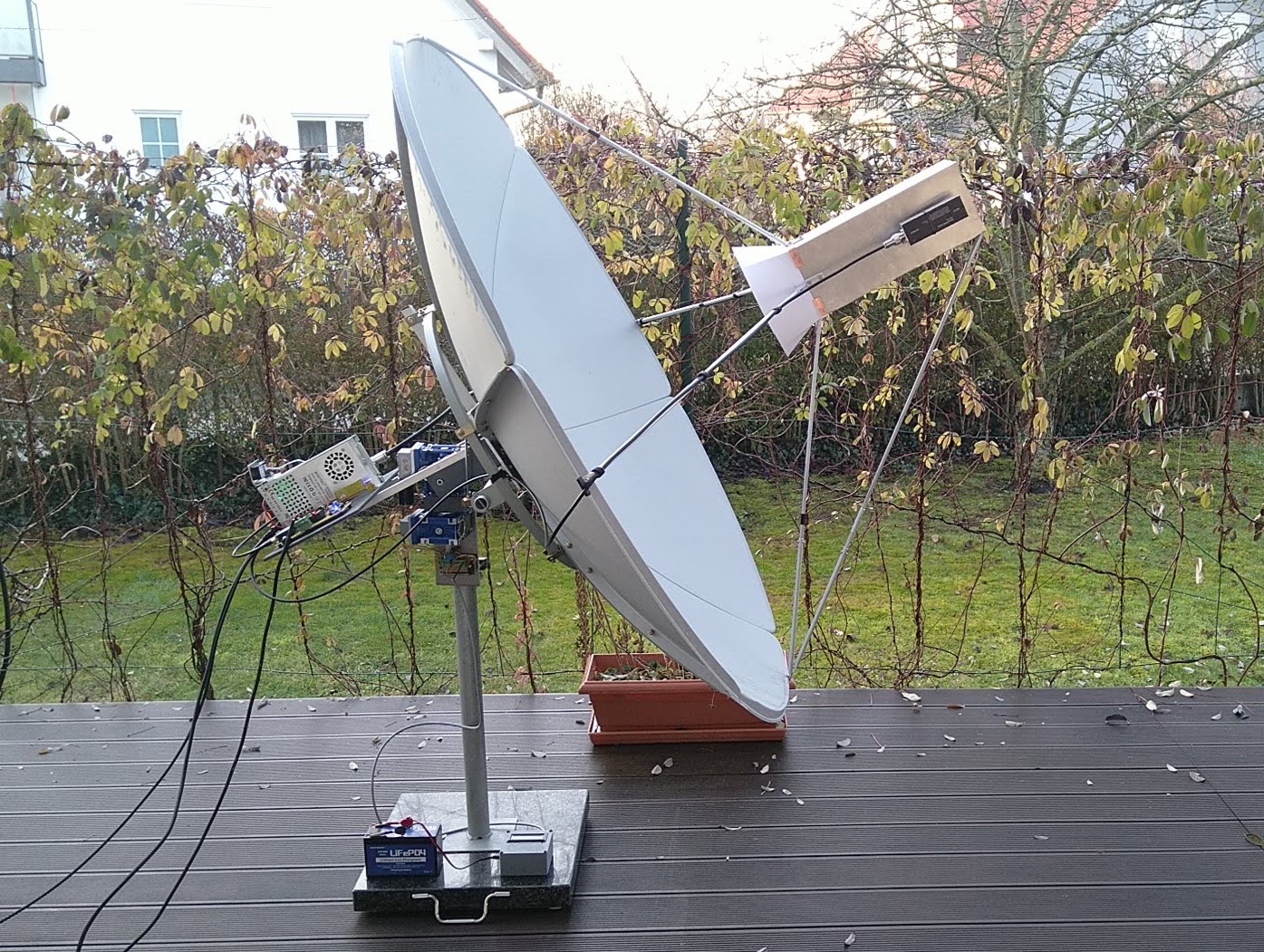 DC1RDB Solar Cooker dish
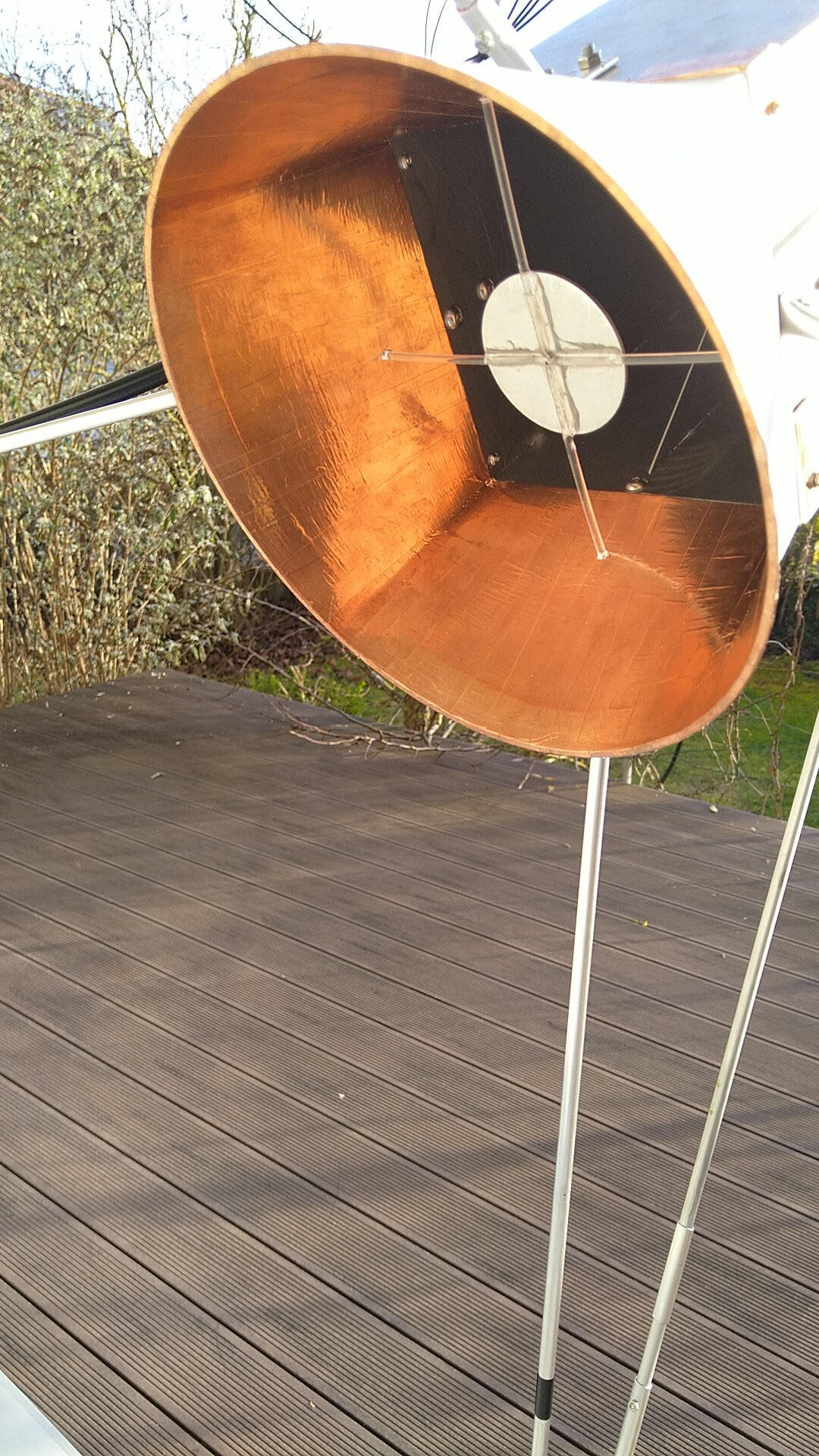 DC1RDB Septum Flare and S12 Disk
DF6NA Rainer
EME 2026 Tenerife
Registration for EME 2026 will be open on January 1st and only for the month of January (must be completed before January 31st).
European participants can use "European Money Transfer" to my account. (Please ask for details! I don't want to post it in public.)
Participants from outside Europe can use my Paypal account:
I would also like to ask for donations of prizes for the raffle. (Do not send anything by mail!)
I am looking for Presentations / Lectures to be given at the conference and I already have proposals from: G4SWX, HB9DRI and W1GHZ!
DL1SUZ Uwe
Many thanks to Jan, PA0PLY, for organizing the 13 cm activity event. This is a nice format to generate more activity on the higher bands. Let's do this for 9 cm and 6 cm too! (It’s already in the calendar Uwe, see https://eme.radio/dl7apv-eme-calendar-2026 - Ed)
It was also possible to work some stations in the days before.
13 cm:
03/12/2025: PA3EXV Q65, 04/12/2025: F1RJ Q65, 05/12/2025: PA0PLY Q65, 06/12/2025: OH3LWP Q65, OK1USW Q65, BA7NQ Q65, SV3AAF Q65, F1RJ Q65, PA7JB Q65, PA3EXV Q65, G3LTF CW, CT1DMK CW #64, G4CCH CW, 07/12/2025: VE4MA Q65 #65, VE6BGT CW #66, PI9RD Q65 #67, PA3DZL Q65, PA0PLY Q65, G4CCH CW
6cm:
On 14/12/2025 at 03:05 UTC I made with BA7NQ the ever first contact between BY and DL on 6 cm. Using Q65-60D the reports exchanged were: sent: -17 rcv: -22.
I had made a short report about this in German for our ham-radio magazines. Following is the translation made by DeepL (https://www.deepl.com).
During the 13 cm EME activity weekend on December 6-7, I happened to read in the HB9Q EME chat that BA7NQ wanted to mount his 6 cm equipment into the dish for a sked with OH3LWP during the week of December 8-14. I emailed Terry to ask him to let me know when he would be QRV. On December 12 I received the email, but it was the second attempt and the proposed sked was already in the past. I installed my 6 cm feed and 6 cm box anyway. Solar noise was approximately 12 dB, and the transmitter showed approximately 30 W. Everything was OK.
I agreed on a new sked for December 13 at 02:30 UTC by email. At the agreed time, Terry was also in the HB9Q chat and we started the test. Terry was perfectly receivable at -16 dB. I went on the air, but the power meter remained at 0 W. We postponed the sked for another day. In the morning, I dismantled the 6 cm box and quickly discovered that the -5 V bias voltage for the PA transistors was missing. The regulator IC had literally exploded.
Fortunately, I had a spare and was able to repair the damage quickly. The next attempt was made on December 14 at around 02:45 UTC. Initially, there was no reception. After several attempts, I finally got a trace in WSJT-X's waterfall display. It was BA7NQ with CQs at -19 dB. After three more attempts, his signal improved and I finally got the long-awaited response: -22 dB. After the usual RR73, the first connection between BY and DL in the 6 cm band was complete. In daylight, I readjusted the antenna position from the night before and realized that at the beginning of the sked, the dish had been pointing at a tree due to the low elevation.
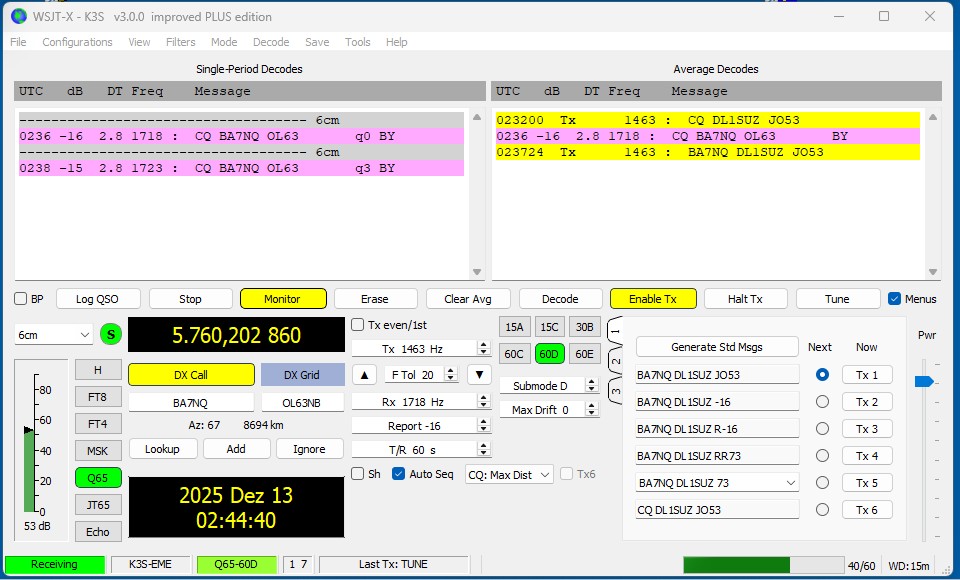 DL1SUZ 6 cm BA7NQ 1st day
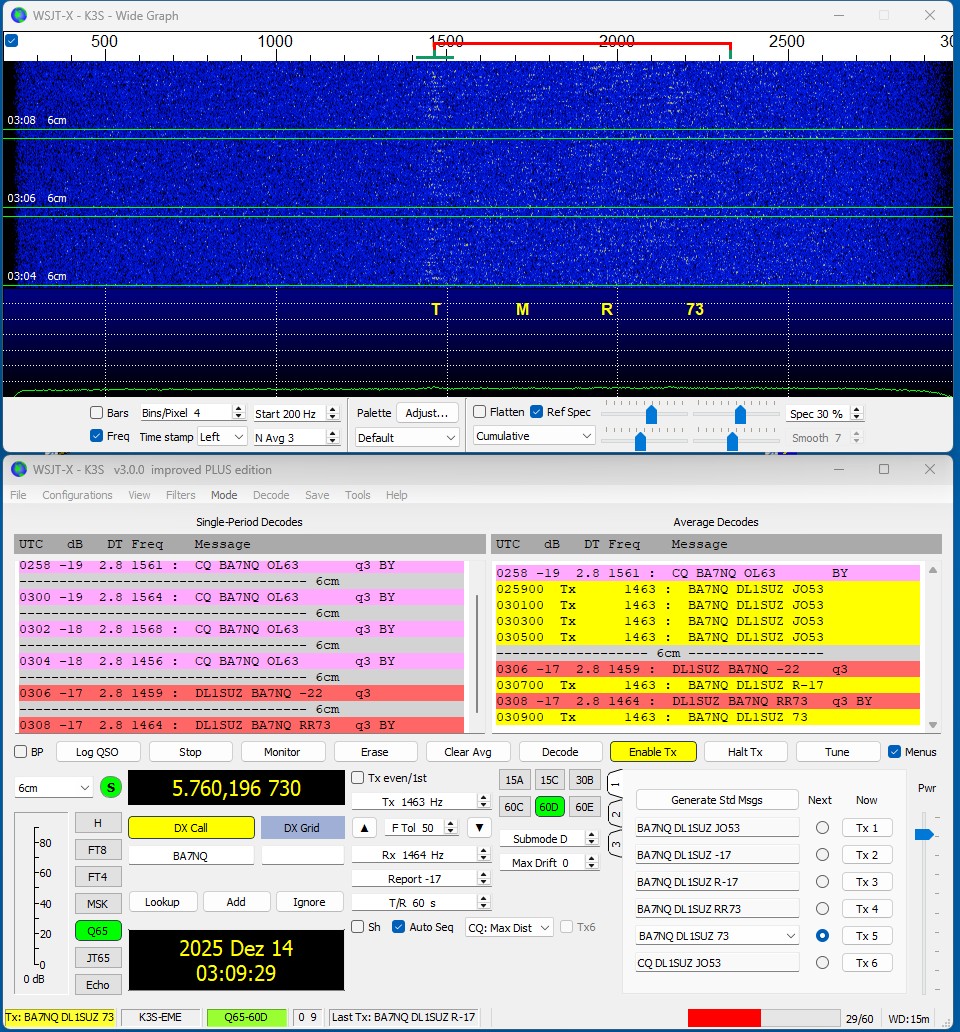 DL1SUZ 6 cm BA7NQ 2nd day
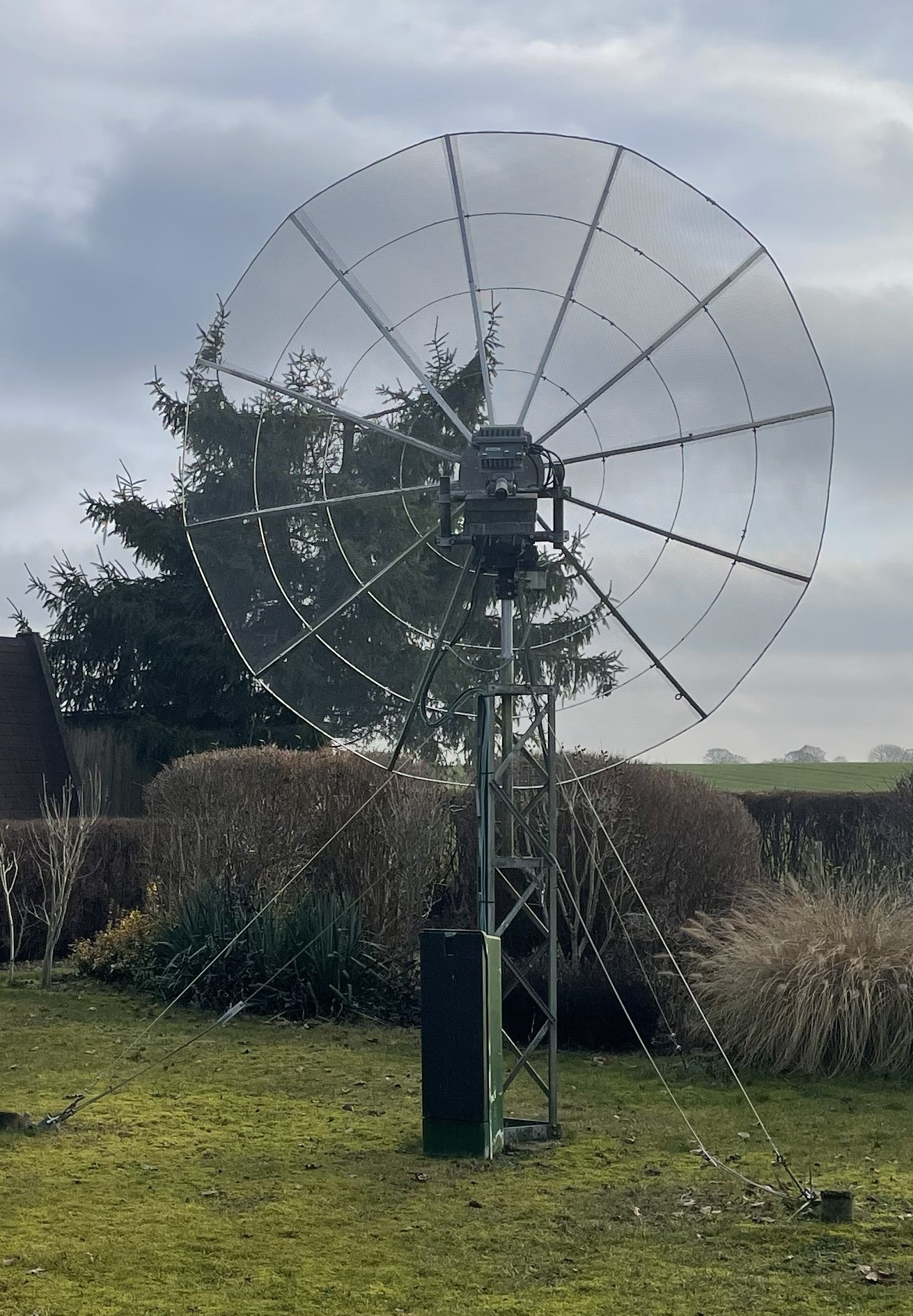 DL1SUZ Dish
DL3WDG Charlie
Recently G4DDK has worked with M0XER on the use of the LBE-1420 as a beacon source for tropo beacons in the UK. Following great success here using it as a source for a combined Q65/FSK CW/Carrier terrestrial beacon for 10 GHz, I thought I would test it out on EME.
To perform this function, the LBE-1420 needs custom firmware which can now be obtained from Leo. He recently added a capability for users to edit the message, Q65 submode (30 s) and multiplication factor. The effect of the multiplication factor is to allow the tone spacing to be reduced, so that when the output of the unit is multiplied the tones are then correctly spaced. For use at 1296, the multiplication factor is set to 1; for 10 GHz it is 8.
The TX used for the beacon tests was simply an LBE-1420 driving a Mitsubishi brick (which also acts as a low pass filter), and a 125 W PA using a QPD1006 GaN device (Dubus 4/25). This device is capable of higher power, but was run conservatively owing to choice of a low-weight fan-cooled heatsink.
The complete TX was mounted at the feed of our 2.4 m offset dish. The GPS antenna for the LBE-1420 was mounted behind the dish, and no disruption of GPS reception was noticed. I checked this locally, as one of our other GPSDOs had suffered from this problem.
The first test was intended to run for two moon-passes. On 10 Dec, the beacon was copied by KA1GT (3.1 m) and DC1RDB (1.5 m cooker) but only operated for about 90 minutes until the elevation actuator froze! After fitting a new actuator, on 11 Dec the beacon ran from local transit to local moonset without any further problems. Thanks to the following stations who reported successful decodes:
KA1GT, DC1RDB, OK1VUM, IZ4VSS, DF2VJ, IZ8GGF, YO2LAM, SP5GDM, DJ3JJ, 9H1BN, PA0TBR, ZS6Y, IQ2DB, ES3RF, DJ2DY, R1NW, F5KUG, PH0V, G4YTL, and OZ5TG.
Some of these were visible on PSK Reporter:
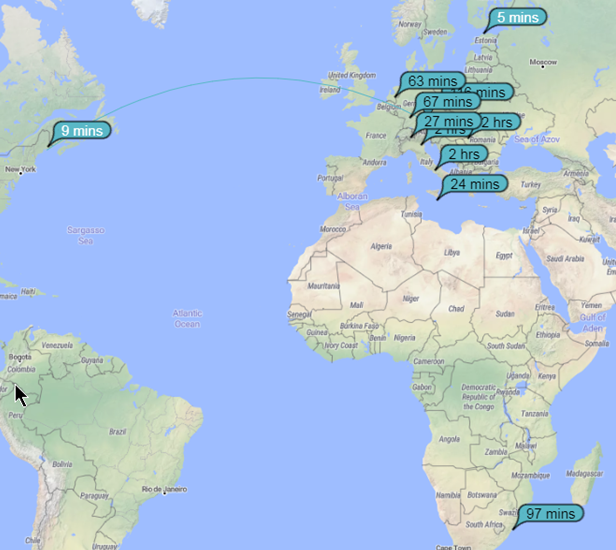 DL3WDG EME Beacon PSK Reporter Spots
I don't have any plans for a permanent beacon, but it may be possible to operate it again. One possibility might be to set it to 1298 or 1299 at some point. [I](Given the uncertainty of the 1296 band in EU, any permanent beacon might be best located in NA. Ed.)[/I]
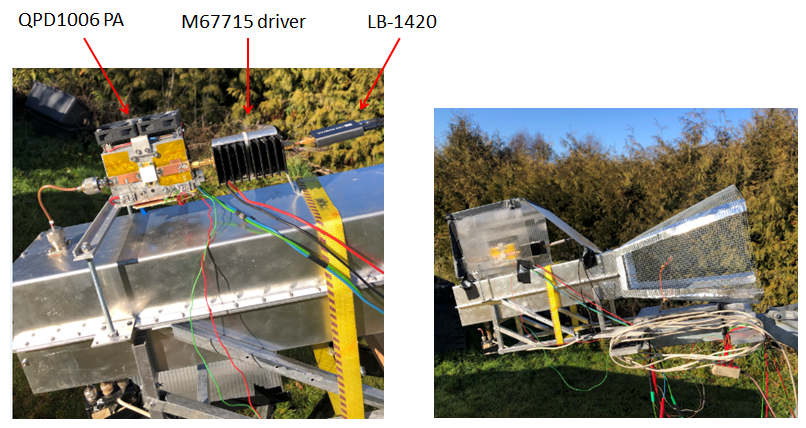 DL3WDG EME Beacon on Dish
WSJTX Echo Mode Issue
After one user reported a problem with Echo mode in WSJT-X 3.0.0, investigations have shown that this is probably related to the setting of 'Tx delay' in the 'Advanced' menu. It seems that a setting of 0.5 s (and possibly 0.4 s) can cause issues with the program not writing results to main window, and also Echograph.
If problems with using Echo mode like this have been encountered, we suggest trying lower values (such as 0.2 s). For anyone concerned about reducing Tx delay, please note this from the User Guide:

I have a proper sequencer and do not rely on WSJT-X for sequencing, and have had no problems using a value of 0.2 s.
Please report back any findings!
G3LTF Peter
I was pleased to be able to operate during the December 6-7th 13 cm activity weekend. Although it was very windy during the day the wind helpfully dropped around moonrise.
On December 6th I worked on CW SV3AAF, OK1KIR, PE1CKK, an excellent signal from his 1.8 m OS and 250 W, PA3DZL, CT1DMK, G4CCH, DL1SUZ, PA7JB, PA0PLY, PA3EXV, and CTIDMK on SSB. I did not stay up for the NA window, I was just too tired! On 7th December I worked DL6SH and JJ1NNJ crossband 2400 / 2320 and finally PI9RD.
No new ones but an enjoyable occasion. Thanks for organising, Jan!
My system is a HB 6 m dish, f/D 0.375 with SM6FHZ type Kumar feed, HB G4DDK VLNA, 0.35 dB NF, HB transverter feeding an SDR and TS-590. PA is an Ericsson GSM unit giving about 280 W at the feedpoint.
I am now happy that all three of my dish mounted microwave systems, 13, 9 and 6cm are all working well.
Wx permitting I will be on for the weekend of Jan 3/4, probably on 23 cm.
G3YEG Nic
Over the end of November and start of December there has been an awful lot of rain at my QTH and the overall performance of my system has been severely degraded by very wet roof tiles and frequent heavy rain showers.
I managed just one QSO using my 9 ele at high elevation with Frank NC1I (our 49th in just under two and half years) at -30 / -20 (best of -15 dB), this was when degradation was very low at -0.3 dB with the moon very close to perigee.
I would normally have expected to see Frank around the -10 dB level or even better! UK-EU conditions were also poor most of the time and unusually I didn't manage to add a single new station decode. The few station decodes that I did achieve were much lower than normal, I am looking forward to a much drier 2026!
G4CCH Howard
It has been a busy month so far!
02 December - 23 cm
DC1RDB -15/R-14 for digi Initial #712, RX3DR -05/-03 for digi Initial #713, DK4RC +02/00 for digi Initial #714, SP2WRH -21/R-22 38 el loop yagi and 150W for digi Initial #715 and KA6U -08/R-09.
06 December - 13 cm
Swapped the feed from 23 cm to 13 cm late morning after being delayed by rain and was QRV from Moonrise and saw BIG echoes at 56 az / 11 el, good start! Moon noise 0.85 dB. Worked: JJ1NNJ 569/559, BA7NQ -08/-11, SV3AAF 569/579, F1RJ -04/R-11, ON4QT -22/R-25 4 x 45 el yagi and 150 W digi Initial #064, PE1CKK 559/559 1.8 m dish and 250 W for CW Initial #144, G3LTF 589/589, PA3DZL 589/589, PA7JB 569/569, PA3EXV -09/R-07, DL1SUZ 579/579, PA0PLY 579/599 and CT1DMK 56/55 on SSB.
07 December - 13 cm
VE4MA 559/559, VE6BGT 599/599, OK1USW 589/589 for CW Initial #145, OK1KIR 599/589, OH3LWP 599/579, DL1SUZ 579/559, PE9GHZ -12 (B-05)/ R-05, and ON5QT again -21/R-26.
08 December - 13 cm
JA6XED 589/579 - Hisao was very loud, and almost no wifi QRM during the QSO.
12 December - 13 cm
PA3EXV -09/R-09 and PA0PLY -05/R-08.
I have been making an 8 pole interdigital filter for 2400 MHz based on P6-38 of the ARRL UHF / Microwave Experimenter's Manual - suggested by Peter G3LTF. Initial results are very good. I centred the filter on 2390 MHz, the 3dB BW is 22 MHz, loss approx 5dB and I am seeing 30 dB rejection at 2410 MHz.
Will have to wait till I have the 13 cm feed on the dish again to see if the filter helps with the Wifi QRM.
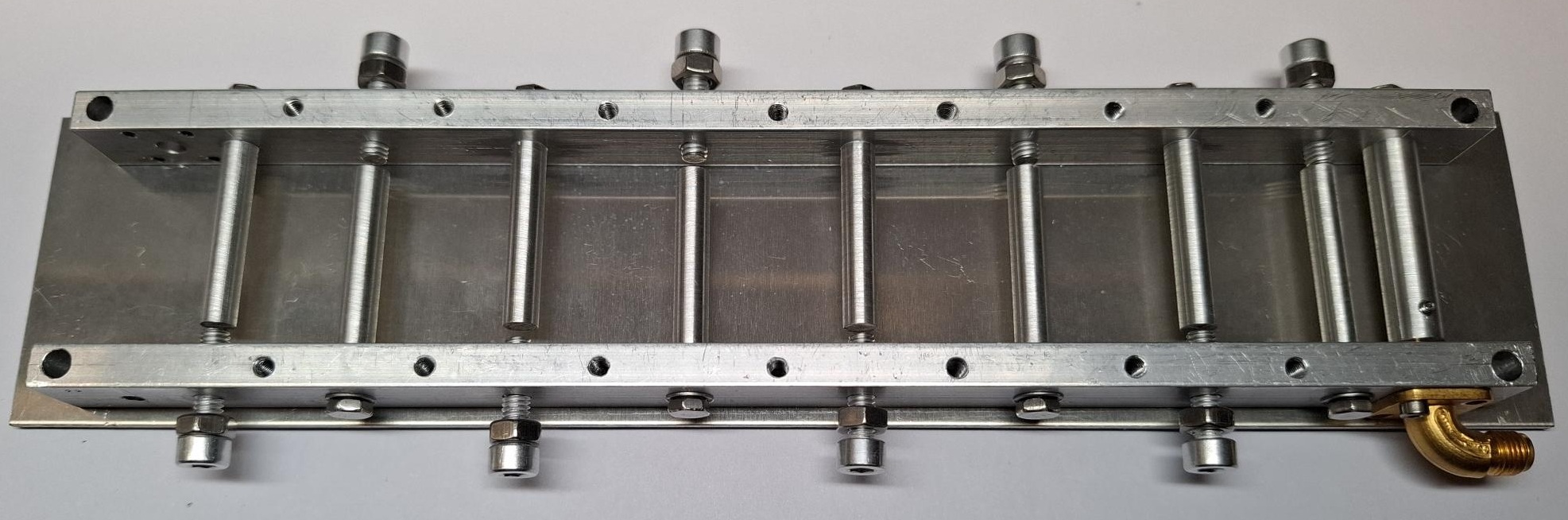 G4CCH Interdigital Filter Inside View
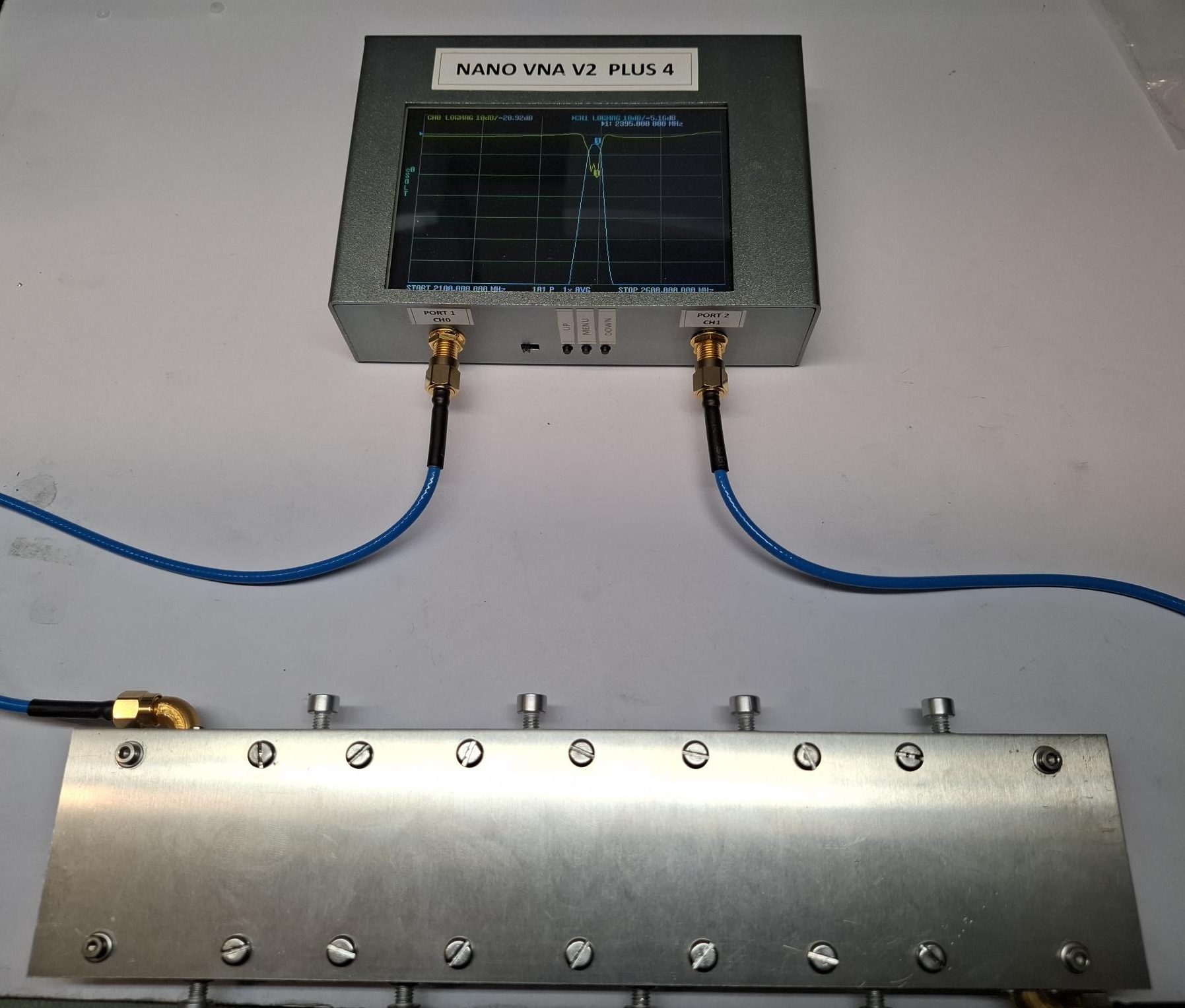 G4CCH Filter Test Setup
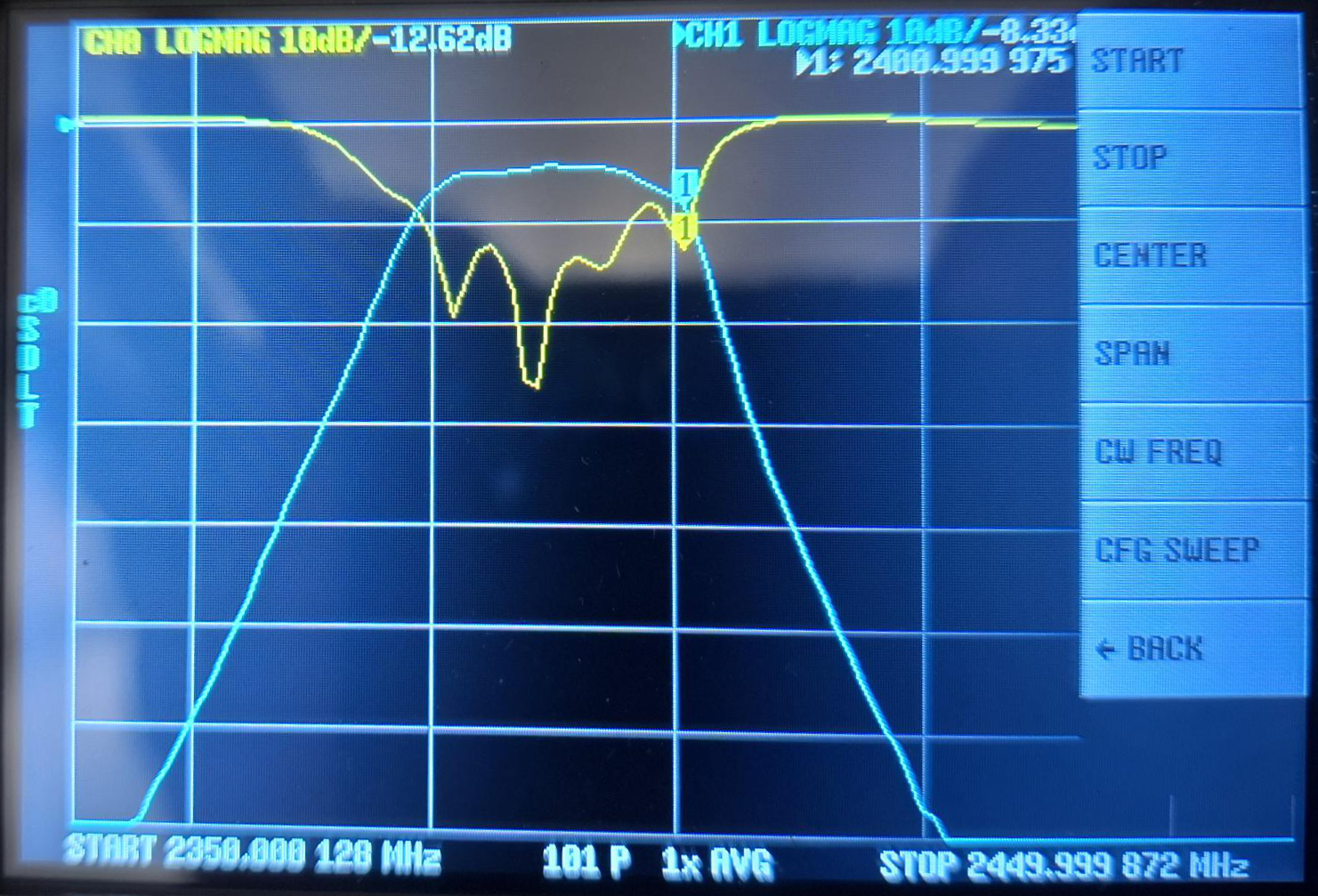 G4CCH Filter Test Results
IW2BNA Walter
I have been active in EME for about one and a half years, initially on 10 GHz and, since November 2025, also on 24 GHz. Unfortunately, my activity is limited by the fact that the EME station is located at my second home, as well as by mechanical tracking constraints: maximum azimuth coverage of 210–230° and elevation ranging from 17° to 65°. Despite these limitations, I have achieved good results on 10 GHz.
As for 24 GHz, after several optimization tests based on Sun/Moon noise measurements, on November 8th I made my first on-air activity with a QSO with OZ1LPR and successful decoding of JA8ERE. On December 6th and 7th, I then worked JA8ERE, JA1WQF, OK1KIR and IZ2DJP, achieving the first-ever Italy-to-Italy QSO on 24 GHz.
I plan to remain active on 24 GHz with the dish at least until April/May, depending on favorable Moon windows, hopefully every suitable weekend.
Station: 150 cm offset dish; 27 W SSPA at the feed on 10 GHz and 11 W SSPA at the feed on 24 GHz.
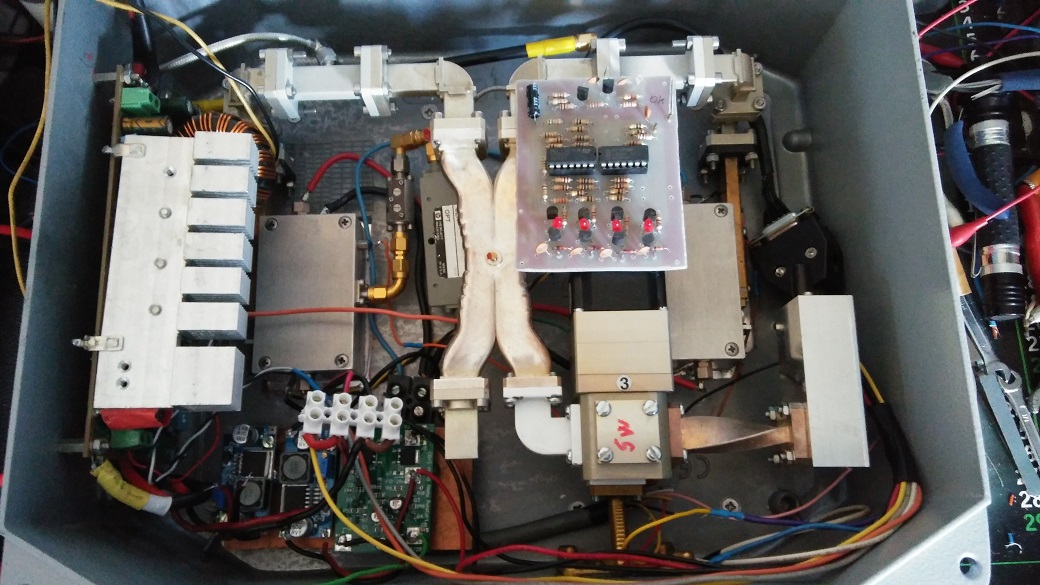 IW2BNA 24 GHz Rig Top View
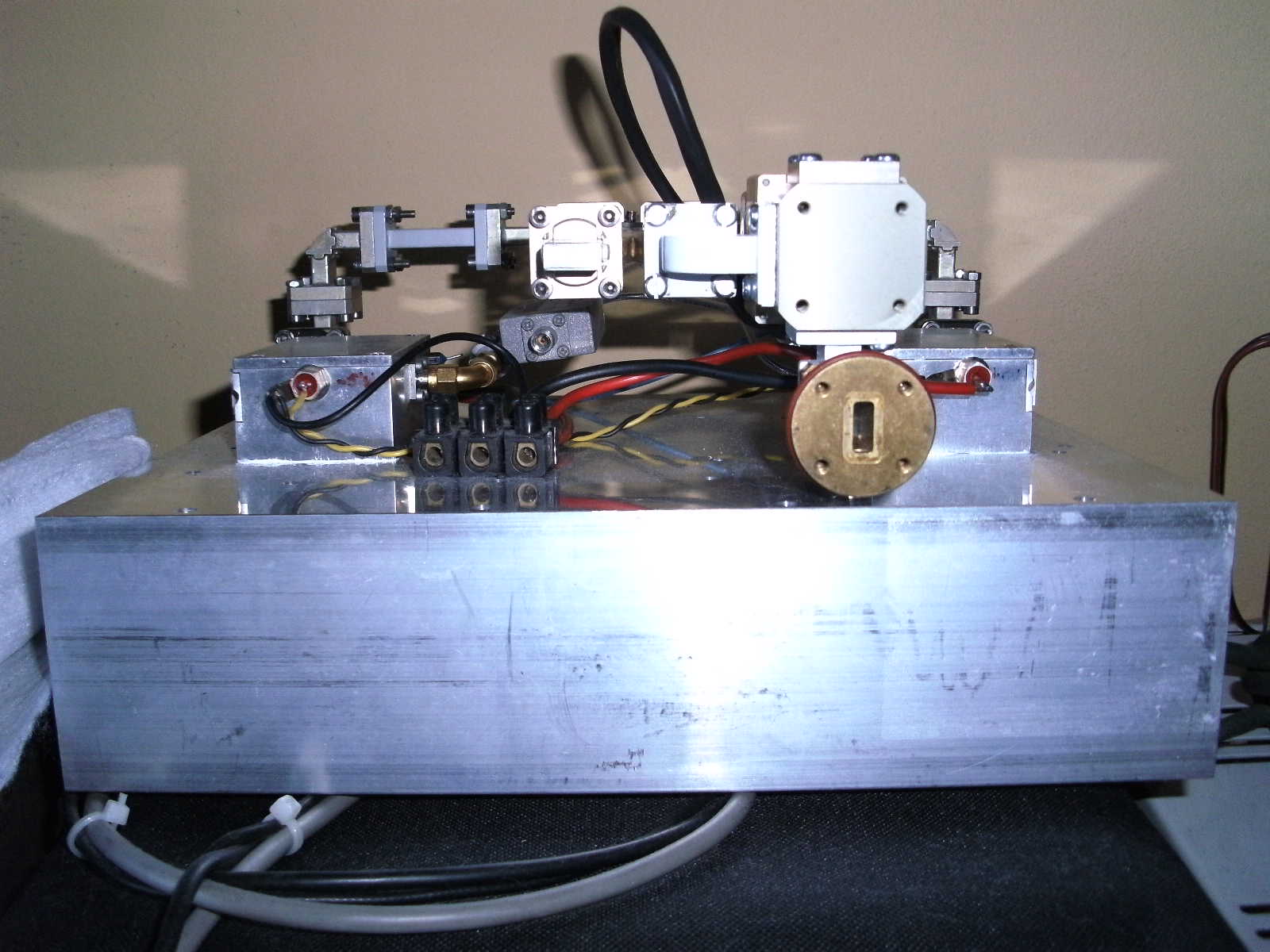 IW2BNA 24 GHz Rig Side View
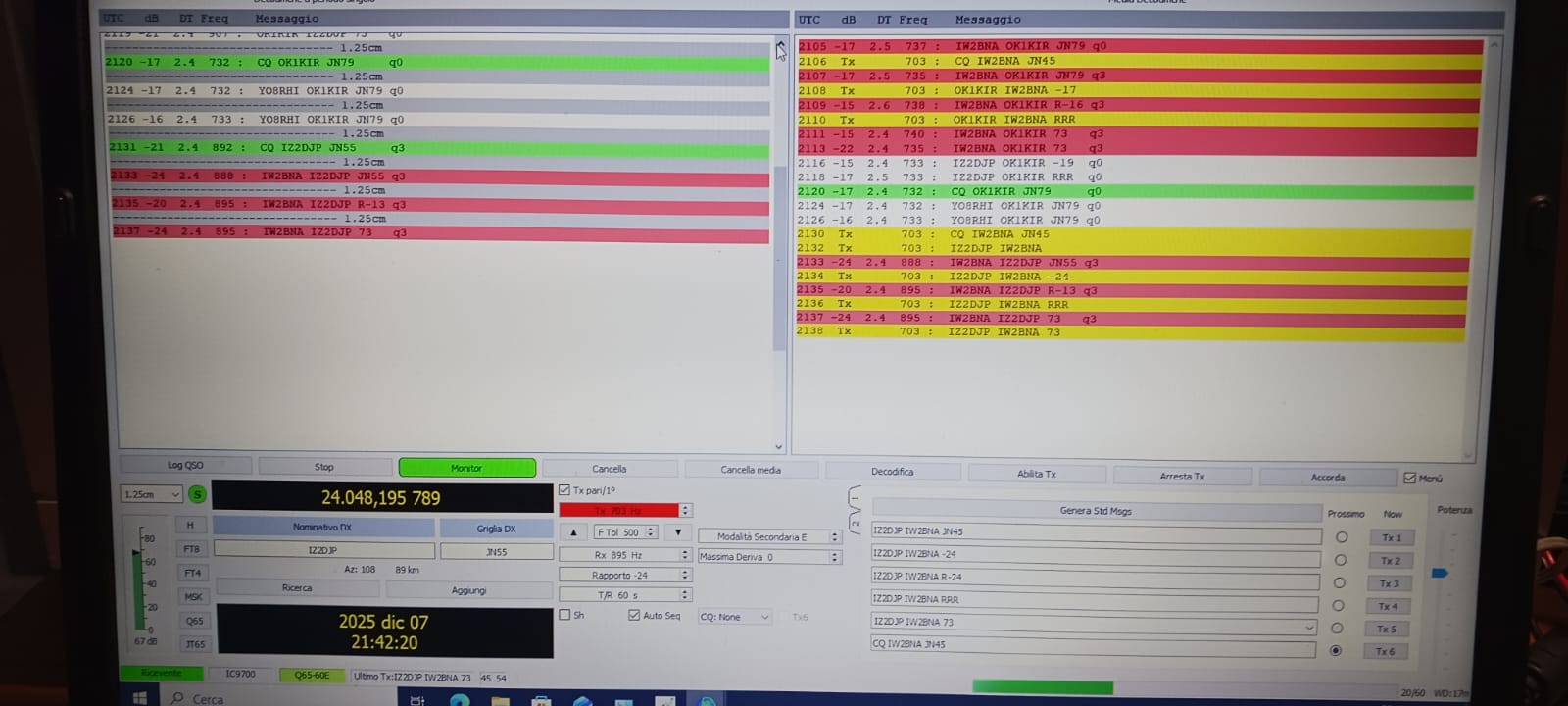 IW2BNA First Italy to Italy 24 GHz EME QSO
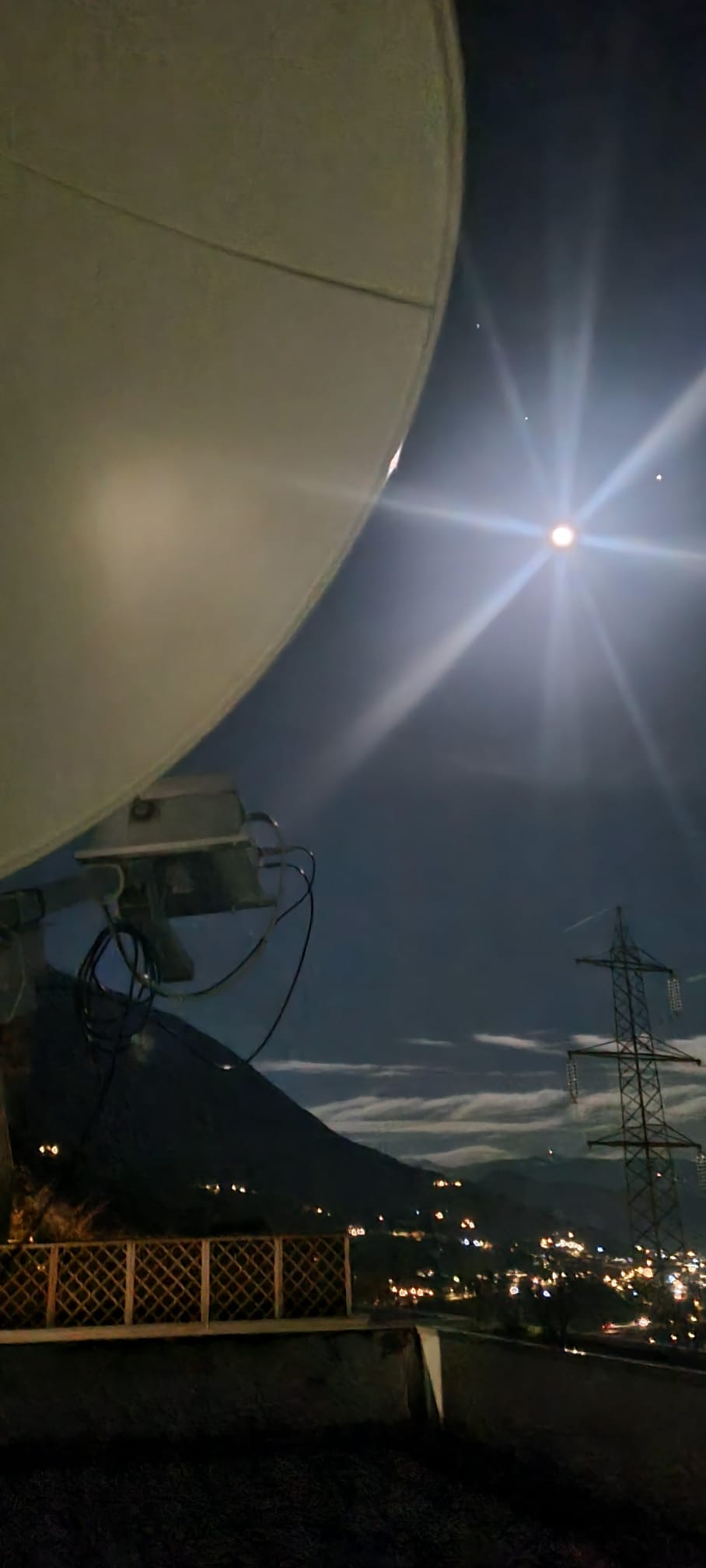 IW2BNA 10 GHz Moon Shot
IZ0JNY Ivan
On December 8th I managed to make some QSOs on 24 GHz, despite very high relative humidity outdoors (more than 86%).
First it was a QSO with Mitsuo JA1WQF with signals Sent: -19, Rcvd: -19. Then it was a QSO with Vlada OK1KIR with signal Sent: -16, Rcvd: -15 and finally with Adelio IZ2DJP with signals Sent: -19, Rcvd: -19.
My 24 GHz setup consists of the same CAS-120 dish and a TWT capable of delivering 13–14 W at the feed (see picture). Measurements on 8th December were SN 10.2 dB, GND 3.0dB, MN 1.2 dB.
For further information, I usually keep my website very up to date: https://www.iz0jny.it
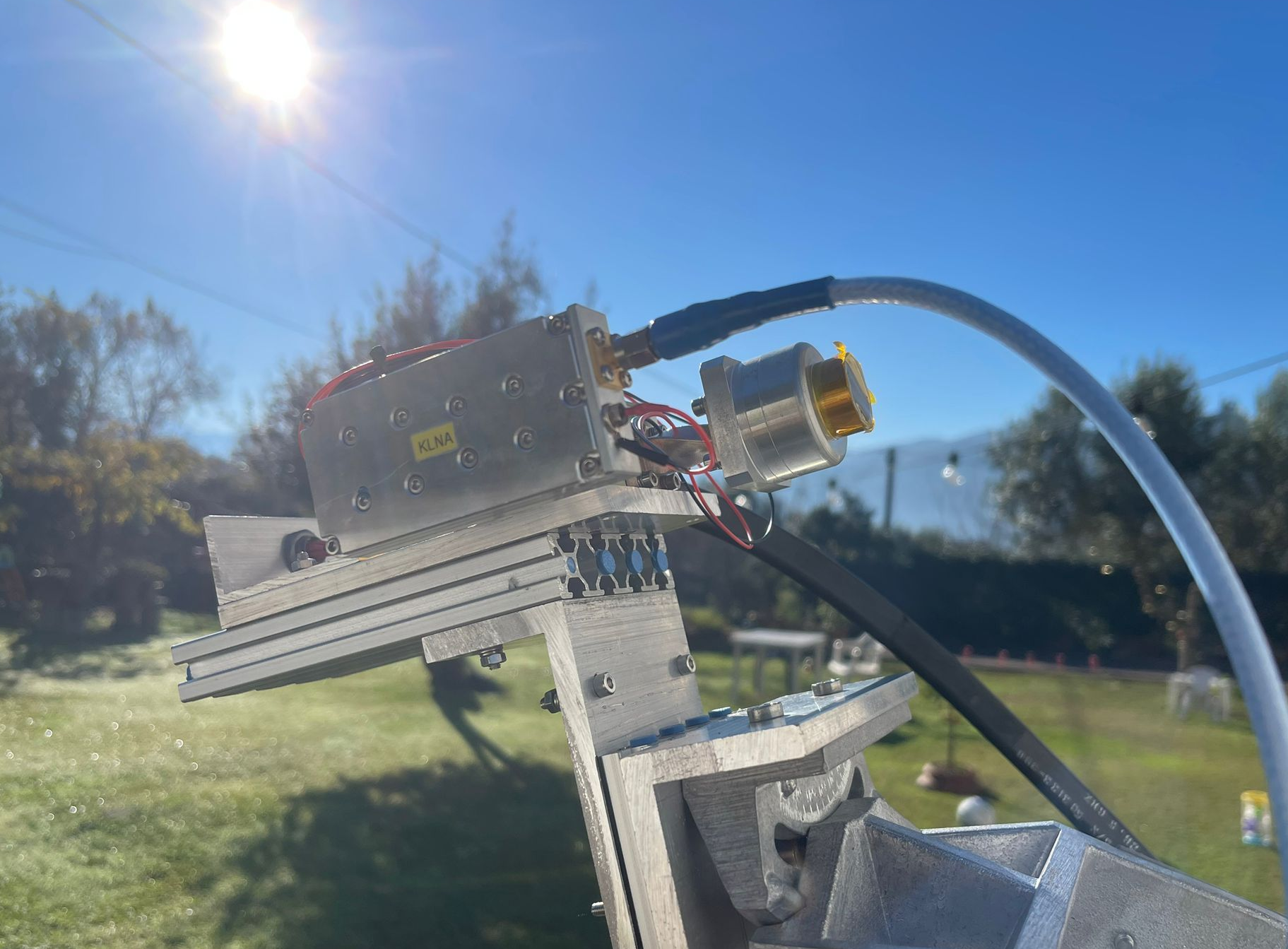 IZ0JNY 24 GHz Rig at Feed
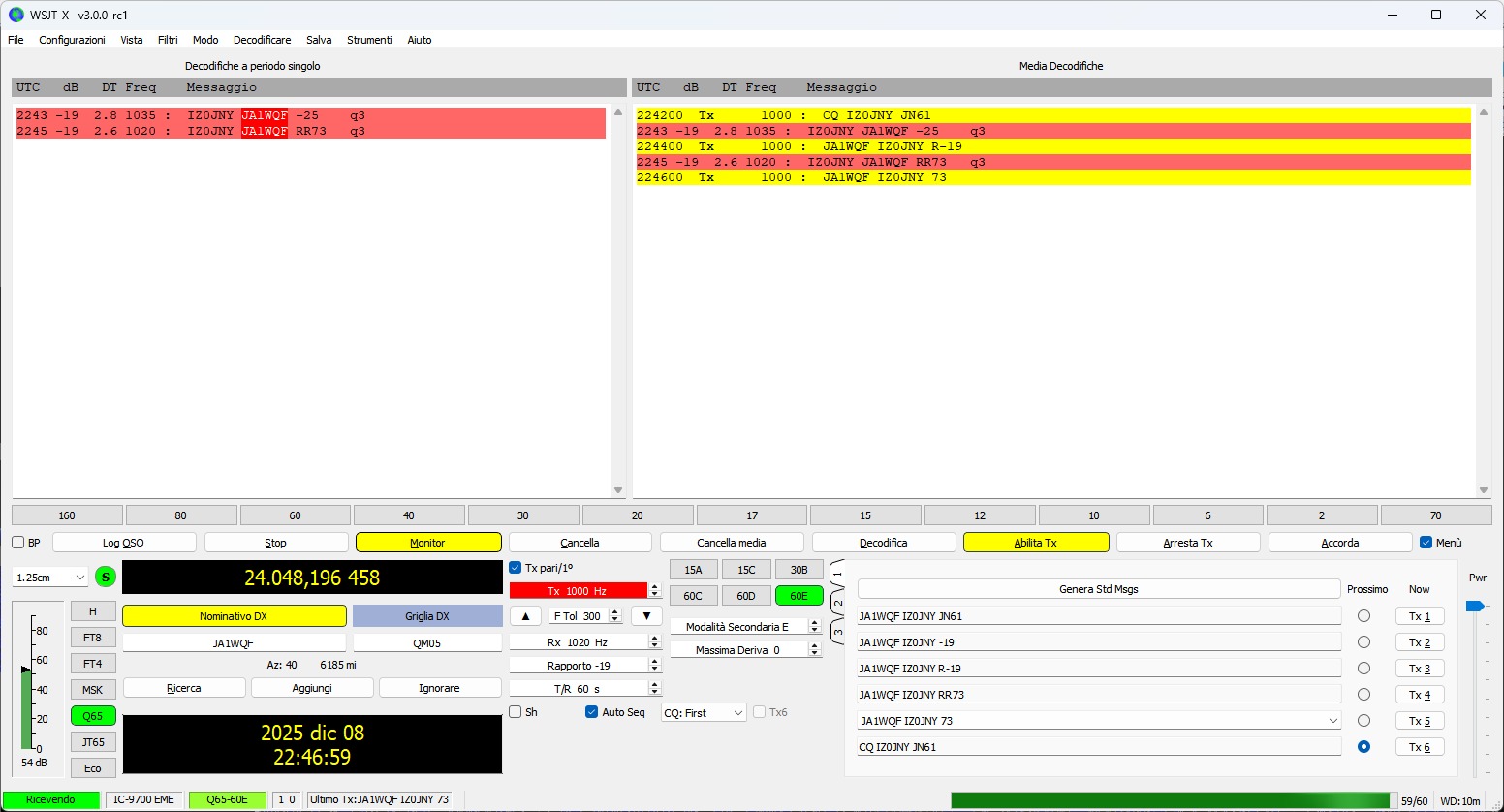 IZ0JNY 24 GHz QSO With JA1WQF
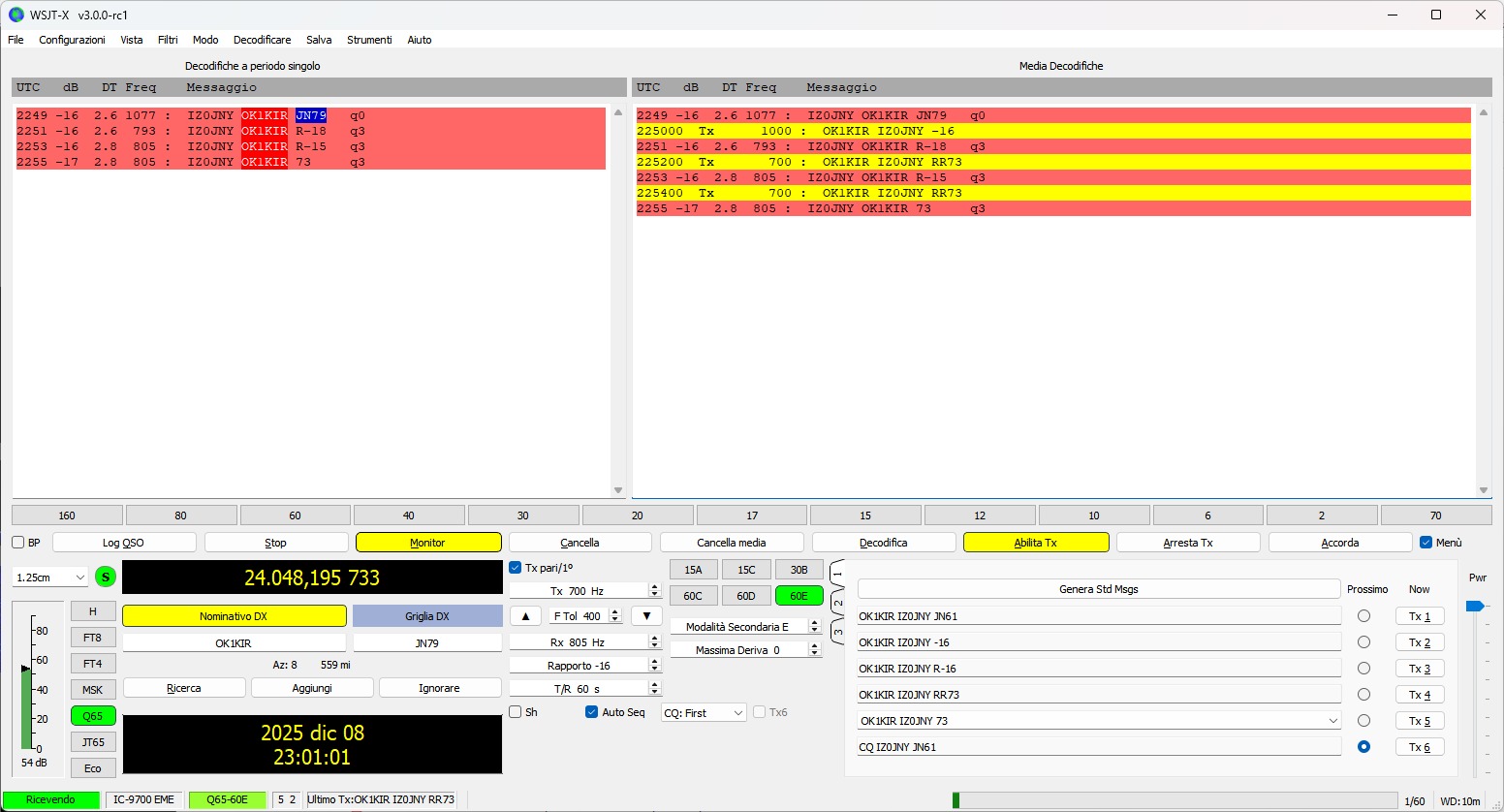 IZ0JNY 24 GHz QSO With OK1KIR
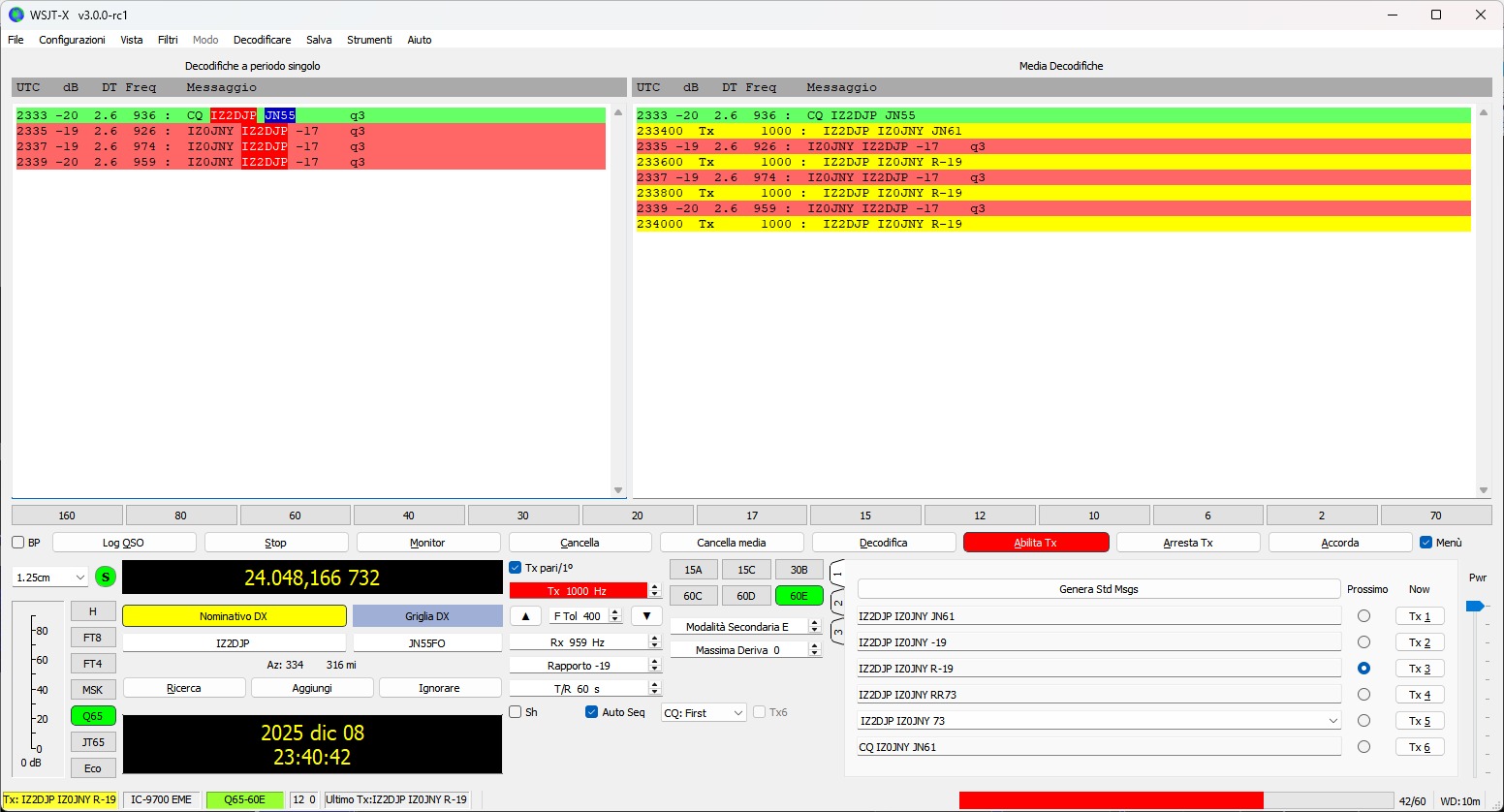 IZ0JNY 24 GHz QSO With IZ2DJP
IZ2DJP Adelio
I have been active on 24 GHz and I am now up 10 initials.
My station is very simple, at home I use a 1.8 m fibreglass prime focus dish with 4 petals, and for portable use I have a 1 m offset dish.
For TX I use an RW1136 TWT running about 10 Watts to the feed and a DU3T LNA.
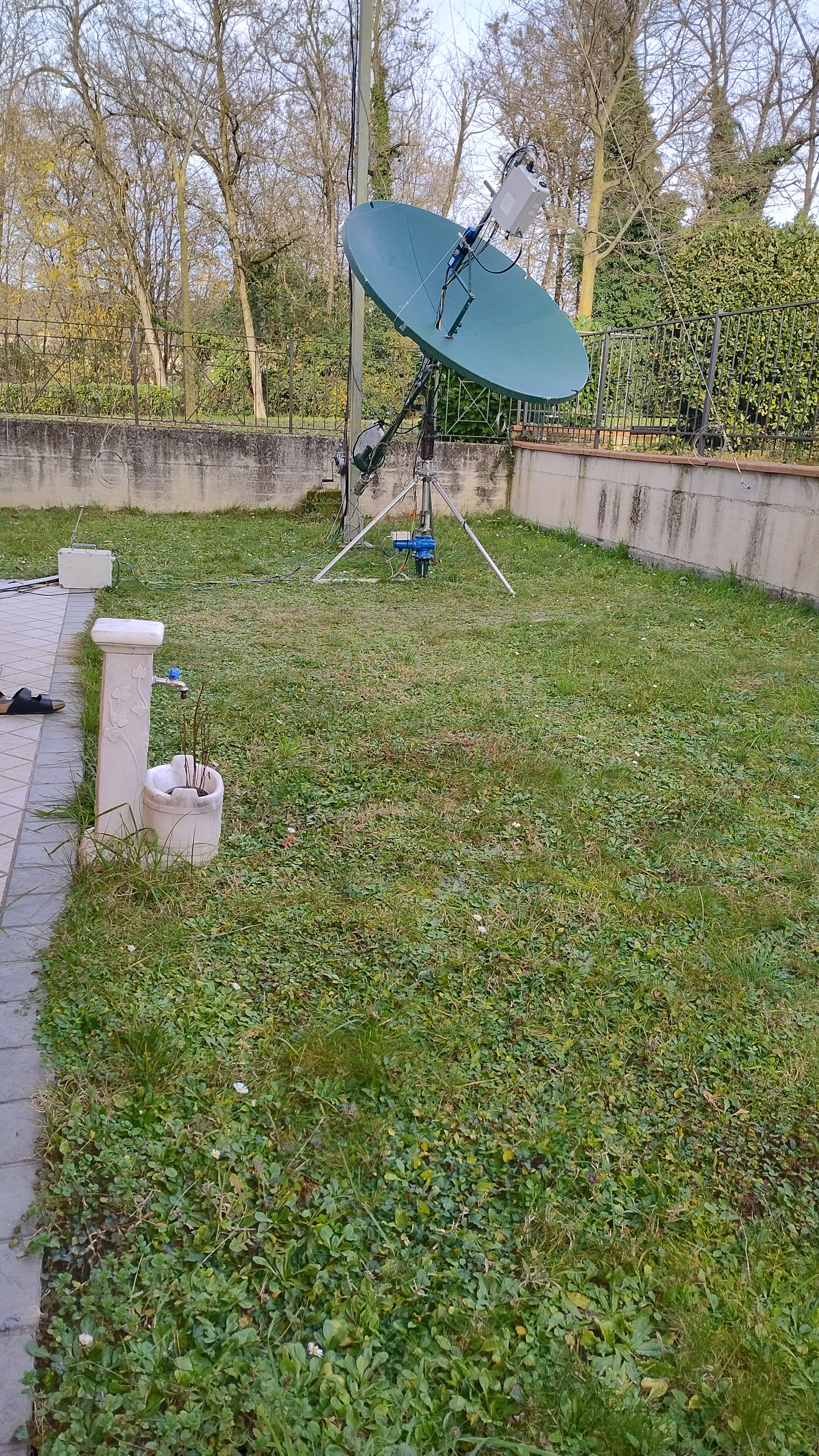 IZ2DJP 1.8 m Prime Focus Dish for 24 GHz
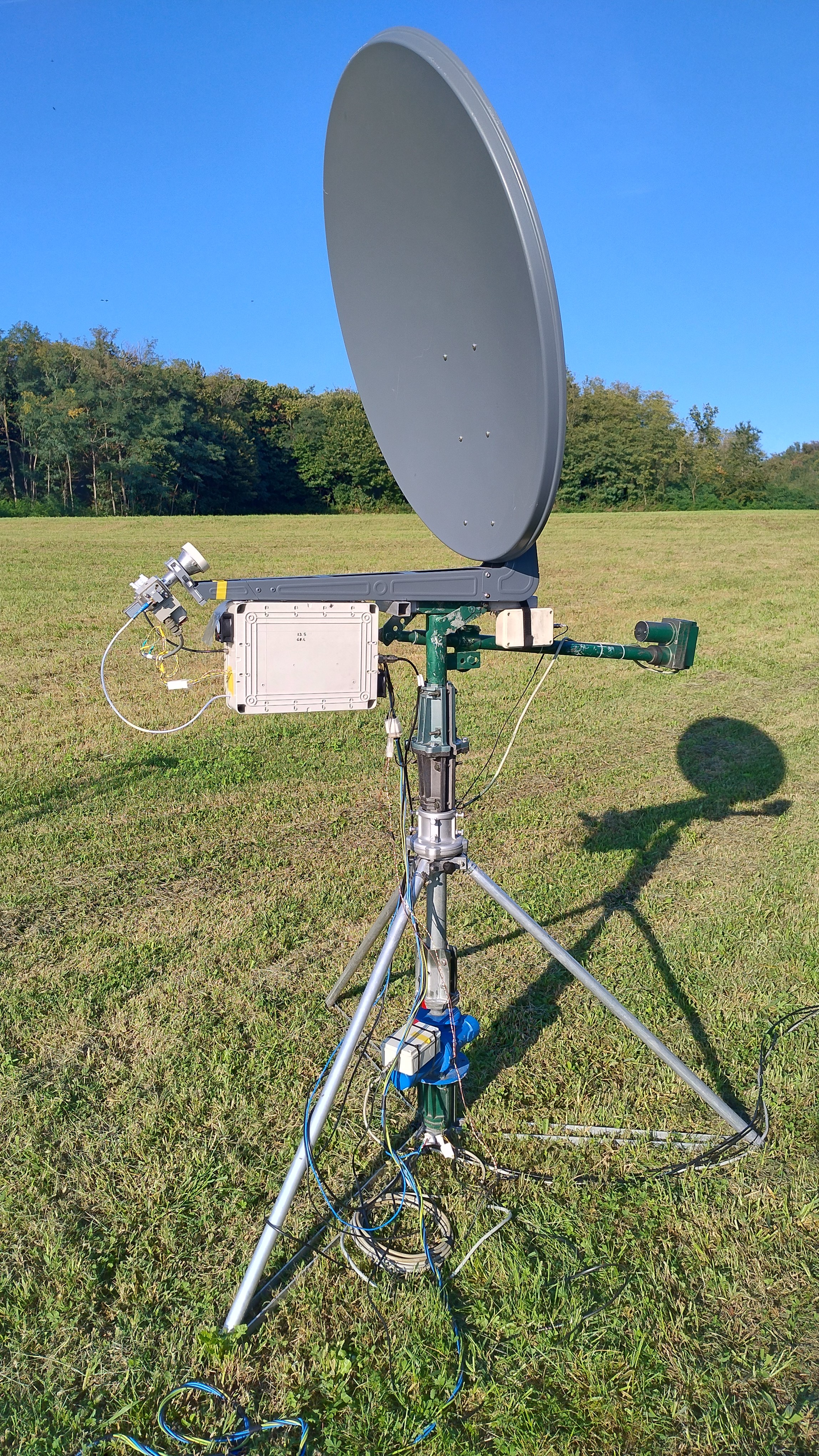 IZ2DJP 1 m Offset Dish for 10 and 24 GHz
JA1WQF Mitsuo
I enjoyed the first half of December on 47 GHz and 24 GHz.
First, on December 5th, I had a 47 GHz schedule with Klaus DC7KY. The conditions were good and I was able to decode Klaus continuously, but unfortunately it ended up being a one-way QSO. I'm looking forward to January.
On the 6th, I switched to 24 GHz and had a CW QSO with Paul WA6PY. The signal was strong and I was able to get a successful QSO (Attached photo)
On the same day, I also had initial QSOs with IW2BNA (1.5 m and 11 W) and IZ2DJP (1.8 m and 10 W) on the 24 GHz EU pass, and the next day with Ivan IZ0JNY (1.2 m and 15 W).
47 GHz is difficult, but everyone should QRV for the equally thrilling 24 GHz.
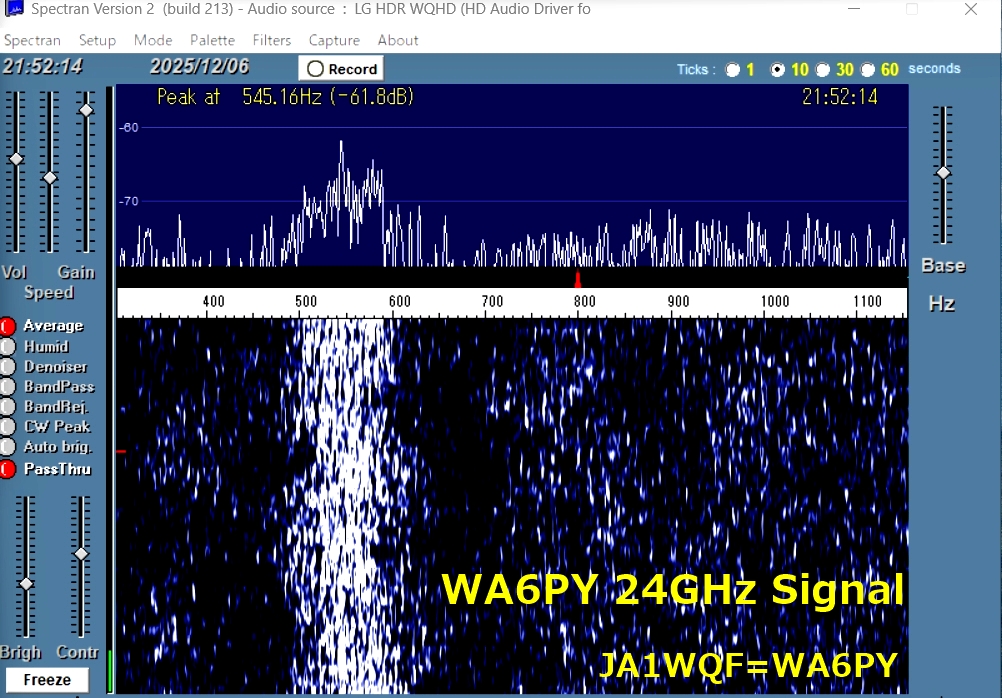 JA1QQF WA6PY 24 GHz DEC 6 2025
JA6XED Hisao
I was scheduled to operate over the weekend, but I was delayed due to SSPA and LNA issues, resulting in Zero QSOs made. I had a series of accidents while setting up. First the SSPA broke, then the LNA, and I had trouble getting it fixed. After the repair, it's outputting about 300 W, which is more powerful than before.
I heard PA0PLY and DL6SH's CW QSO and called PA0PLY, but he didn't notice me. Both stations were strong and I could hear them clearly on RST 559-569 with almost no difference in signal quality.
In JA, JJ1NNJ was operating over the weekend and had QSOs with five stations.
After the weekend I wanted to make a QSO with at least one station, so I made plans with PA0PLY on December 8. I could hear him clearly at first, but for some unknown reason I lost sight of him.
I was called by G4CCH and we QSO'd. I contacted PA0PLY on the HB9Q logger, tried again, and successfully had QSO.
By the way, only JJ1NNJ and JA6XED were active from JA on 2.3 / 2.4 GHz.
JJ1NNJ Koichi
I enjoyed the 13 cm AW. I installed the 13 cm equipment on Thursday, December 4th. There were no problems with the equipment, and I was able to receive echoes, Sun noise of 14 dB @220 sfu and Moon noise of 0.2 dB.
Operating results were on 5th Dec. PA0PLY, OH3LWP #34, on 6th Dec. G4CCH, OK1KIR, on 7th Dec. JA6XED, PA3DZL, DL6SH, PI9RD #35 and G3LTF. All QSOs were on CW, and 2320 / 2400 crossband except for JA6XED.
Equipment used was a 3 m solid dish F/D=0.25, 3 ring super VE4MA feed, with 150 W at the feed. I measured the 3 dB beam width, it was 3.3 degrees, and the antenna gain was estimated to be 33.6 dBi. I removed the equipment on Monday, 8th Dec.
N0AKC Charlie
I was on somewhat for the 13 cm activity weekend, but was limited due to other commitments that weekend. I managed to work PA3EVX, PA0PLY, VE4MA, OH3LWP and KN2K. KN2K (VA) was a new state for me on 13 cm, bringing my total to 8 on the band.
NC1I Frank
I was not very active in December. A combination of many very windy days and internet issues at my station limited my activities. When I was QRV I found activity to be unusually low on both 23 cm & 70 cm.
I had only one initial on 23 cm since my report last month; I completed with IK3HAR (-25/-13). Claudio was running a 1.9-meter dish and 25-watts.
I added four initials on 70 cm: OE4WHG (-21/-14) 1 x 28-element and 700-watts, HI3R (-17/-16) 1 x 28 element and 50-watts, CT7ABA (-23/-16) 2 x 13-elements and 250-watts, and DF1NP _24/-21) 1 x 40-elements and 400-watts.
I hope to be more active in January.
Happy holidays to all.
OH3LWP Ari
I participated in the 13 cm activity weekend and completed a total of 22 13 cm QSOs.
New 13 cm initial QSOs:
5/12/2025 JJ1NNJ CW crossband 2320 / 2400 MHz
6/12/2025 PE1CKK digital
7/12/2025 VE6BGT CW, DL6SH digital, PI9RD digital
8/12/2025 I heard and called JA6XED on CW crossband 2320 / 2400 MHz but did not complete a QSO.
I was also active on 23 cm and achieved new initial QSOs: 3/12/2025 VK6PY digital, SP3XBO digital
OK1KIR Vlada & Tonda
70 cm activity on Dec 1 while waiting for Ron, DU3T on his 70 cm expedition as HI3R in Dominican Republic brought five new initials with Q65-60B starting at 16:17 with R1NW (-12/-20) as #374, then SP2WRH (-10/-14), DL4DTU (-11/-11), CT7ABA (-26/-18) and DL7URH (-16/-18) as #378. Later at 20:53 we finally got HI3R (-22/-22) as #379.
13 cm activity, initiated in advance by Jan PA0PLY during the weekend of Dec 6&7, was attractive by possible 13 cm operation of DU3T. Ron unfortunately was found to be deaf on 13 cm, so there was no chance to try a QSO. Far later he discovered the reason for the terrible background noise to be interference from strong local WiFi signals. On Sat, Dec 6 we made 3 CW QSOs with JJ1NNJ (559/579), G3LTF (589/589) and PE1CKK (559/559) as #205. Using Q65-60C we made 3 QSOs with BA7NQ (-9/-9) as #122, SV3AAF (-6/-5) and ON5QT (-22/-24) as #123. Continuing on Sun, Dec 7 we made in CW another 6 QSOs with PA3EXV (O/O) as #206, OK1USW (579/589) as #207, PA0PLY (579/599), VE6BGT (589/599), G4CCH (589/599) and OH3LWP (579/579) as #208. With Q65-60C we added PA3EXV (-10/-6) and WA3RGQ (-16/-7).
On Sun, Dec 7 when it was sure that DU3T cannot try operation on 13 cm, we switched to 24 GHz. It was initiated by a request of Walter, IW2BNA and later joined by Adelio, IZ2DJP. The test was purposely arranged close to the time of the predicted spread minimum and dgrd was only 0.5 dB as the Moon was close to its perigee. Maximum spreading was only about 40 Hz (for the whole Moon’s solid angle) enabled excitingly nice and easy QSOs similar to lower bands like 13 cm or so. It is evident from the enclosed screen shot.
In summary on Dec 7 using Q65-60E we worked at 21:11 IW2BNA (-16/-17; B-15/B-15) with OS 1.5 m / 11 W as #59 and at 21:17 IZ2DJP (-19(B-15)/-13) with PF 1.8 m / 10 W. Later we measured MN=2.4 dB, Zo/CS over 4 dB and extremely narrow own echoes giving SNR up to -9 dB (smooth sharp peak visible on enclosed picture). Unfortunately, we forgot to try CW. Interestingly, post processing of WSJTX records showed almost unbelievable margins in signal strengths (SNR) at both stations of up to 7 dB or 11 dB with WSJTX averaging over 2 or 3 periods, even with normal decoding options.
That clearly indicates our possibility (PF 4.5 m / 20 W) of working 24 GHz stations with only about 10 W power and dishes far below 1.0 m size.
On the next day Dec 8 we continued 24 GHz operation and made with Q65-60E at 22:55 IZ0JNY (-15/-16) with 1.2 m / 15 W and on Dec 9 repeated at 00:12 IZ2DJP with even better reports (-14/-12) regardless of predicted max spreading up to 190 Hz, but at higher elevation (lower path loss).
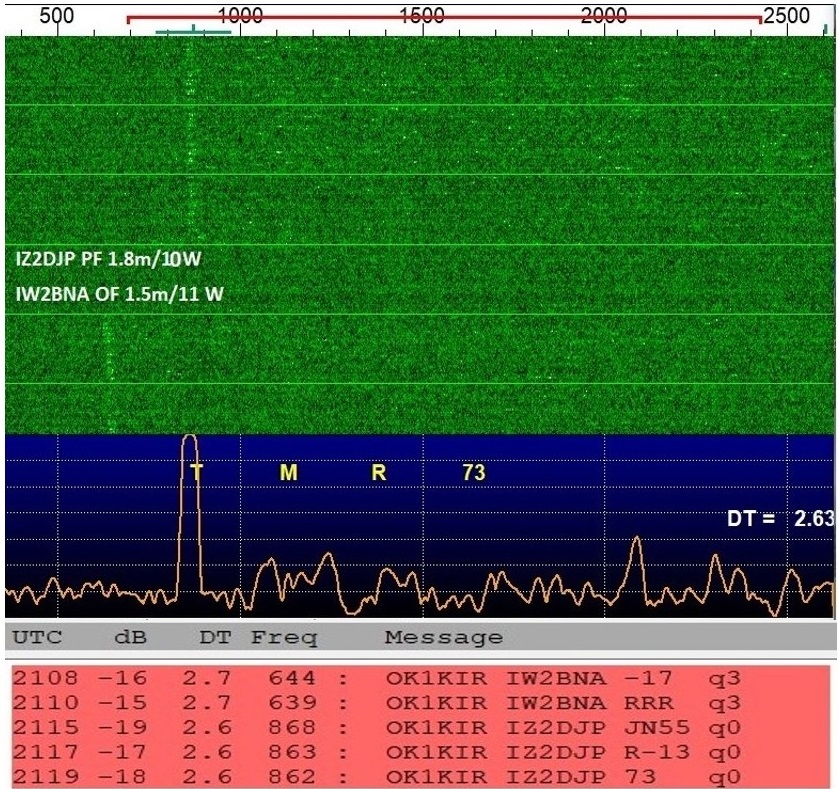 OK1KIR 24 GHz screen
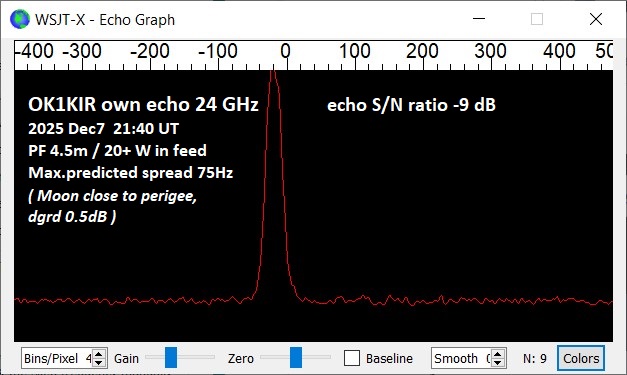 OK1KIR 24 GHz own echo Dec 7 2025 2140 max 75 Hz
PA0PLY Jan
I configured my 13 cm system in the week before the 13 cm event and tested it with my neighbour Gerrie, PA3EXV.
During the first MR on Friday Dec 5th, I worked: JJ1NNJ (O/O), OK1USW (-10/-16), DL1SUZ (-11/-13), OH3LWP (599/599), OM0MS (-20/-14) #90.
Then I took a nap until 04.00 UTC for the NA activity: VE6BGT (579/579), VE4MA (-09/-12), & N0AKC ( -21/-23). It was a pity that so little activity came from the USA.
On the next MR on Dec 7th: BA7NQ (-18/-20), CT1DMK (579/579), G3LTF (599/579), G4CCH (599/579), PA3DZL (-04/-06), OK1KIR (599/579), F1RJ (-09/-15), DL6SH (-05/-05 & 579/569), JA6XED heard us but we did not check Rx on 2400 MHz unfortunately, PI9RD (-06/-03), PE9GHZ (-19/-20) Eddy had serious trouble to keep the dish on the moon due to stormy weather, PA3EXV (-15/-10), SV3AAF (-14/-11), DL1SUZ (-18/-12). I saw Hisao, JA6XED on the HB9Q logger but he disappeared before we could make a QSO.
On Dec 8th I worked JA6XED (529 / 559). On Dec 9th I worked WA3RGQ (-20/-18) Don was running only 60 Watts to a 3 m dish.
KL6M and DU3T had trouble with their 13 cm stations, ZS6JON could not finish his new dish in time.
On my side I had serious trouble with interference on the JA band at 2400 MHz. I used the I0NAA noise meter system to see what was on. See the attached picture where you can see the noise levels from left to right: 2320 MHz - 2304 MHz and to the far right 2400 MHz. One can imagine that picking up weak CW signals was difficult.
After the contest I figured out that the DEMI BPF filter I use for this band might be too wide. It covers 2400 up to 2500 MHz. Bert, PE1RKI will produce a replacement filter which drops off to -50 dB directly after 2400 MHz. Hopefully this will improve the situation.
All in all it was a nice event with nice QSO's. Thanks all for the participation during this event!
The next 13 cm all mode event is on March 1st following the DUBUS 13cm contest on Saturday February 28th. See the DL7APV calendar. https://eme.radio/dl7apv-eme-calendar-2026
Note: PI9RD also tested the new 9 cm system and could copy their own echo's very well (25 m dish / 60 Watts). The system is now operational and usable on demand.
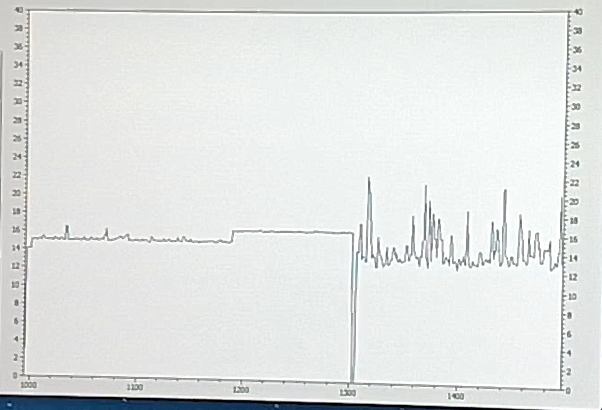 PA0PLY 2320 2304 2400 noise level
PA3DZL Jac
PA3DZL worked on 432 MHz (27th Nov to 3rd Dec)
Very nice conditions and great activity from new stations.
I was very pleased to QSO with Ez on the HI3R DXpedition, nice signals from his single 28 el. M2 yagi and 75 W. Unfortunately he could not be QRV on 23 cm because of significant delays of the equipment due to ongoing military operations in the Caribbean.
I also worked BX4AP #453, OZ7UV, DL9KR in CW, BG2QAX #454, 4X1AJ, GØJDL, VE3CIQ, K3SK #455, NC1I, RU4HU #456, HI3R #457 and DXCC #87 also FIRST QSO ever PA-HI and OMØAB #458
PA3DZL worked on 2320 MHz (Activity weekend and some days before).
I had a great weekend with very nice QSOs, conditions were very nice and signals were UFB also. The smallest station worked was Marcel, ON5QT running his 4 yagis with linear polarity!
This time I was using my new feed OK1DFC + scalar ring and new WD5AGO preamp, and I measured 0.7 dB Moonnoise. I had QSOs as follows:
Digi Mode: OMØMS #178, ON5QT, F1RJ, BA7NQ, PA3EXV, OH3LWP, VE4MA, PAØPLY, DL6SH, PI9RD, PE9GHZ and DL1SUZ
Mode CW: VE4MA, VE6BGT, G3LTF, SV3AAF, CT1DMK, G4CCH, JJ1NNJ X-band 2320-2400MHz
Mode SSB: PI9RD great signals from the 25 m Dwingeloo dish
Single Yagi Success on 13 cm
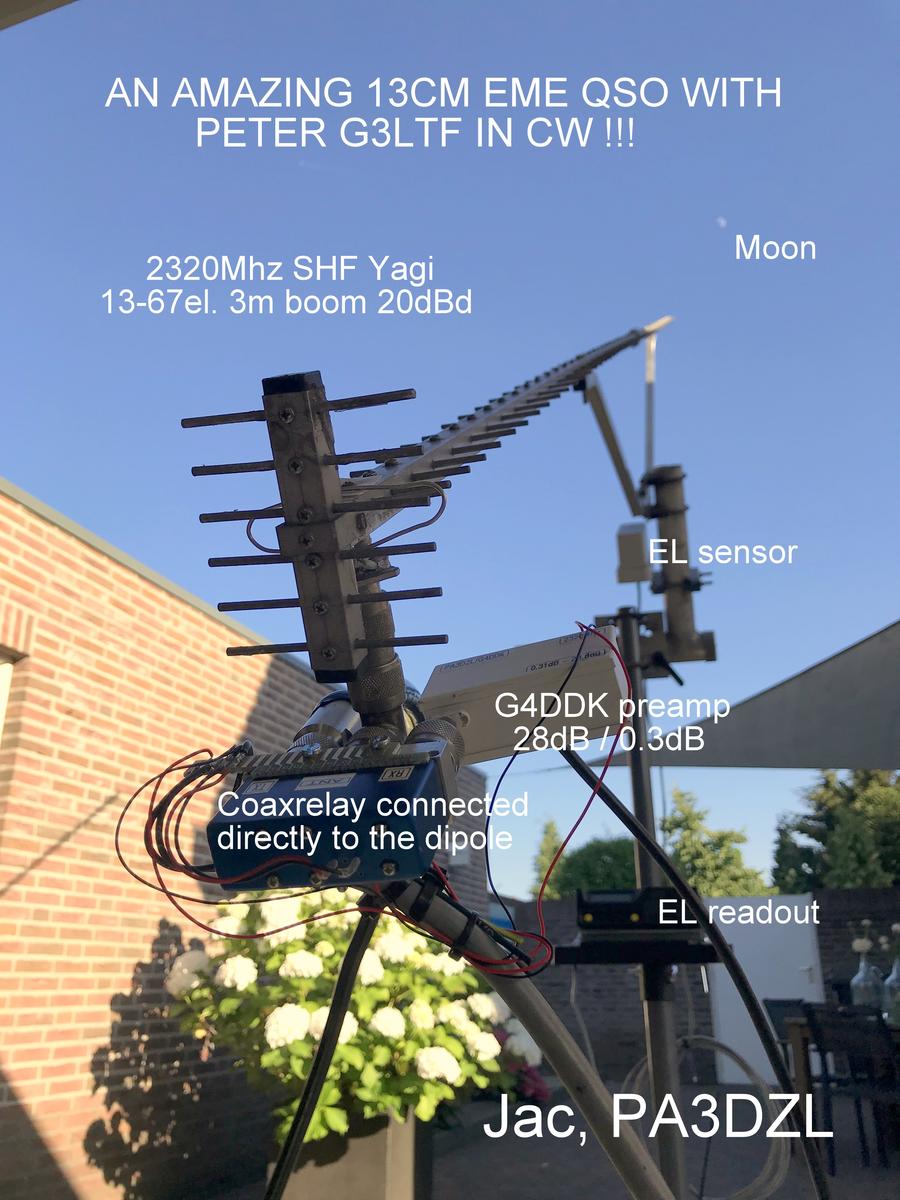
In the October NL there was a report of ON5QT having 13 cm QSOs running 4x 44 el Yagis and 150 W. I want to encourage even smaller stations to try 13 cm EME based on my past success with a single 67 el Yagi in 2018.
With my 67 el. Yagi was only QRV for a few days just to give it a try, but I had great fun and was surprised to make 4 QSOs on 13 cm, with the UFB results.
QSO’s were made with
• 2 x HB9Q 10 m dish in Digi Mode JT65 reports were -16/-12 and -16/-13
• 1 x PAØBAT 3.7 m dish in Digi Mode JT65 reports were -27/-25
• 1 x G3LTF 6 m dish This was an amazing CW QSO! reports RO/O
I did pay a lot of attention to the losses before the preamp. See the picture below: Dipole with N-adapters to N-switch (no coax cable), G4DDK 0.3 dB preamp to N-switch (no coax). I was running about 350 W @ the dipole.
So QSOs can be made with a single 67 el. Yagi on 13 cm. JUST DO IT !!!
 PA3DZL G3LTF 13 cm CW EME QSO antenna
VE4MA Barry
Winter has arrived here with some cold weather but only a little snow. I can operate either on 2304 or 2320... no crossband.
On December 6th I did install the 13 cm feed in the 3 m dish and I did have a problem with a poor coax relay control cable... not sure the TX relay was fully engaged for my first QSO with PA3EXV -17 / -25! I had no sign of echoes and I was not monitoring my SWR. When I did check it, it was pretty much all reflected! I went out in the cold and dark and cleaned connections on a "Jones" plug to restore reliable service!
I then went on to work PA0PLY -11/-12, N0AKC -24/-23, VE6BGT 579/579, PA3DZL 569/559. I went QRT at this point as Europe had not awakened yet!
On December 7th I worked DL1SUZ -22/-18, F1RJ -22/-12, CT1DMK 559 both (It has been a long time since we had a QSO on any band), K5DOG -24/-21, PA3DZL -13/-12 and G4CCH 559 Both.
I am going to try to be QRV again on 24 GHz on January 3rd and 4th. I have to investigate a 13 kV TWT power supply issue before then. I plan on operating on 70 cm for the Dubus contest on January 31. I hope to have a new SSPA running as it's time to retire my 48 year old K2RIW PA. I have many big Tetrode cavity PAs but never felt it necessary to run that much power 😀
I am looking forward to exercising all the bands during the 2026 Dubus contest but I will operate all modes.
VE6BGT Skip
My latest endeavour was getting my new 13 cm feed built in time to use it for the 13 cm special activity weekend on November 6th and 7th.
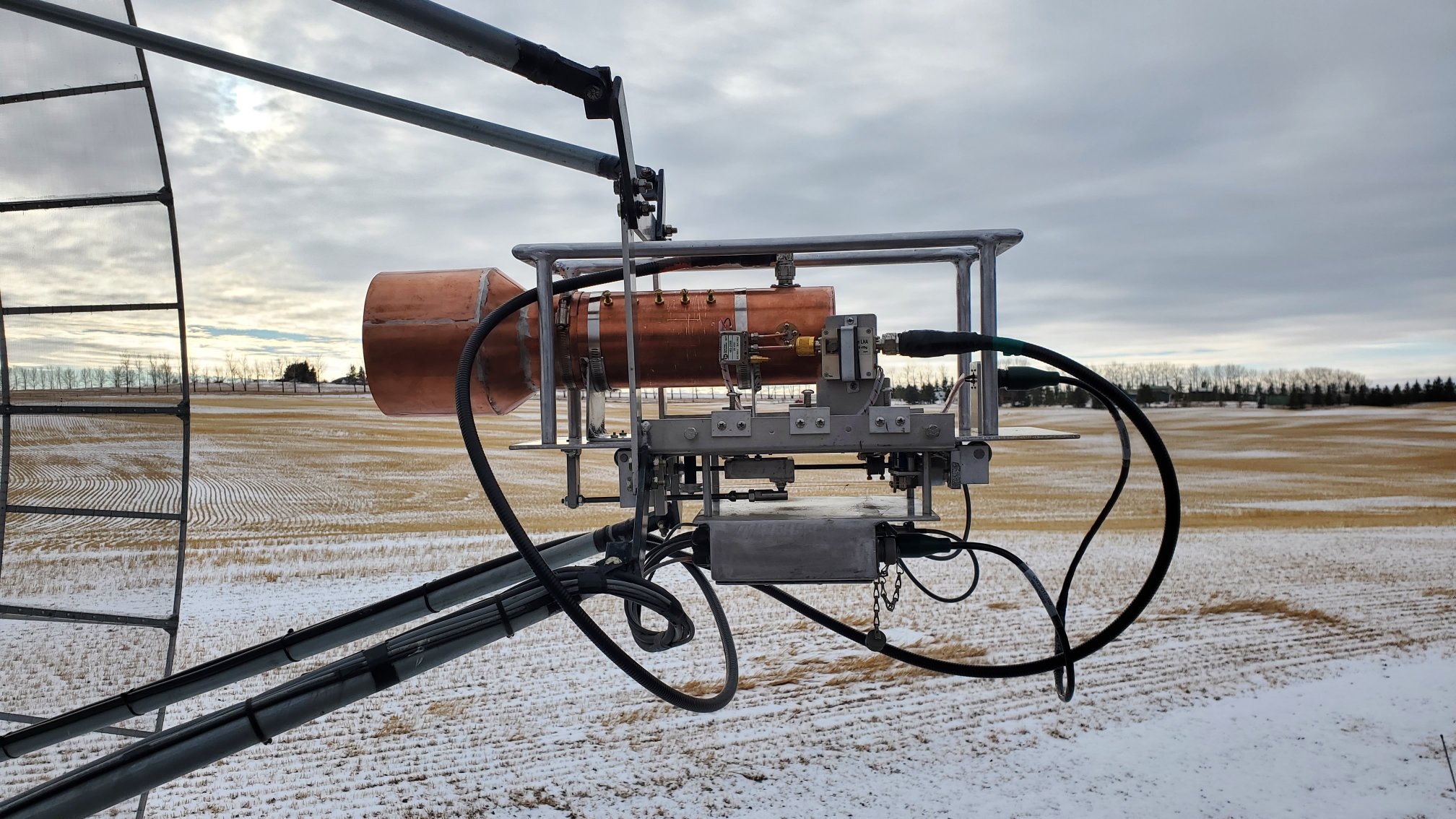
It is again a VE4MA style feed with an IMU launcher for the end of it. I have built this type before for all my other EME bands but this one was a challenge. For some reason, at least I think as it was explained by others that using a brass plate for the back plate on the copper waveguide for some reason didn't want it to tune the probes properly. It wasn't until I swapped the brass plate out for a copper one did it finally co-operate and tune nicely. Now the jury is still out on that theory though!
But it did tune and I got the rest of its mounting hardware built and tested just in time for the activity weekend. 13 cm signals were really strong probably due to the close perigee of the moon. I worked stations on both 2304 and 2320 Mhz. One problem I do have is after the dish is beyond 100 degrees azimuth, the Sirrius radio satellite broad interference is bad for us here in western Canada on 2320 MHz. Even with that noise signals for most stations were strong enough to come through it well. The few stations I worked (all on CW) were: PA0PLY 589/579, VE4MA 579/579, PA3DZL 579/579, DL1SUZ 559/569, CT1DMK 559/579, G4CCH 599/599, OK1KIR 589/589, OK1USW 559/559, OH3LWP 559/579. Thanks to Jan, PA0PLY for organizing the special 13 cm weekend event.
If you would like to see some of the contacts I made go to Youtube and search my call or use this link for the latest: https://youtu.be/H1020u1xHIk
 VE6BGT New 13 cm Feedhorn
VK2CMP Mick
Not much in the way of activity over the last month on 432 Mhz as it seems like everyone was still catching up on their sleep after the contest?
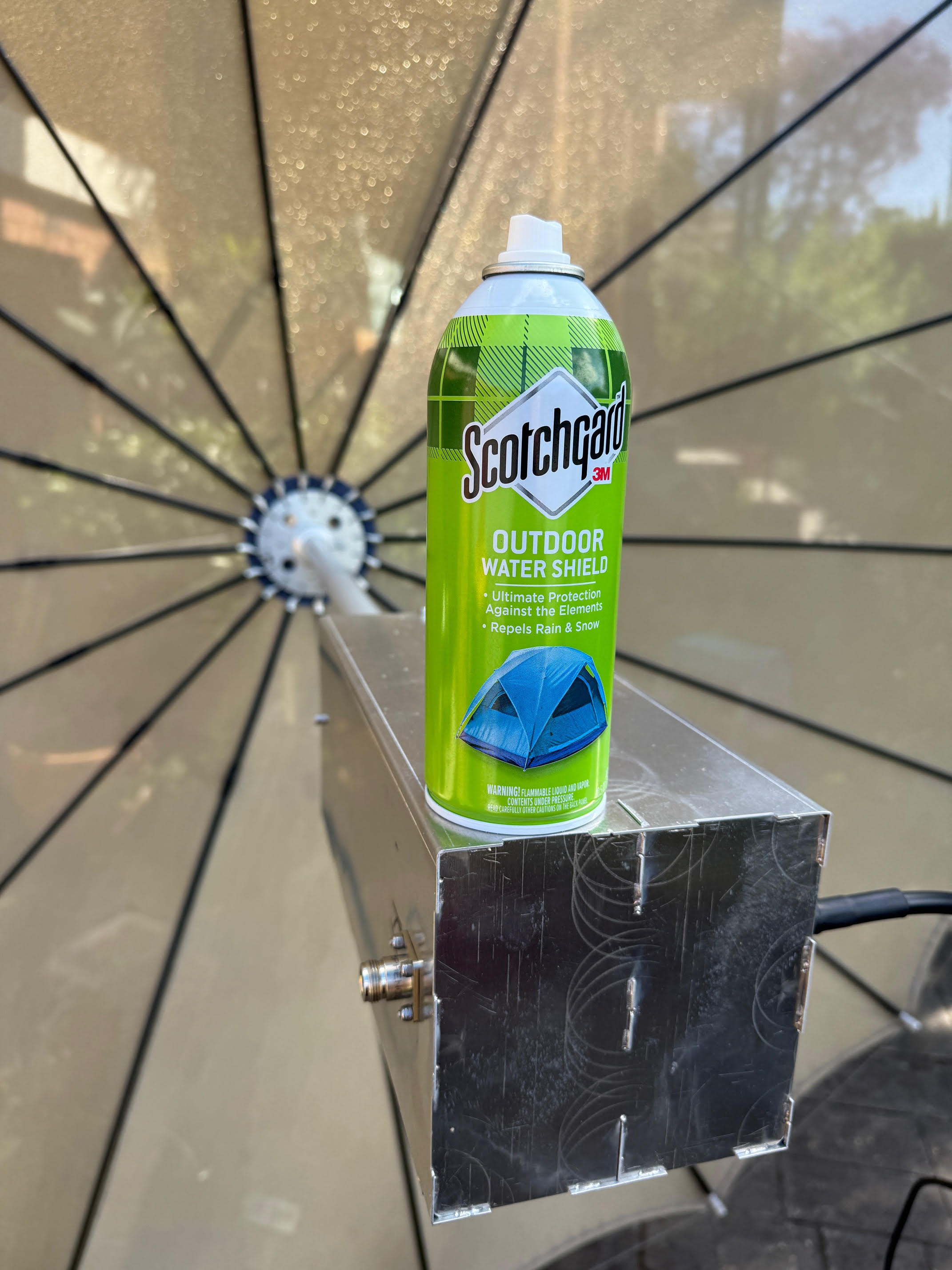
I did some maintenance on the 23 cm portable set-up. W2HRO passed on his Pro Tip of water proofing the folding dish with Scotchgard Water Shield, when I asked him the best way to clean bird droppings off a new dish. You need two cans to do front and back.
I also fixed the 23 cm PA which failed after the 1st night of the contest. The LV supply failed and as a consequence the latching Dow Key 412A relay did not switch and I blew up the LDMOS. At $500 Aussie pesos for a replacement FET, I am now replacing the relay with a fail safe…. I am also just making a 2nd set of cables, antenna controllers and KISS PA for future remote ops. Not to mention working out the best way to pack all this for easy transport and deployment.
 VK2CMP Water Treatment for Umbrella Dish
W1GHZ Paul
BOOK RECOMMENDATION
I recently bought a new book, "Reception of Weak Radio Signals from Space" by Miroslav Kasal (OK2AQ), after reading about it in the October 432 and above EME Newsletter.
Much of this book is about EME, with examples from the OK1CA station, compiling most of the information on EME in one place.
This book should be essential reading for any EME beginner, and a good reference for experienced ops. There is loads of good practical information for any microwaver, not just EME. Highly recommended, a good reference. Available from Wiley.com
https://www.wiley.com/en-us/Reception+of+Weak+Radio+Signals+from+Space-p-9781394292745
W8TN Clark
Since last month's report I was able to be active on 23 cm for 3 days: 05 November, 07 November, and 09 November with my portable station. During those periods I worked the following Initials: KG0D, N0CTR, IU4MES, W3IPA, KN2K, NC1I, N4BAA, RA9FLW, ZS5Y (DXCC #23), IK5VLS, ON4LX (DXCC #24), PA3HDG, UA4AAV, DL7UDA, OK2DL, OM4XA (DXCC #25), DL3EBJ, PA3DZL, RX3DR, RA4HL, UA9FAD, IQ2DB, PA3EXV, DF3RU, OK1KKD, VA7MM (DXCC #26), OZ5TG (DXCC #27), VE4SA, N6NU, and W3SZ. This brings me up to 95 QSOs, 80 Initials, and 27 DXCCs in just 5 operating periods on 23 cm EME.
On my last operating session, the temperature was pretty cold so I was operating remotely from inside the house. Just at sunrise the wind picked up and it started to rain so I ran outside to quickly take down the Sub-Lunar folding dish. I got the dish down but when I carried it into the garage and bent over to lay it on the floor, I became unconscious and fell face first onto the concrete floor. This did considerable damage to my face and left forearm and necessitated an immediate visit to the Emergency Room. They determined I had fractured the C4 and C5 vertebrae in my neck. As I write this it has been 12 days since the injury and my neck and shoulders are still extremely sore and I am not able to do more than some very basic things. Recovery has been slow to say the least. I guess that at 77 years old you just do not bounce back as fast as when you were young! (We wish you a speedy recovery Clark. This report unfortunately missed the cutoff for the November NL - Ed.)
WA6PY Paul
I was QRV in all 4 sections of the ARRL EME contest on 1296, 2304, 3400, 5760 and 10 GHz on CW. I made 45 QSOs.
Besides the contest during the last few months I was active on 24 GHz CW. Currently I am using an RW1127 modified per DL7YC description and I am getting up to 30 W out. I am also using a KLNA made by DU3T, which has lower NF by about 0.3-0.4 dB compared to my own. My signals and echoes are much stronger. On July 21 in the Dubus Contest I QSO'd: OZ1LPR DB6NT SA6BUN, after the contest on July 24th SP3XBO and SP6JLW. On October 10th I QSO'd JA1WQF, however conditions were difficult with high humidity and high libration. I tried with JA8ERE, but we could not hear each other. On November 7th I was ready for sked but the coupling between the motor and elevation drive broke, and I could not repair it in the middle of the night.
During the next sked on December 5th, we did not hear each other, on my side conditions were good, Moon Noise was 2.4 dB and I had nice echoes. The Libration at my end was 230 Hz and the mutual libration was 100 Hz. Unfortunately spatial polarization was -55 deg and I have no means to rotate my feed or install waveguide twist. On December 6th {the next day) we had a very nice and easy QSO with JA1WQF, I could give him a 539 report, but once I sent the O report, I decided not to change it.
For now I have 14 Initials on 24 GHz CW.
My WiFi connection to the shack is very weak and sometimes HB9Q EME Logger is intermittent. Please use only
Merry Christmas and Happy New Year 2026 to all.
2026 Funtest Rules
The 2026 Funtests will be one day events, mainly because of the crowded nature of the calendar this year. The 13 cm Funtest will take place first, on March 1st. This is the day after the 13 cm DUBUS contest and coincident with the all modes activity day proposed by Jan PA0PLY. The 23 cm Funtest will be on March 28th.
Please remember Al K2UYH’s words, “These Funtest Events are intended to be fun”. You do not need to transmit on SSB to participate. CW to SSB and vice-verse exchanges are encouraged and count for points. (Only one QSO between stations is allowed, i.e., you cannot work a station SSB to SSB and SSB to CW for extra points).
Scoring is contact points x number of two letter Grid Sectors (IO, JM, FN, EM ...) x 100. SSB to SSB contacts count as 2 points. SSB to CW (or CW to SSB) count as 1 point. The exchange is your Sector (IO, JM, etc.). Only the 2 sector letters need to be sent and copied by EME. The exchange of signal reports and/or 4-character grids is optional and not required. Operation may be by single or multiple operators from one location with no distinction for scoring will be made. This is a Funtest and meant to be similar to an activity event – the goal is to have fun and to find out how well your system is performing. Communication on Loggers (HB9Q) is allowed.
CW stations are encouraged to participate and enter a score, scoring 1 point for every QSO with an SSB station and with the same multiplier of major grid squares x 100.
Logs should be sent to the 432 MHz and above EME Newsletter by email to
 Funtest Award
W2CDL (W2RWJ) Martin
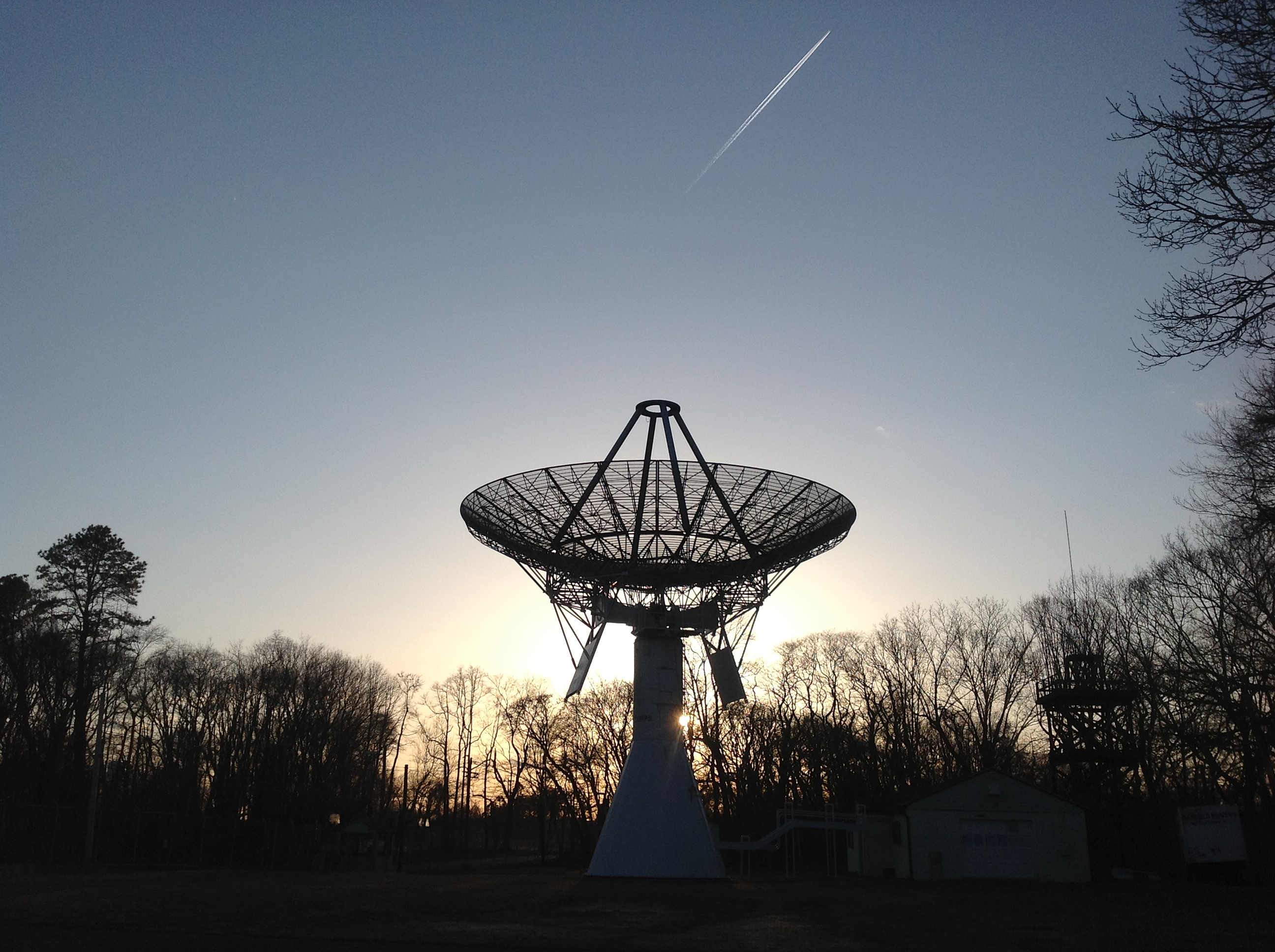
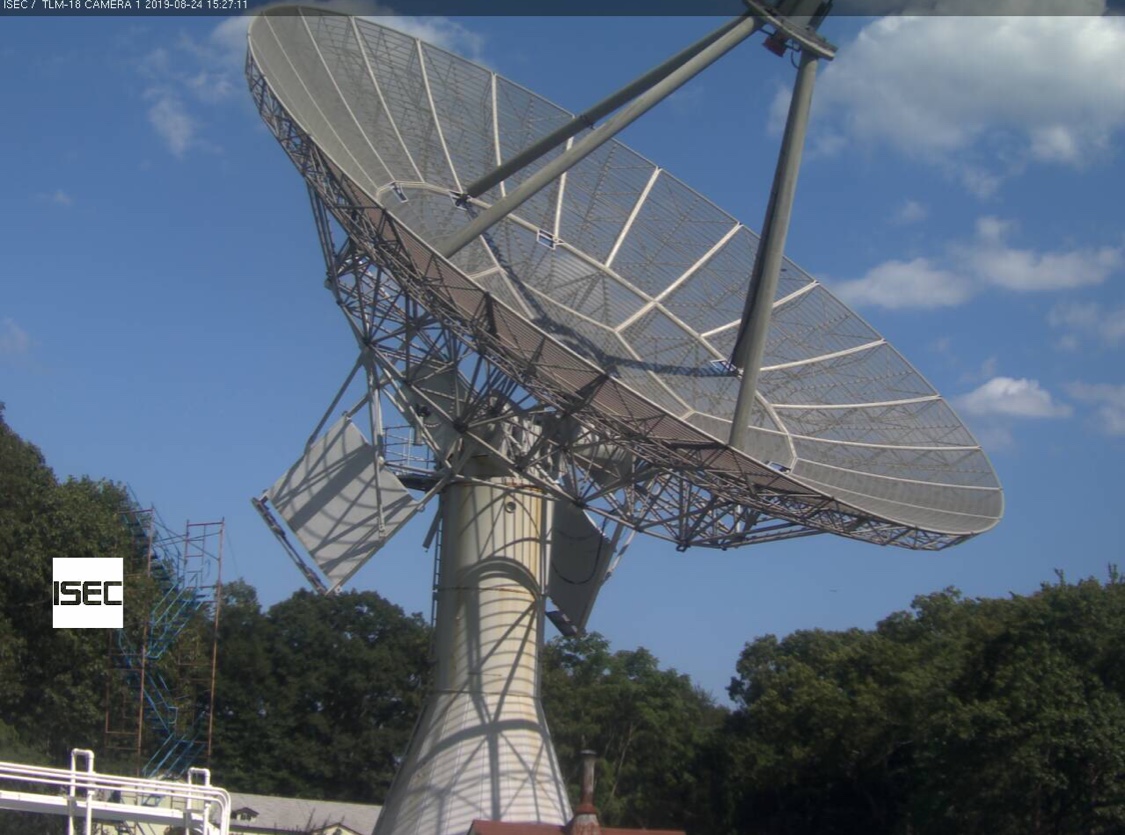
The InfoAge Space Exploration Center, located on the grounds of the TIROS 1 ground stations in Wall Township, New Jersey, have restored an 18.2 meter dish antenna to service for radio astronomy and EME.
The dish was thoroughly demilitarized by the US Army prior to their departure from the property. However our volunteers have returned it to service as a radio telescope, with the ability to do EME on 1296 MHz. The retrofit included a entirely new control console, data, power systems, and RF infrastructure.
We are seeking amateurs within a reasonable commuting distance who are willing to act as docents one day a month to demonstrate EME under the W2CDL call-sign, and generally interpret the other exhibits at the location for visitors.
We are extending an invitation to the local amateur community to participate in the project, the requirements are below:
- A willingness to commit to one day per month (12:00 PM to 5:00 PM) to greet visitors and interpret the exhibits for them. ISEC will provide training material, and a senior docent to partner with during their on-boarding.
- A valid general class amateur license in order to demonstrate both amateur radio and EME (or at a minimum the echo off the moon).
- Successfully passing a volunteer background test.
- Assist with technology projects as necessary.
- Join InfoAge as a member https://www.infoage.org/membership/
Email us at
 W2CDL 60 ft Dish
 W2CDL Antenna Closeup