

432 AND ABOVE EME NEWS
August 2026
Volume 55 Number 8
Editor: Barry VE4MA
Production Assistance: Peter G3LTF, Frank NC1I & Bob W1QA
News, Contests and DXpeditions
This newsletter is very large (the biggest yet?) and I want to thank everyone for getting their reports in early and nicely formatted with separate large pixel count photos. It really makes a big job much easier!
The very hot and humid weather has continued in parts of Europe and North America and it has certainly been hard on people, equipment and has had some effect on EME activity levels. There has been a really good level of activity on and off of the moon.
There was excellent activity for the first leg of the ARRL EME contest on 13, 3 and even 6 cm. It was good to concentrate the activity by announcing our intended operations. I expect that there may be more activity on the higher bands and coordination is even more important there. The ARRL contest rules do not restrict the use of other communications means during the contest period, but given the weather challenges with changing equipment during the daytime heat, it would help a lot if stations would once again announce in advance their operating plans on the email reflectors or on HB9Q.
There has still been a great deal of activity outside of the ARRL contest bands, spurred by the good conditions and high Northern declination. G3YEG has completed a 432 MHz QSO with 4 Watts and a single 9 element Yagi. The impact of the “Cooker” dishes continues with many more stations becoming active or building towards it. The C37EME DXpedition certainly generated a lot of activity and to some extent did detract from the contest activity. There is a lot of good reading in the station reports and articles below!
Off Air Activity
Although the activity may have been intense on the air, many operators have been busy with software and hardware creations that are of interest to many of us. I want to mention a few:
• KA1GT has been busy and has a software item called “EMETest” which is a set of programs that may help in evaluating EME systems via Echo Testing and Y-factor measurement (sun noise, ground/50 ohm noise, cold sky noise and moon noise. He also has a couple of other interesting items in his report below.
• OZ9AAR SimpleCalc program seems to be widely used now. It provides some of the functionality that the VK3UM EMECalc program but includes some additional features. See SimpleCalc
• KB2SA continues his work on high efficiency feed systems for Cooker and other small 23 cm dishes. He has an excellent document showing various f/D options at: KB2SA Optimal Feeds
New Frequency Grab
The FCC in the USA has released a further proposal for new commercial satellite allocations that overlap existing amateur spectrum. This time the 900 MHz, 2.4 GHz and 5.7 GHz bands are the topic. See the following for more information:
RSGB Headlines
RSGB ARRL's Reply
Solar Eclipse
On August 12th there was a total eclipse of the sun along a path running from Greenland to Portugal. There are some interesting reports on this event provided by G3LTF and G4CCH (see below).
Contests
ARRL International EME
The 2026 ARRL International EME contest will continue in September. It runs for four full weekend 48-hour periods (0000 UTC on Saturday through 2359 UTC Sunday). The remaining dates for 2026 are:
Weekend 2: 2.3 GHz & Up:
September 5-6, 2026
Weekends 3 and 4:
50 to 1296 MHz - October 31-November 1, 2026; November 28-29, 2026.
The complete rules can be found at https://www.arrl.org/eme-contest
As mentioned earlier we can do a better job of coordinating activity by indicating our plans on EME email reflectors or on HB9Q before and during the contest period for this contest. There is nothing more frustrating than to get set up to operate on one of the microwave EME bands in the middle of the night and no one else shows up. With the weather situation it can be very difficult to make quick band changes!
DXpeditions
C37EME Andorra – There was EME activity with the URA (Unió de Radioaficionats Andorrans) call sign C37EME from locator JN02sk in August 2026. See the C37EME Article below.
ER/EA8DBM - Alex will be active from Moldova from KN37 on 144, 1296, 2320 MHz EME from September 5th to 9th.
The first two days will be on 1296 and 2320 MHz (just in time for the ARRL EME contest). Then on the evening of September 6th, he will switch over to 144 MHz for a couple of days. If he can find a suitable QTH, he might also get on the air before the contest on September 3rd or 4th.
T7 San Marino - Walter IW2BNA and Adelio IZ2DJP are considering returning to San Marino and operating on 5.7, 10 and 24 GHz. They are also considering a 5 band operation at a new DXCC. Please see IW2BNA’s report below and consider providing the requested feedback if you are interested.
DL1SUZ Uwe
On July 12th I tried to deliver some points on CW for the 9 cm DUBUS-contest and I did QSO DL4DTU, G3LTF, OE9ERC and DB6NT.
The next day with all mode activity on 9 cm it was better and I worked in Q65: LZ4OC#25 (DXCC #14), PA0PLY, SP3XBO #26, VE4MA #27 (DXCC #15), VE6TA #28, W5LUA, and PA0BAT #29.
I was running 75 W into a 3.2 m mesh dish with a simple septum feed. 9 cm is a nice band for EME. It's a real pity that activity is so low.
Thanks to Jan PA0PLY for organizing the activity days on the rarely used bands.
DL6SH Slawek
I have been only partly QRV, with the very hot temperatures outside and some reconstruction activities at my house but on August 8/9 2026 I was QRV on 3 cm:
CW QSOs: OK1DFC, SP6JLW, # WA9FWD, OZ1LPR, ON5TA, IK3MAC, OM4XA
Digital QSOs: OK2AQ, PA3CSG, KM0T, SA6BUN, N1AV, # YO2LAM, IK6CAK, # AC0RA, # W3SZ, LZ4OC, IK3GHY, IZ2DJP, # KN0WS, VE4MA, PE1CKK, OH3LWP, OE9ERC, # WB6CWM, ON4CDU, and # DF5MO.
My station is a 2.4 m Andrew offset dish, Kuhne MKU10 G5 Transverter with a GPS based clock, 60 watts Kuhne SSPA with WR90, DU3T Preamp WR90 and waveguide switch which are all directly mounted at the feedhorn. My IF is at 432 MHZ with an ICOM IC 475, Perseus SDR with converter, RTL-Stick and RSP1a. I have PCs with several monitors and I can see the whole band with the SDR. I can work at 10,368 and 10,450 MHz if needed.
I am driving my SSPA to about 50 watts. It is water cooled with some 50 m of cooling tubes in my garden earth and a cooling compressor in my basement. The maximum temperature was about 27 degrees C at the SSPA this weekend (34+ degrees C outside) and no noise at the dish.
My dish was mounted at a truck in earlier times as a satellite mobile TV station. I am using the original rotators, but converted them to 24 Volt DC motors. This is all controlled by the excellent N8CQ-system with a Raspberry Pi using Linux, a HH12-Inclinometer and MAB25 azimuth encoder. I have installed 6 variable supports from farmer trailers and some concrete blocks to shoot over my house and the neighbour’s fence to the moon.
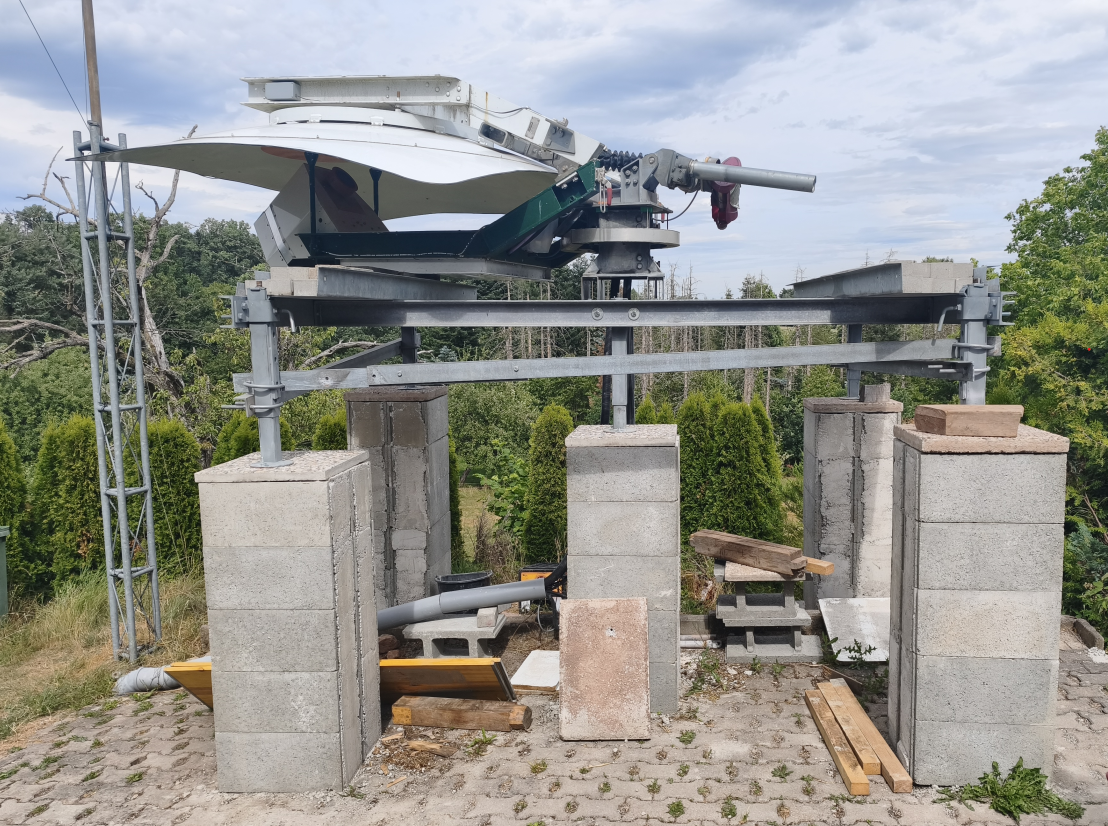 DL6SH 2.4 m Dish
F6KAR Radio-Club CERN
F5JWF, F1TJJ, ON4MU and F5AYE
Since 1988, there has been an amateur radio club at the European Center for Nuclear Research, of Higgs Boson discovery fame. Recently, a 4.3 m dish was installed and our first EME contacts took place in July 2026.
The dish comes from a C-Band weather radar installation and has been relocated on the premises of CERN near Geneva. The dish is fitted with harmonic drives and brushless motors, providing fast and precise actuation.
F1TJJ and F5JWF developed a tracking system made of dedicated hardware, which manages the indexed incremental sensors and the motor controllers, and a dedicated software suite combining source position calculation with an SDR part allowing fine calibration of the dish through sun (or other objects) scanning routines.
The 23 cm RF part was built from bits and pieces provided by F1TJJ, F5AYE, F5JWF, HB9DUG and ON4MU and consist of a OK1DFC septum feed, a G4DDK LNA and a 120 W single LDMOS DF9IC PA. The radio-club already owned an ICOM IC-9700 which we disciplined with a 10 MHz OCXO (using the ICOM the auto-calibration routine)
The quality and size of the dish will make it a perfect candidate for DSN and possibly radio astronomy experiments. An 8.4 GHz receiving system consisting of a septum feed with dual polarization, LNAs and a downconverter is already close to completion. In the meantime, and in spite of a not yet optimized system, we did some tests and had some fun during last moon perigees (one being the ARRL 13 cm and up contest, meaning that quite a few players were on the “wrong” band with the “wrong” feed!)
F6KAR JN36AF had new initial QSOs in Q65, Sent/Received on July 15th, 2026 from 13:18 to 14:18 UTC:
KA6U -12/-21, DL1AT -11/-13, KD5CHG -10/-14, ES3RF -08/-13, and R1NW -14/-13
On August 7th, 2026 from 10:17 to 10:28 UTC:
OK1UGA -08/-12, and OH3LWP -11/-19
On August 8th, 2026 from 07:24 to 11:23 UTC:
IK2DDR -06/-07, ON4AOI -05/-05, F4BLE -14/-18, ON5GS -08/-05, PA3FXB -10/-13, RX3DR -12/-16, UA9FAD -14/-09, PA0TBR -06/-13, ON4QQ -12/-12, UA9YLU -15/-12, G0LBK -11/-10, HB9Q +03/-05, NC1I +00/-04, F5KUG -07/-11, YU1DA -10/-13, OK2DL -01/-08, C37EME -20/-21, PA3BYV -15/-15, DL8FBD -10/-13, OZ9AAR -07/-07, ON4BCB -05/-07, DF2VJ -11/-15, ES3RF -08/-13, DK5AI -10/-19, N4BAA -10/-14, K6EME -15/-18, DJ7FJ -12/-13, DC1RDB -18/-22, N0LWF -11/-17, A71AW -15/-16, UA1ALD -09/-15, KC2HFQ -17/-20, KB7Q -14/-19, LA3EQ -17/-16, G4SDG -19/-18, KB2SA -13/-21, WI0JK -20/-20, KG0D -3/-17 and W2LPL -14/-17
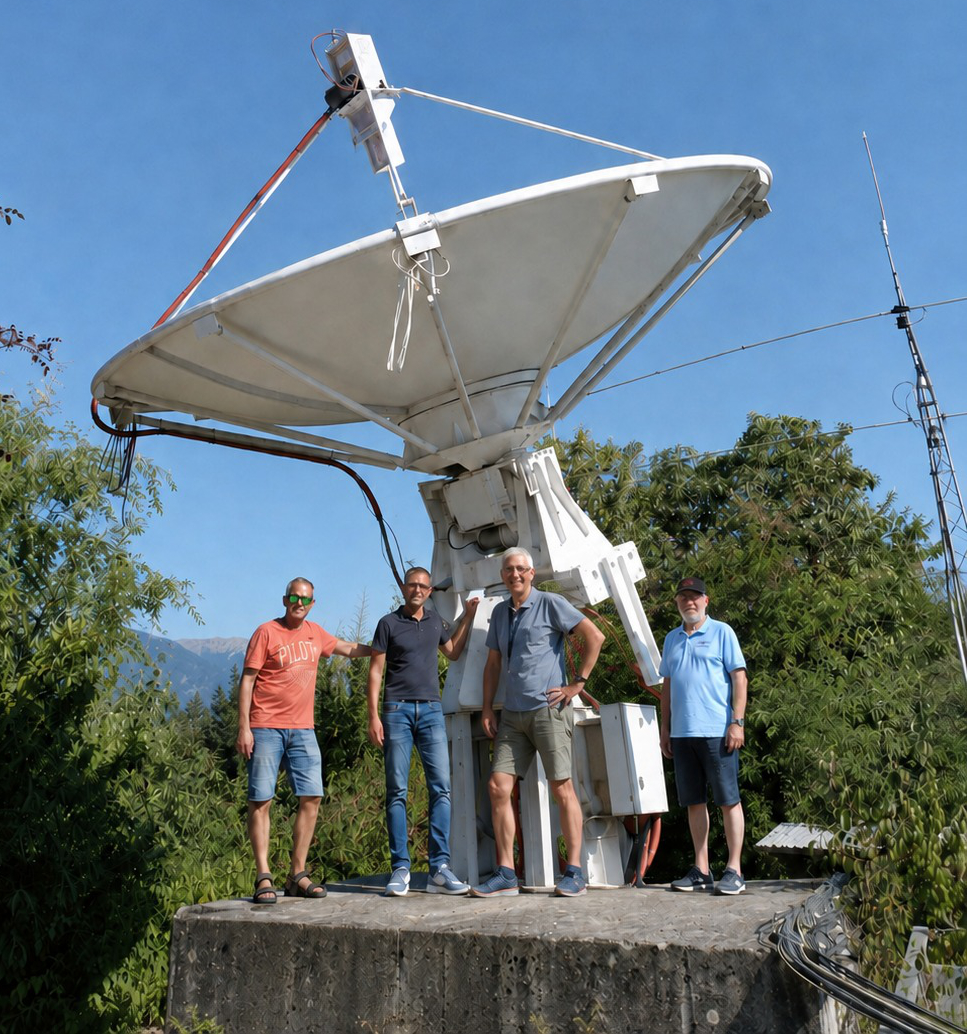 F6KAR Dish with F5JWF F1TJJ ON4MU F5AYE
G3LTF Peter
I had some problems with the 13 cm PA when preparing on August 7th which turned out to be a broken SMA connector and a burned out load in the output coupler. I repaired the SMA but the coupler will take longer to fix and so I was running at about 150-180 W instead of the normal 280 W.
It also meant I was not QRV on 8th August until 09:00. I then worked on CW: G4CCH, OH2DG, DF3RU, PA3DZL, OH1LRY, SP3XBO, SV3AAF, WA6PY, VE4MA, SP9VFD, VE6TA, OH3LWP, OE9ERC, OK1DFC, OK1KIR, KL6M, and N1AV #168 and then on 9th August, DG5NFF #169 for a total of 18. The weather was very kind with no wind, I think the only CW op that I missed was PA0BAT. Thanks to all for the nice CW QSOs. I then changed the feed to 23 cm to try and work Alex, C37EME but although he was a good 539 level when working digi he was much weaker when we tried CW and although I copied both calls he could not find me, so I am still stuck on 91 DXCC.
I then turned my attention to the major solar eclipse on August 12th trying to make a recording of sun noise on 3.4 GHz. Sun noise level early in the day was 17.2-17.6 dB at SF 100. The eclipse was quite close to the horizon here and my dish grounded before the completion but I got a reasonable set of results to just beyond the minimum, (once again I screwed up my Spectravue settings for recording csvs). I attach the preliminary result, but I have more work to do to produce the comparison to theory as I did in 2015 (see Orebro 2015) and make an estimate of the sun’s diameter at 3.4 GHz.
For the next leg of the ARRL I will start on 6 cm (6 m and 40 W) and I will try to be on for the JA / VK window. On 6th I will be on 9 cm (6 m dish and 90 W), I don’t intend to operate on 13 cm unless there is a specific request.
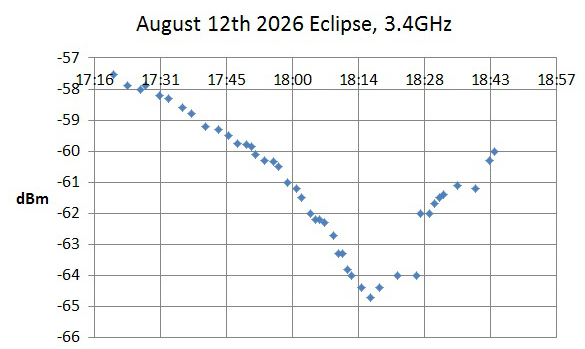 G3LTF 3.4 GHz Sun Noise During Eclipse
G3YEG Nic
Although there has been quite a bit of activity over the last 2 months, again the dreaded EU Faraday lockout has made my task of finding new station decodes rather difficult. Even setting the antenna for vertical polarization has only added two new decodes but those have been quite rewarding and interesting. At the beginning of August my grand total of EME QSOs surpassed 100, over 80% of these using just the trusty 9 ele at high moon elevation - the antenna is now over 25 years old! My total of decoded stations is now 59 with over 80% achieved using the 9 element, analysing the received levels obtained it seems likely that all bar one of the decodes (K5QE using all 21 elements ) could probably have been achieved using the 9 element!
The two new decodes were both during the C37EME expedition to Andorra with the ant set vertical at 185 deg. azimuth and 65 deg. elevation apart from the first day when I used 15 ele horizontal at 180 deg. azimuth and only 30 degree elevation which I knew was far too low. However on the 6th August I could quite clearly see the C37EME signal peak at 1500 Hz on the spectrum display with very little painting on the waterfall. On August 7th with the antenna set to vertical I managed my first decode of -30 dB and another of -29 dB, unfortunately I was not able to be QRV for much time that day.
On August 8th things improved dramatically as the moon passed 160 degrees (Moon / antenna were fully aligned at around 07:50 UTC with a best decode of -23 dB and quite obviously Faraday changed to present the C37EME signal vertically on the Isle of Wight!! As you can see from the screen shot (a re-run of saved files later that day) I managed a QSO with Frank NC1I at 0803. On the 8th August I also added a new decode of DL4ZAG at best of -27 dB. Kurt is one of the smallest stations that I have so far managed to decode. On the 9th the same Faraday shift beyond 160 degrees was quite clear to observe but the best decode of C37EME that morning was -25 dB. On Sunday even though signals were not as strong, I was on occasions seeing stations calling C37EME on the waterfall remotely on my phone and advised the expedition of their approximate frequency.
As yet I have not managed to re-run all of my saved files from the expedition weekend so there may be other signals waiting to be discovered. However my analysis so far has discovered something new with WSJT. I normally have to set the station callsign in the DX Call box to decode any signal below -26 dB but while looking for NY1V and with that callsign in the DX Call box I found two reliable decodes from both DL4ZAG (initial decode at -30 dB) and S56P (initial decode at -28 dB). The waterfall and spectrum display were much as I would expect for these very low levels, so it's an unusual discovery. I have fed this observation back to the WSJT team for their thoughts.
On August 10th I had another remarkable QSO with Frank NC1I with my antenna still in the weekend's position, I received Frank at -32 dB and Frank decoded me at -27 dB. This was when the moon was at 140 degrees azimuth some 45 degrees out! In effect the antenna was over elevated by 45 degrees (in the antennas vertical plane) - which is usually very bad news for my TX.
Following our success on August 8th with my antenna miles off the moon, on the 10th our two QSO's were even better!! Our first was with the 9 element antenna still in its vertical position from the weekend and at just about the best position time, Frank saw one of the clearest paints he has seen from me on his waterfall and decoded at -23 dB.
I suggested that I try a QRP QSO and I adjusted my TX power remotely on my phone by reducing the TX power slider on WSJT to what I thought would be around 10 W at the antenna. After the TX cycles started I checked the 9700 and found that the power was actually only down by about 3 dB (25 W at antenna). I quickly reduced the 9700 TX power down to 20% of full power. Frank started his decodes at -27 dB, then missed one decode and then saw a -33 dB decode and we successfully completed the QSO. When I rechecked the TX power I discovered that I had actually reduced the TX power down to just 8% of full power which is 6 W at the 9700 and just 4 W at the antenna (for my last 3 TX cycles). So we have now managed to have most of a QSO with only 50 W ERP. Contributing to this must be the low degradation at 0.4 and my roof which has been baking itself extremely dry over the many heat wave cycles in the UK.
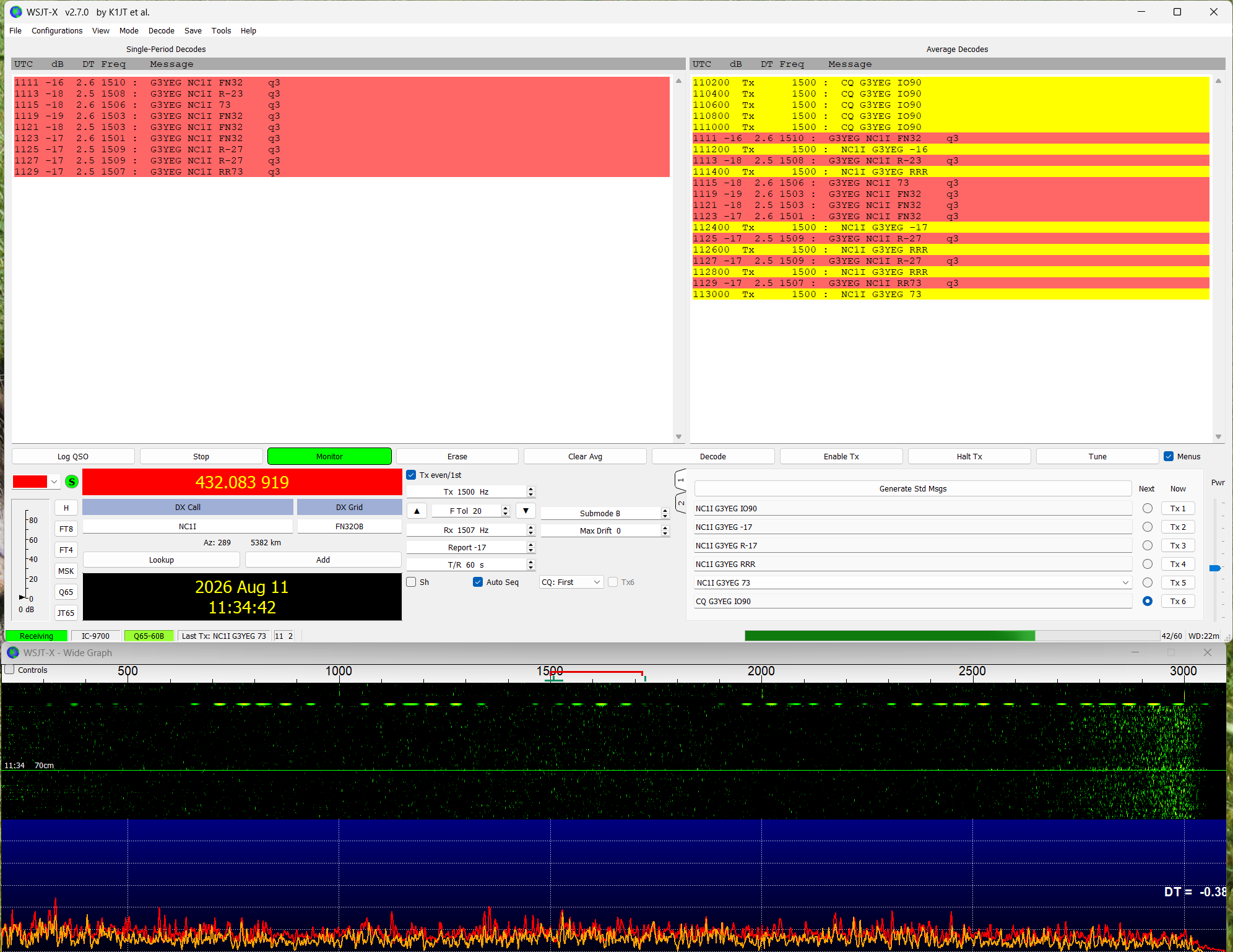 G3YEG NC1I 4 W QSO Screen
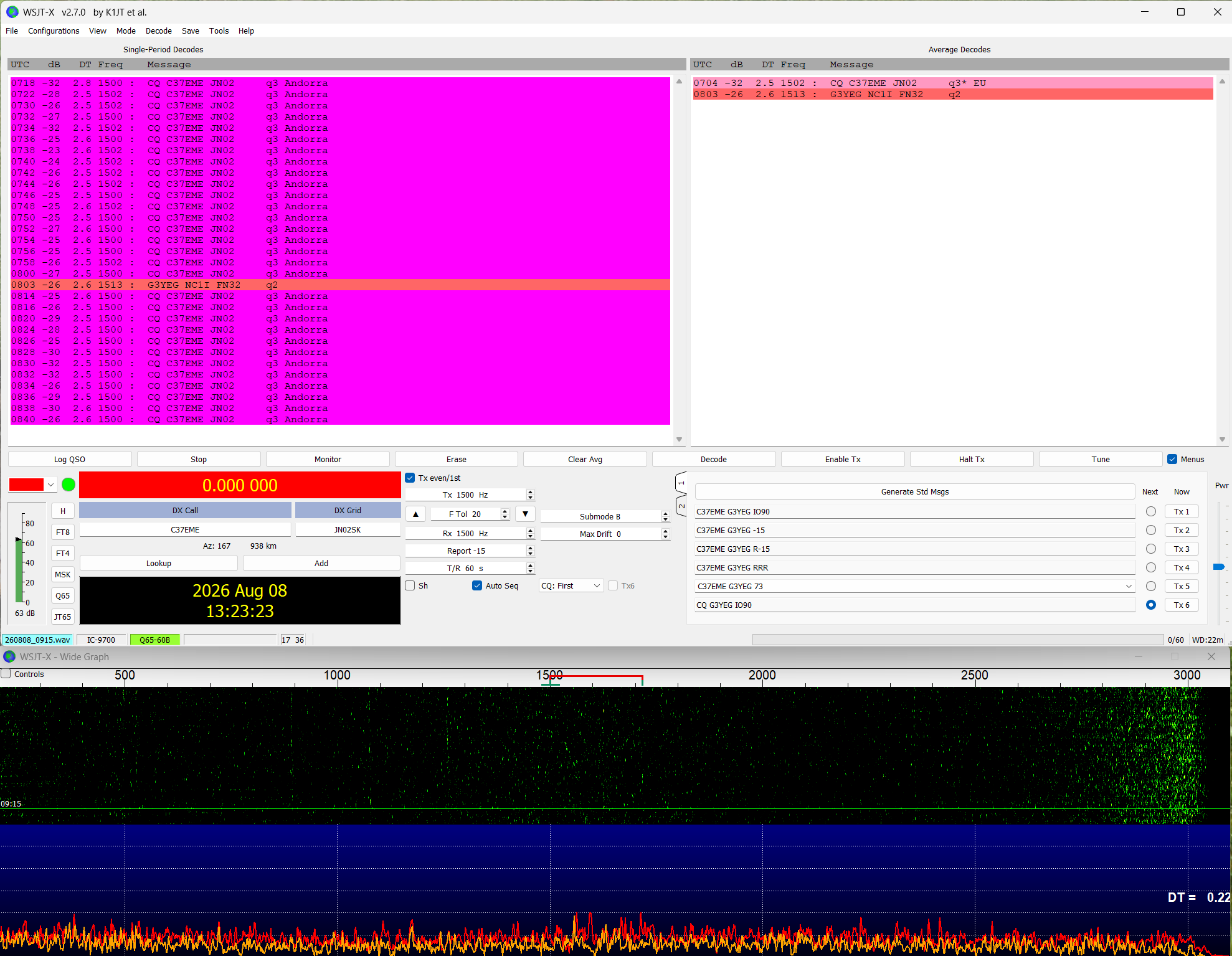 G3YEG C37EME on 2026-08-08
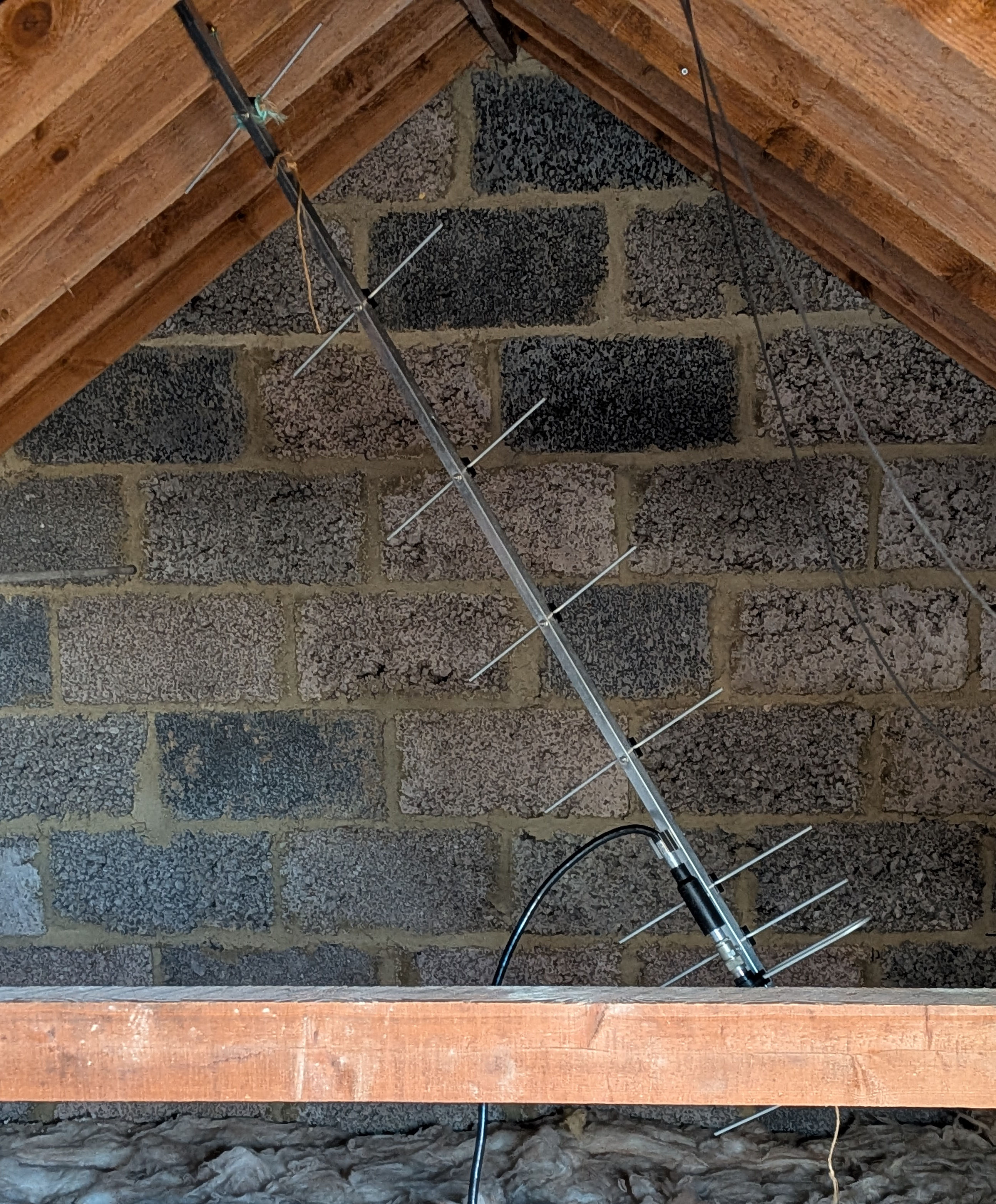 G3YEG 9 element Yagi in Attic
G4CCH Howard
23 cm
On July 17 KV7E, July 18 ZS4TX CW for Initial #596, N8XS for digi Initial #743, IK2HAR, KE7NR, HA5UA, and July 19 G4SDG for digi Initial #744.
On July 20 NY1V, July 22 OE1ISB with a 1.9 m dish and 10 W for digi Initial #745, GW4ZHI
On August 07 EA/RD4D for digi Initial #746, C37EME for digi Initial #747 and digi DXCC #145, VA3MW for digi Initial 748, and NJ2R for digi Initial #749.
13 cm
I was active on 13 cm during the first leg of the ARRL EME Contest. Activity was lower than expected. I made 15 x CW QSOs and 10 digi contacts. I won’t be on for the next leg as I will be away that weekend.
On August 08 DG5NFF for digi Initial #071, SV3AAF CW, OK1KIR CW, 4Z5LV, C37EME for digi Initial #072 and digi DXCC #034, G3LTF CW, WA3RGQ, G4RGK, VE4MA, OH1LRY, WA6PY, VE6TA, SP9VFD, OH3LWP, OK1DFC, KL6M, VE4MA, and N1AV CW Initial #148.
On August 09 IK3COJ, SP3XBO, DG5NFF CW for Initial #149, ON5QT, ON4CDU with a 1 m dish and dual band ring feed for digi Initial #073, SP6JLW, and KN2K.
Solar Eclipse on 12 August
I observed the eclipse on 2320 MHz, and saw a very clear dip in sun noise as the moon passed across the sun. We had a 91% eclipse, not a total eclipse. The chart doesn’t start until 1748 as I had some issues setting up Spectravue to output the results as .csv data. I was using my 5.4 m dish with 17.6 dB Sun noise measured before the eclipse started.
10 GHz EME Project
I am in the very early stages of gathering equipment for 10 GHz. Initial tests will be on my existing 5.4 m mesh dish with a 0.5 f/D. I have a WR90 WG switch coming, but right now I have no other parts yet.
I want to build what I can, and have a few parts 10 GHz mixers and a MAX2870 PLL, and would like to get to the stage soon where I can RX on 10 GHz EME. I have a Maclean 670 LNB and will either modify this with an SMA input to connect a loaned W2IMU feed, or adapt the existing WG input to connect to a W2IMU that I will build myself.
I don’t have a WR90 flange for the feed, so if anyone can help me, it would be appreciated.
I will need all the usual stuff like LNA, and SSPA.
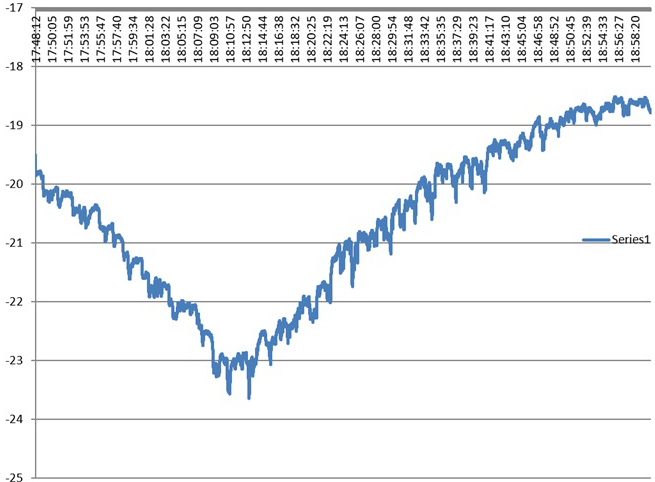 G4CCH 13 cm Eclipse Sun Noise
G4RFR John (G0API)
The Flight Refuelling ARS, G4RFR, were active on Sunday 9th August on 10 GHz using Q65. As the contest coincided with our Annual Hamfest we decided to operate in the same meeting room as we were raising funds for Microwave Beacons and a G3YGF Legacy fund for local RF projects. This imposed a block on CW/SSB operation due to the high noise floor.
However a total of 26 2-way QSOs were made between 07:47 and 13:00 UTC. The main object was to demo to visiting Amateurs the wonders of EME operation, all be it when using a 3.65 m diameter prime focus, 0.43 f/D dish under full auto tracking and fully GPS referenced locked and 200 W at the feedpoint. The echoes averaged 19 dB, with 16.5 dB of Sun and 3.2 dB of Moon noise. We did have a report via HB9Q that our signal was decoded on a 45 cm dish, so we guess we were getting out!
Since losing our friend and Mentor, Julian G3YGF, last December, the group have had the interesting part time job of sorting out his house and its collection of RF objects. Approximately 7.5 tonnes of quality RF test equipment to be removed from the upstairs rooms alone and then there was the lounge, kitchen, outhouse, and large garages. Add in a 60 foot Versatower mast and antennas and 10 various sized parabolic dishes and you can see where the time goes.
When we have met for our normal Wednesday PM EME sessions, and we have completely redesigned our control systems, which now uses a Pluto 2 as the prime mover. This allows amongst other things, the ability to have split TX/RX frequencies, which with our LNB RX at 618 MHz IF and the DL3WDG 144 MHz based TX module, saves on down conversions, etc.
We have also finished our new 24 GHz head unit, which has 25 W TWT output driven by a 1296 MHz TX and a 144 MHz RX IF from a DU3T waveguide guide based LNA via a 4 port WG switch, with a Super VE4MA feed directly on its input. The sky/ground performance is in line with expectations but we have issues with the 3.65 m dish surface and may have to resort to a smaller antenna or more accurate antenna.
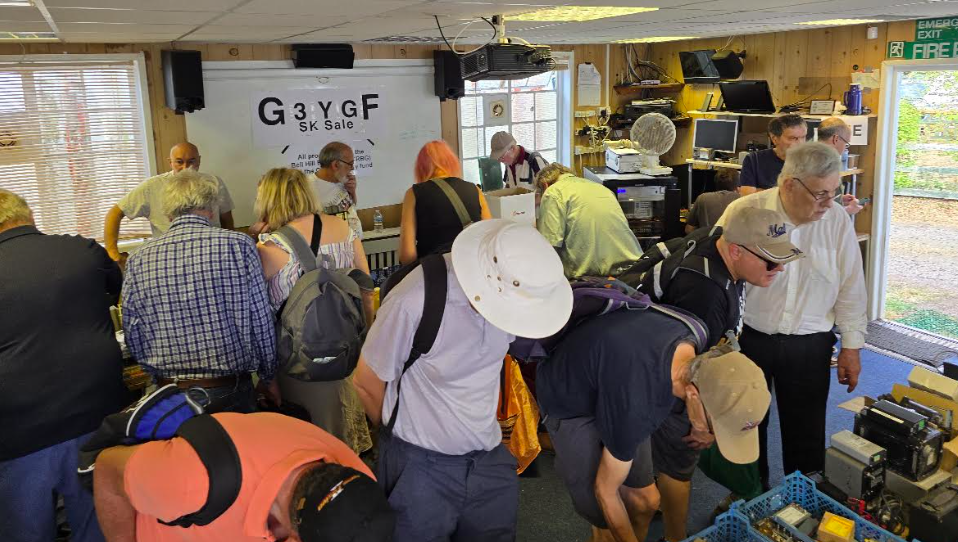 G4RFR Hamfest in Operating Room
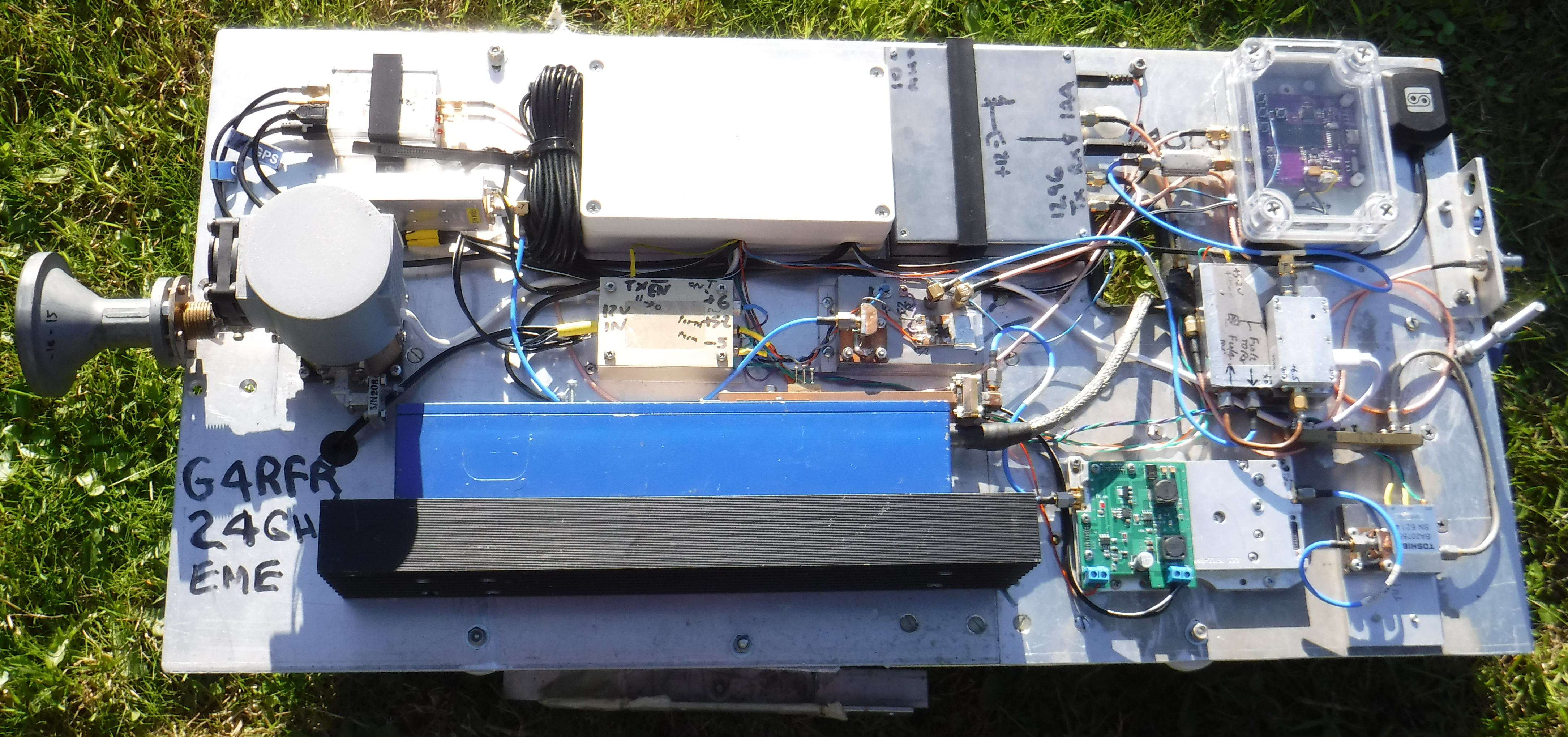 G4RFR New 24 GHz Rig
G4RGK Dave
I am just getting back to EME after family issues. In October last year my wife developed a serious heart condition, which effectively curtailed my activities and stopped me getting to Tenerife in the summer. Thankfully she is now over it and recovering well.
As a result, my operation this year has been restricted to trying to work the various expeditions that have appeared on 70/23/13 cm.
I did manage to get on for the first leg of the ARRL microwave weekend on 13 cm. Weather conditions were good and everything seemed to work well despite the profile on my dish, which is a stressed reflector being quite poor these days.
I worked the following: OE9ERC, OK1DFC, OK1USW, PA3DZL, OH1LRY, OH3LWP, PE1CKK, F1RJ, SP9VFD(CW), DG5NFF, G4CCH, PH0V, SP6JLW, and VE6TA. I heard about another 10 stations that I was unable to find calling CQ.
I hope to be QRV for the next leg on 13 cm, I am limited to TX on 2320 but I should have the ability to listen on 2304 with an SDR.
G8RWG Niels
A couple of weeks before the first weekend of the ARRL EME contest I moved my 1.2 m offset dish for 10 GHz to the back garden where I have better moon visibility to the east. I also changed out the transmit and receive coax lines between the feed tray and transverter/SMPS box for some shorter, lower loss cables.
On 7 August, the day before the contest, I measured 0.5 dB moon noise and 7.9 dB sun noise, SFU @ 10 GHz = 315.
On 10 GHz there were good conditions and a high level of activity for both moon passes. The afternoons were very hot in the UK and I kept a close eye on the PA temperature but Murphy stayed away and with everything performing well I completed 34 QSOs in total. I should be QRV for the second weekend and look forward to working the stations I missed.
I had the following QSOs:
7 Aug 2026 - OZ1FF, IK3GHY
8 Aug 2026 - OZ1LPR, OK2AQ, OH3LWP, OK1DFC, ON5TA, OZ1FF, YO2LAM, LZ40C, IK3GHY, IK6CAK, OM4XA, G4HSK, SA6BUN, W3SZ, DL4DTU, IK0HWJ, AC0RA, KM0T, N1AV
9 Aug 2026 - PA3DZL, OE9ERC, DF5MO, OH1LRY (#66), F5JWF, PA3CSG (#67), IW2FZR, G4RFR, UN6PD, SV3AAF (#68), IZ2DJP, NJ6D (#69), PE1CKK, VE4MA, OK1KIR
10 Aug 2026 - DL5CN, PA0BAT, W3TI, G4YTL, SM6CKU
All QSOs were completed using digital modes with a 1.2 m offset dish, 20 W PA and a DU3T LNA.
I6YPK Bruno
It is with great joy that I report my first two contacts at 24 GHz via EME! They were made on August 9 with Gerard PA0BAT using Q65E mode (-14,-15) with an elevation of 41 degrees, high humidity and very high spread. The next day made a second contact with Peter OZ1LPR, again with Q65E mode (-18,-13), a moon elevation of 20 degrees and always very high spreading.
Previously I did several RX tests of the DL0SHF beacon best -11, OZ1LPR best -9, VE4MA best -11, and finally on August 04 I was ready to TX and Mauro IK6CAK received me for the first time!
My setup is a 1 meter dish, W2IMU feed designed by Ivan IZ0JNY, a Spinner WR42 Waveguide Switch, a DU3T LNA, and about 20 W from the RW1127 TWT modified by Hans PE1CKK.
For the setup I adopted a temporary open frame solution, designed so that the output of the DB6NT transverter is as close as possible to the TWT input, and the TWT output is connected to the WG switch via a short section of WR42 waveguide.
My setup will change soon because I need to install a new CAS120 dish. Unfortunately, there isn't much space on my small balcony for a bigger dish 😀
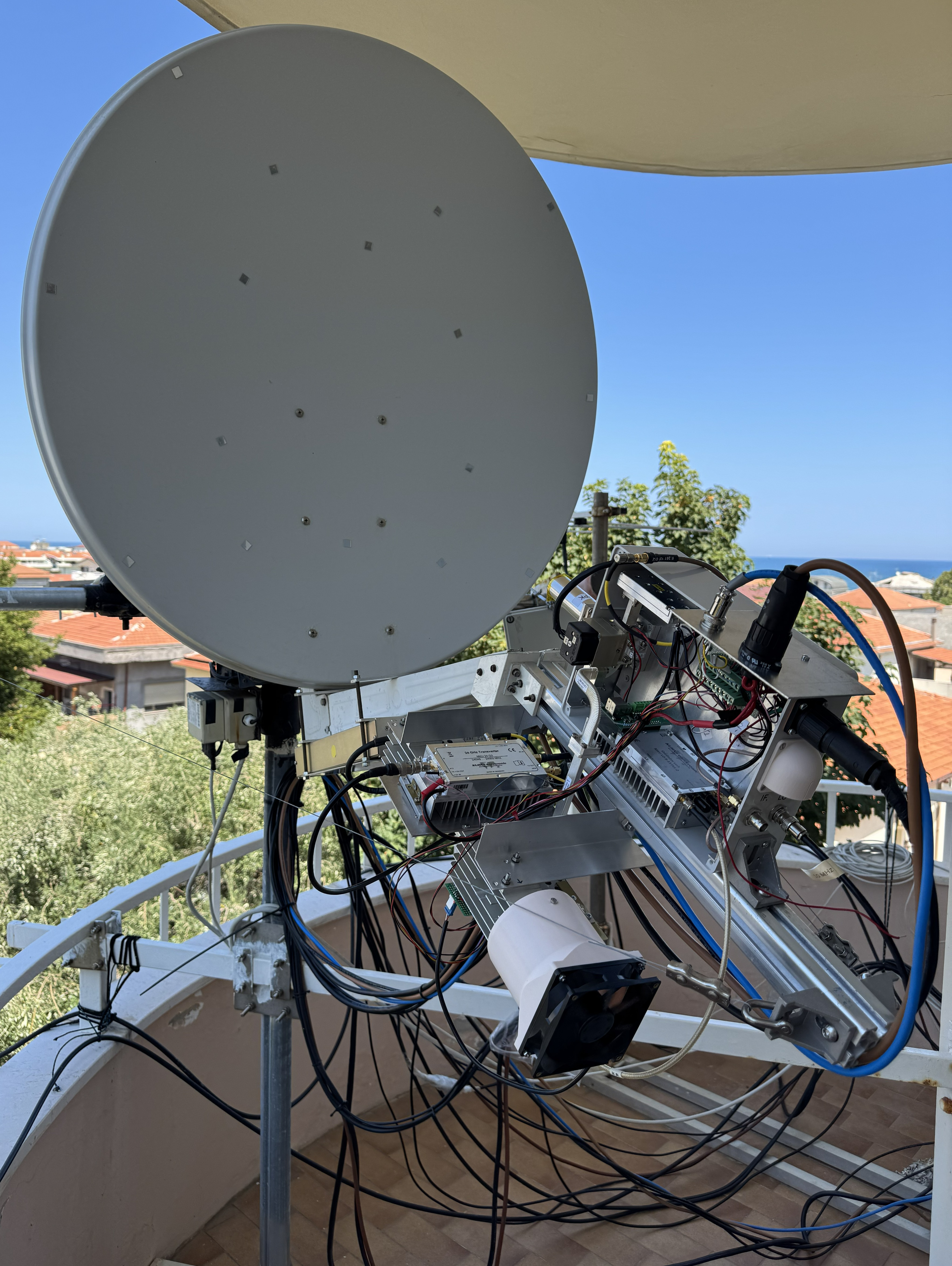 I6YPK 24 GHz TX setup
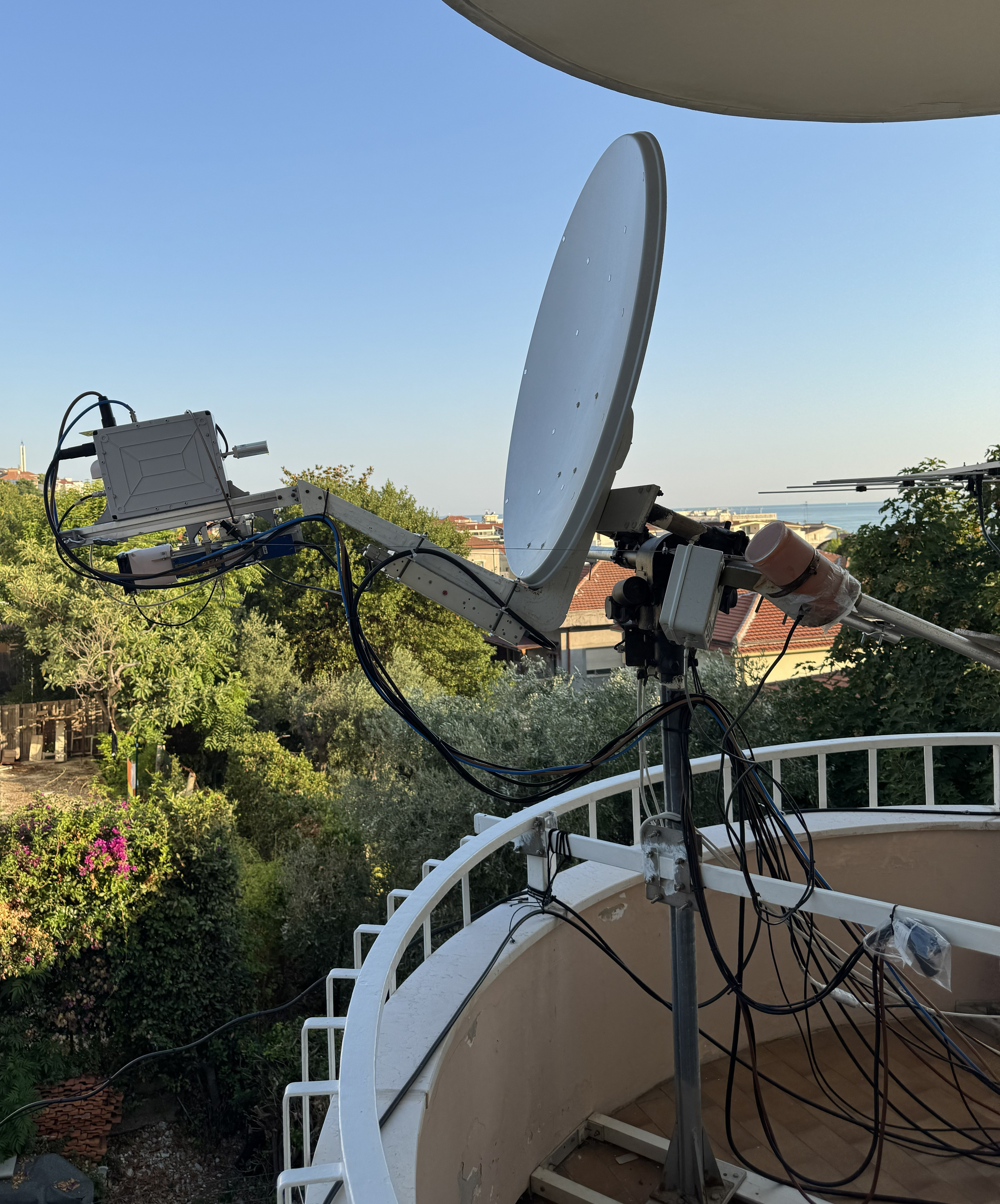 I6YPK 24 GHz RX Only setup
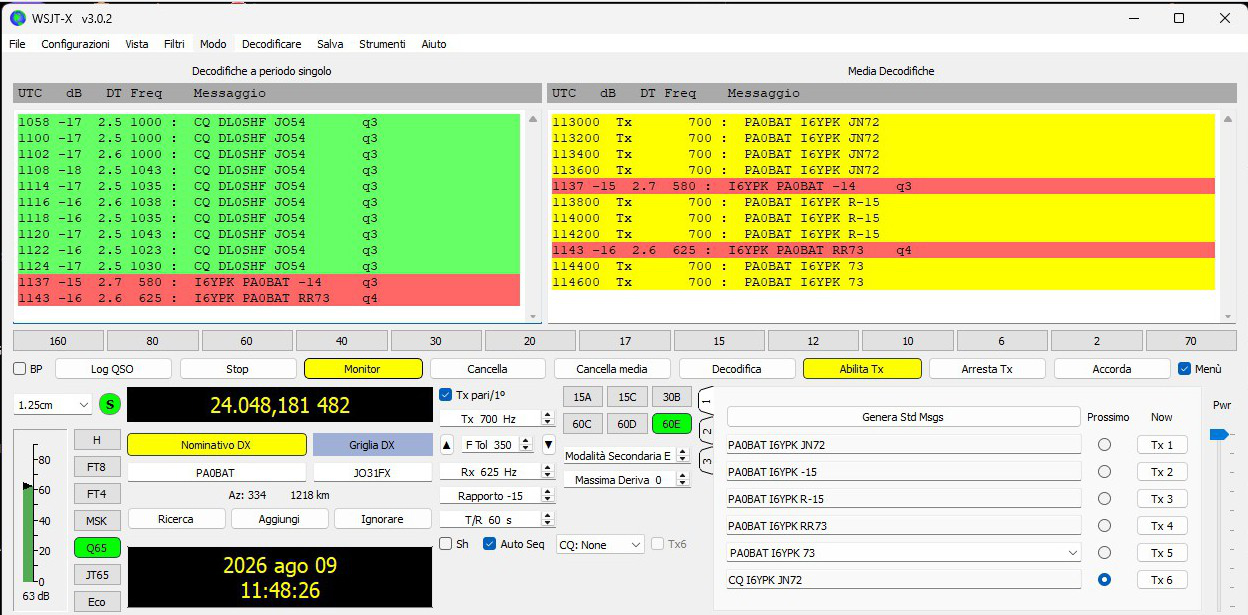 I6YPK 24 GHz QSO with PA0BAT
IW2BNA Walter
Unfortunately I don't have any activity in the ARRL contest because I'm (still) having encoder reading and tracking issues. I hope to resolve this by the second round in September and make some new initials on 3 cm.
I'm writing to talk about the possibility of returning to San Marino for a weekend to see if we can activate the 5.7 GHz band, which had a lot of Wi-Fi interference in March. For 5.7 GHz, we purchased a new DU3T preamplifier with better performance than the old DB6NT from the 1990s. We also have a very narrow band pass filter that we can activate or remove depending on the interference.
I'd like to conduct a survey to see how many stations might be interested in T7 San Marino on 10 and 24 GHz and if there will be interest in scheduling a QSY before the end of the year or early 2027. It can be scheduled but only if there are requests.
We could suggest anyone interested write to my email address
I’d love to connect with more 24 GHz stations, as well as Zdenek OK1DFC, who had rain in March when we were last on 24 GHz.
With Adelio, we're also evaluating an activation on 5 bands for next spring in another DXCC that was never activated on the microwave bands.
KA1GT Bob
1. EMETest
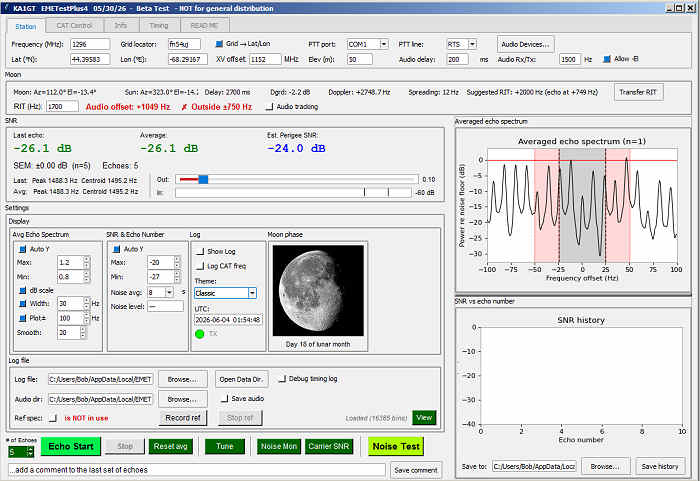
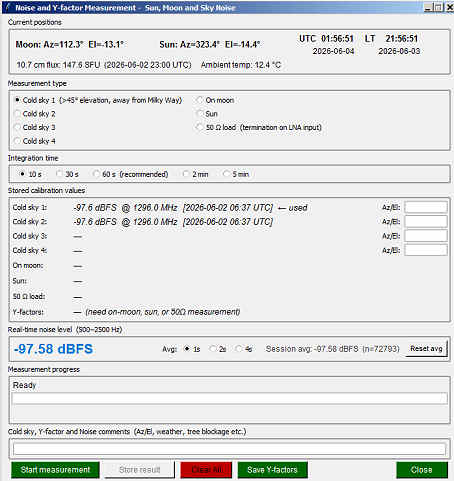
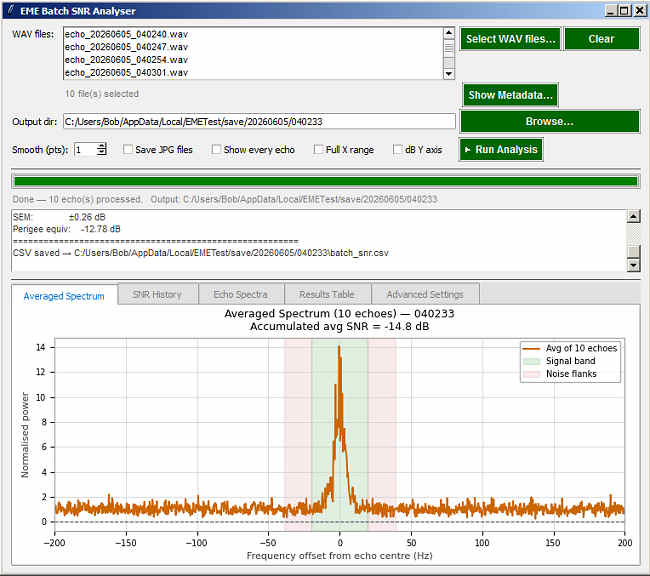
I've written a set of programs which may help in evaluating EME systems via Echo Testing and Y-factor measurement (sun noise, ground/50 ohm noise, cold sky noise and moon noise). An installer and program descriptions can be found on my website at EMETest
Here are some screenshots:
 KA1GT Screen 1
 KA1GT Screen 2
 KA1GT Screen 3
These programs don't do anything particularly innovative, but they are designed to obtain and record the maximum amount of information from these test and save it in files which are easily retrieved for further analysis and record keeping. Note that I wrote these programs for myself and my system, but that should work with most rigs. They do NOT use HamLib, but rather do direct CAT control of the rig frequency; they are 100% independent of WSJT-X, having their own very high precision ephemeris calculations. The Doppler and Libration spreading calculations are good through 76 GHz and can be based on grid position or exact lat/long for use on the higher bands.
Thanks are due to Charlie, DL3WDG for many helpful suggestions, bug finding, beta testing and his general help with this EMETest project.
2. Extending the 1.5 m Cooker dish
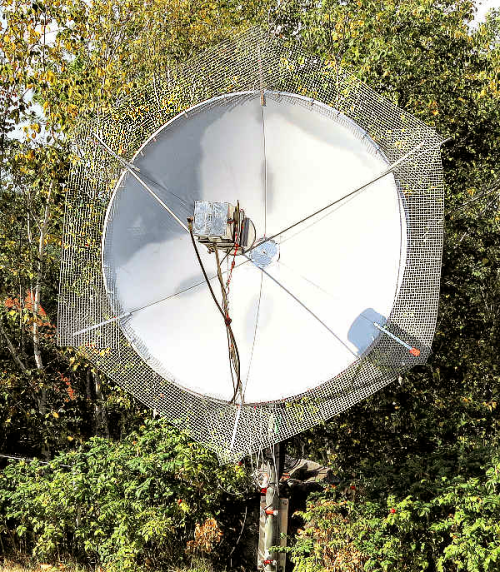
I've been running some tests on an expanded 1.5 m cooker dish, taking it out to something like a 1.75 m dish with a hexagonal shape and an f/d ratio around 0.31. The initial experiments are described on my website at Cooker Extension
Initial testing seems to indicate that the extension does improve performance (though I've only tested it on RX at this point). I've tried several feeds including the OK1DFC short septum (with a 184mm flare) and the performance is good, At an SFU value of around 120 I see at least 10 dB sun noise (equivalent to about 11 dB at SFU 150) and the decoding ability on Q65 signals in in line with this. The cost was around $30 and it can be done in a day. I'd say it's worth experimenting with. The benefits will be more significant if you don't have a "fence" around your dish since the fence would effectively shield much of the extension from RF.
 KA1GT Expanded Cooker Dish
3. Website Articles
I also have a couple of new website articles, one on ground/50ohm Y-factor testing, and one on SMA connector losses. These can be found at: 50 ohm y Factor Test and SMA connector losses
KB7Q Gene
Activity on 23 cm EME continues to be outstanding, it's not unusual to have 25 stations active on good moon days each month. Plenty of folks took advantage of decent weather to get their "cooker" dishes on the air.
In the past two months I added 13 new initial stations. New to my log: KE7NR (-21/-20), W9KW (-25/-28), W2LPL @ FM29 (-26/-24), VE7ZD (-28/-26), WI0JK (-28/-24), PI9RD (-8/1), EA8/RD4D (-18/-17), YU1DA (-21/-24), NJ2R (-24/-25), F6KAR (-19/-14), PA3BYV (-26/-20), DL6ZG (-19/-16), and after two days of chasing C37EME (-25/-26) on the Andorra DXpedition.
All the activity brings my initial count to #278, not too shabby for a 1.5 m dish, WD5AGO preamp, and a homebrew 500 watts SSPA.
KN0WS Carl
I look forward to the ARRL contest each year. Probably 90% of my QSOs happen during that contest. On the weekend of August 8/9 I set up for 3 cm using my backyard dish. It only has about a 4 hour window to the east for each moon pass, requiring an azimuth of at least 83 degrees. On August 8 I had great frustration and was only able to work 5 stations: OZ1LPR, KM0T, G4RFR, DL4DTU and an initial with SA6BUN.
The vertical shaft which carries my dish has an enclosed sprocket and chain system to encode azimuth. Apparently the chain had become rusted and certain links were not tracking properly on the sprocket gear. My azimuth reading was up to 2 degrees off, which was not so noticeable last month on 9 cm, but was a huge problem on 3 cm!
The second moon-pass was better, with me working PA3DZL, IK6CAK, ON5TA, OH3LWP, N1AV, OK2AQ and OK1DFC. I had initials with OE9ERC, PA3CSG, AC0RA, DL6SH and VE4MA. So 17 QSOs for the first contest weekend. All were using Q65D. As usual, there could have been more QSOs if my tracking was better and if I worked everyone I saw. It always gives a bit of confidence after moving dish azimuth 2 degrees to see a dozen signals on the MAP65 screen!
I saw OK1KIR (-8), N7KU / NJ6D (-19) and PE1CKK (-10) and understood that W5LUA was active. Next month I hope to go up north to my 4.8 m dish for 13 cm. I have been cleaning off and refurbishing a few smaller dishes, which might also see action up there on 3 cm, 6 cm or 9 cm, but my inclination is to keep things simple.
I have a 1.2 meter GeoSat Pro dish that I made a portable mount for years ago. It uses a stepper motor with a threaded screw to adjust elevation and a stepper motor to a worm-gear reduction drive to move azimuth. I may take this north next month to try to look west on 3 cm, which I cannot do from my home dish (seen in the background here). This shows a commercial “coffee-can” feed that is not well matched to this dish, but I have just printed up a W2IMU feed to experiment with. The new feed to better match the dish and the printed mount to hold it.
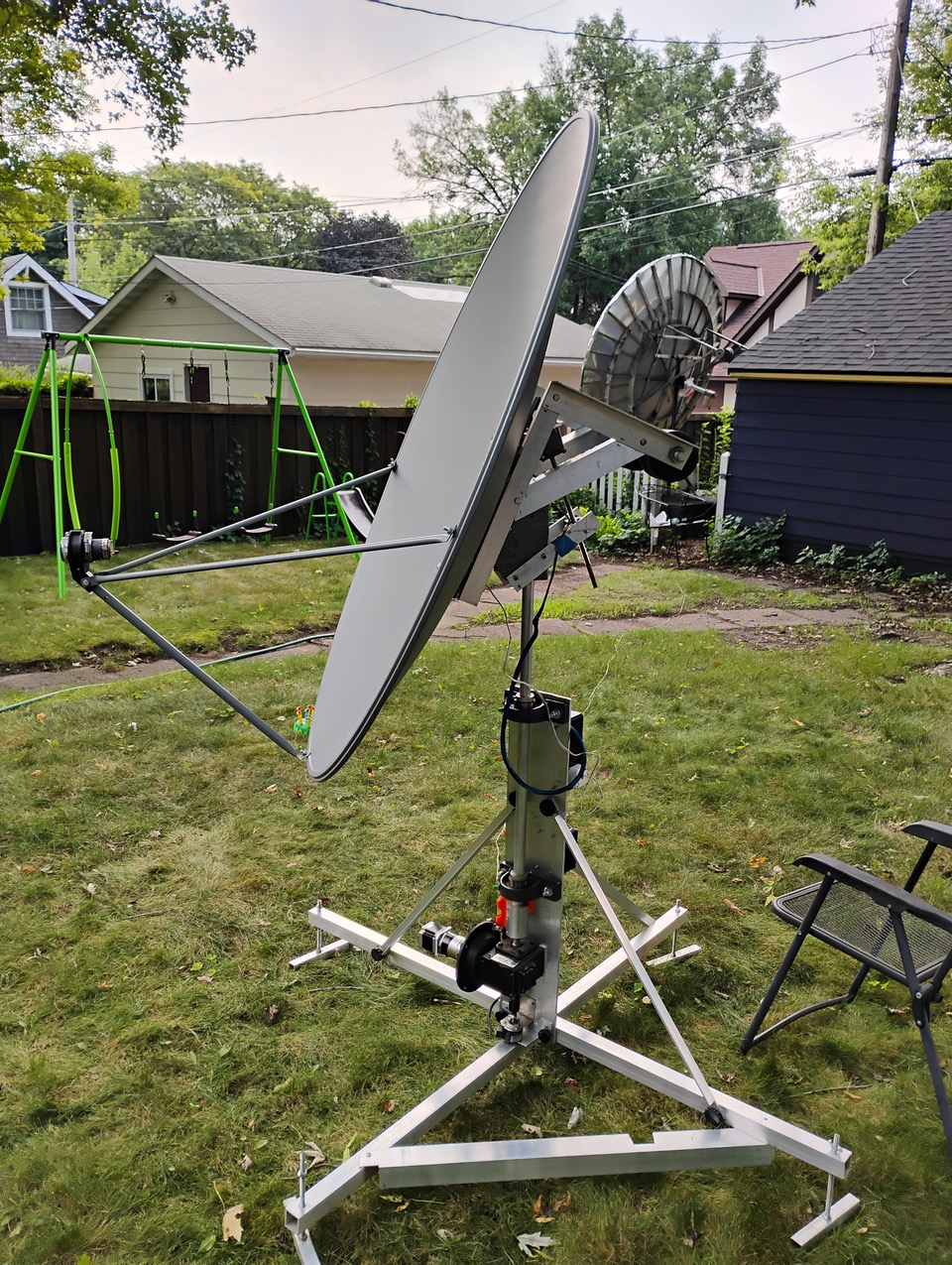 KN0WS 1.2 m Portable Dish
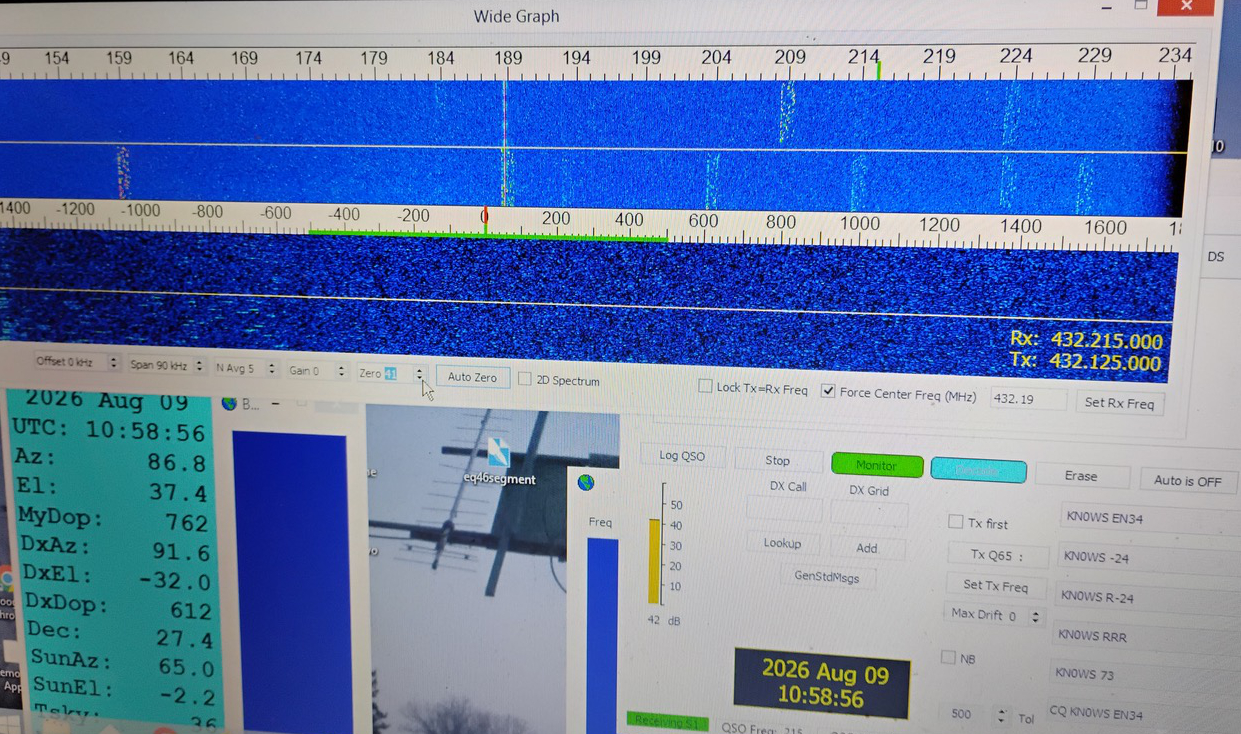 KN0WS 3 cm Signals Seen
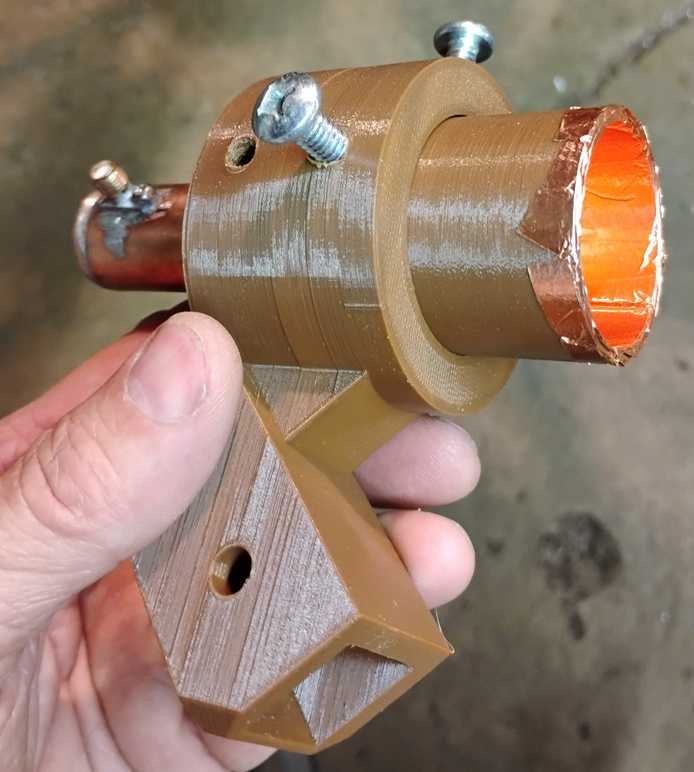 KN0WS 3D Printed W2IMU Feedhorn for 3 cm
KN2K Ray
A few months ago, I completed the renovation of my homebrew 2.3 m mesh dish. The poultry wire mesh was replaced with 6.3 mm square mesh. With about 300 W at the feed, my first QSOs with the renovated dish were made this month on 23 cm using Q65 with OK1UGA, KB7Q and SM6CKU. I heard CQs on 23 cm from C37EME but was unable to work Alex.
The feed for 23 cm this month was the OK1DFC lightweight septum with a 240x100mm flare and a 65x32mm S12 disk. Going forward I will be shifting to a 200x100 flare that should perform slightly better on this dish. (All of my feeds mount on a 32 mm fiberglass center tube. The tube with its feed must be removed to move the dish which is mounted on a rolling platform into the garage. Housing restrictions forbid permanent outdoor antennas.)
For the 2.3G+ contest this month, I mounted the OK1DFC lightweight septum for 13 cm with a 116x100 mm flare attached. The weather was storm-free for several hours each morning of the contest weekend. With 200 W at the feed, I was able to make 15 contacts with WA3RGQ, OH1LRY, F1RJ, DL1SUZ, PA0PLY, OE9ERC, PA7JB, OK1DFC, VE4MA, SP9VFD, N1AV, OH3LWP, DG5NFF, G4CCH, and VE6TA. I plan to be active again on 13 cm during the 2.3G+ September contest weekend.
The 2.3 m dish operates from the east-facing driveway and is stored in the garage. At the lunar meridian I must QRT to keep its side lobes away from the neighbour’s house 30 feet away. Lunar PM operation is via a second dish, a 1.5 m solar cooker on the west facing the patio behind the house. It is blocked by the house during lunar AM and is usable only during lunar PM.
When not in service, the cooker’s feed and support tube are removed and it rolls into the basement. Due to high heat indices (>40°C) and frequent storms of late, there has been no activity with the “rear burner” this month. I hope the weather will improve enough to bring it back on line for lunar PMs in September.
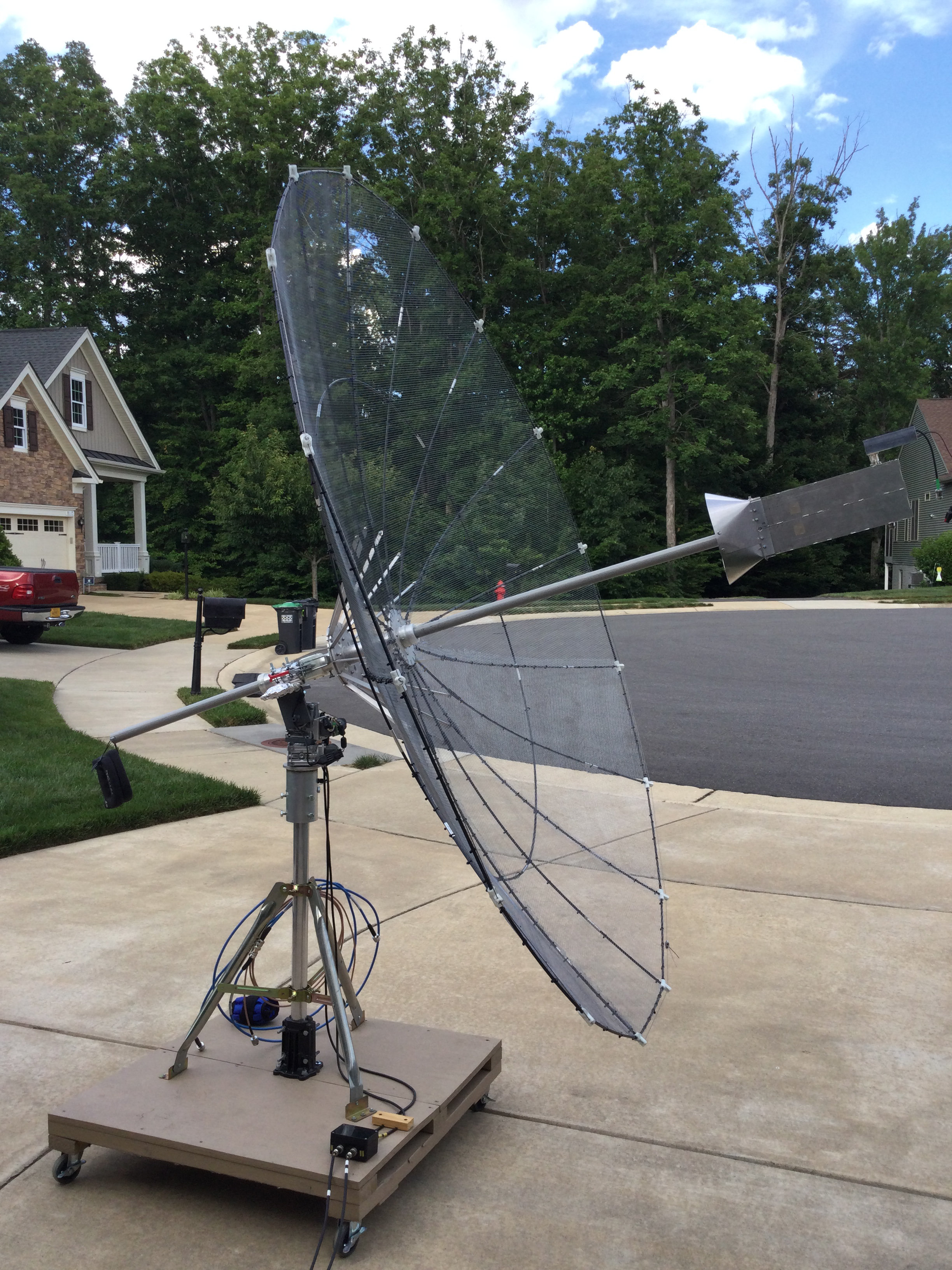 KN2K Eastern Dish
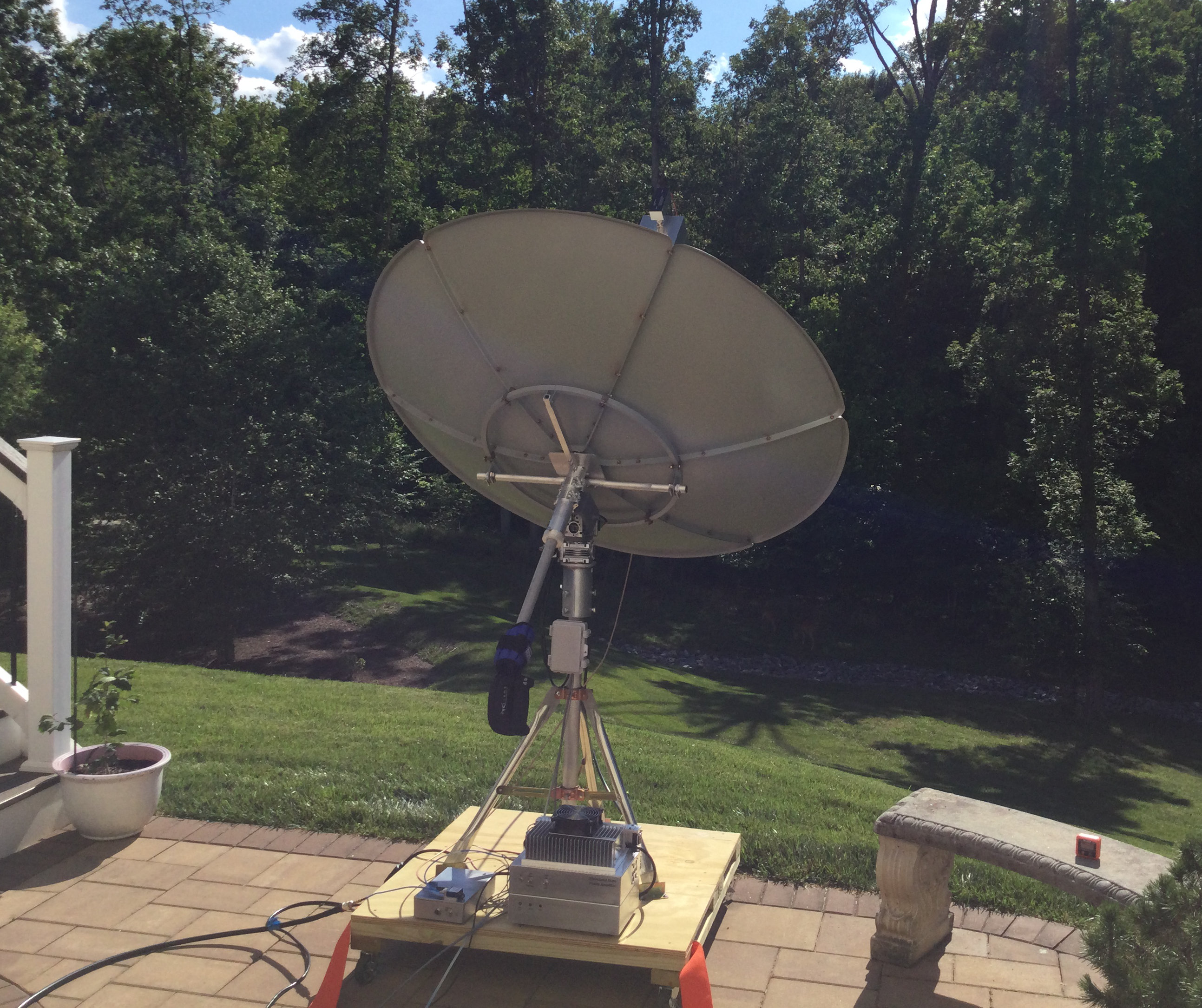 KN2K Western Dish
LZ4OC Sasho
At the beginning of the lunar window I was active on 23 cm EME on August 03 I had QSOs KB2SA -20/-30 1 m dish, DM2CFH -6/-5 10 m dish, KE7NR -12/-15, R1NW.
On August 4 I QSOed KV7E -18/-12
On August 7 I worked Alex's expedition C37EME -23/-24. Thanks to Alex for the activity!
On August 8th and 9th I participated in the ARRL 3 cm contest, for the two days I had 42 QSOs & 17 DXCCs.
On August 8th I QSOed G8RWG -17/-19, OK1DFC -7/-9, OZ1LPR -1/-10, OZ1FF -9/-10, IK3GHY -14/-11, ON5TA -9/-13, OH3LWP -8/-12, SA6BUN -9/-11, AC0RA -16/-12, DL4DTU -9/-13, OM4XA -15/-12, IK6CAK -11/-11, KM0T -11/-15, ON7FI -20/-14, N1AV -13/-17, NJ6D -14/-19, OK2AQ -13/-12, ON4CDU -16/-17, IZ0DJP -16/-13 and WB6CWN -20/-16
On August 9th I QSOed JA1WQF -6/-7, OE9ERC -6/-11, IK3HAR -18/-17, YO2LAM -6/-16, PA3DZL -10/-10, YO8RHI -18/-18, UN6PD -20/-20, G4HSK -20/-18, OH1LRY -13/-13, F5JWF -10/-10, IW2FZR -10/-17, G4RFR -2/-13, W3SZ -17/-15, PA3CSG -20/-19, PE1CKK -12/-14, DF5MO -19/-15, W3TI -19/-15, N1AV -13/-14, DL6SH -10/-14, VE4MA -11/-11, W5LUA -10/-10 and OK1KIR -7/-11
On the next ARRL weekend I plan to try again on 3 cm and 24 GHz, if everything is ok.
On August 10th there were tests on 24 GHz, I didn't have much luck but I still made a QSO with Gerald PA0BAT -14/-13.
On August 14th on 3 cm, I had the chance to make my first IT9/LZ EME QSO with IT9CJC -15/-10 Thanks Marcello.
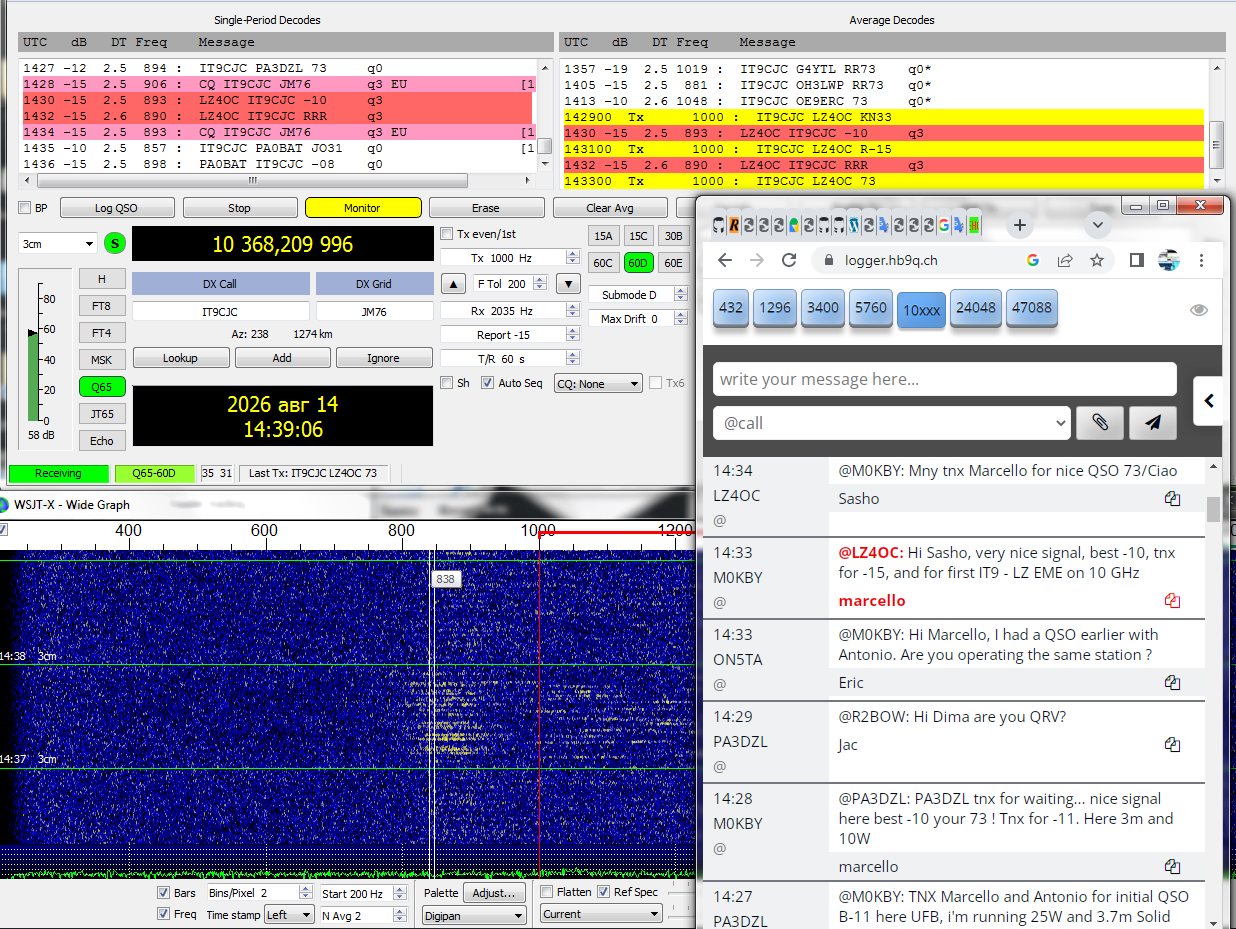
LZ4OC-QSO-with-IT9CJC-Screen.png
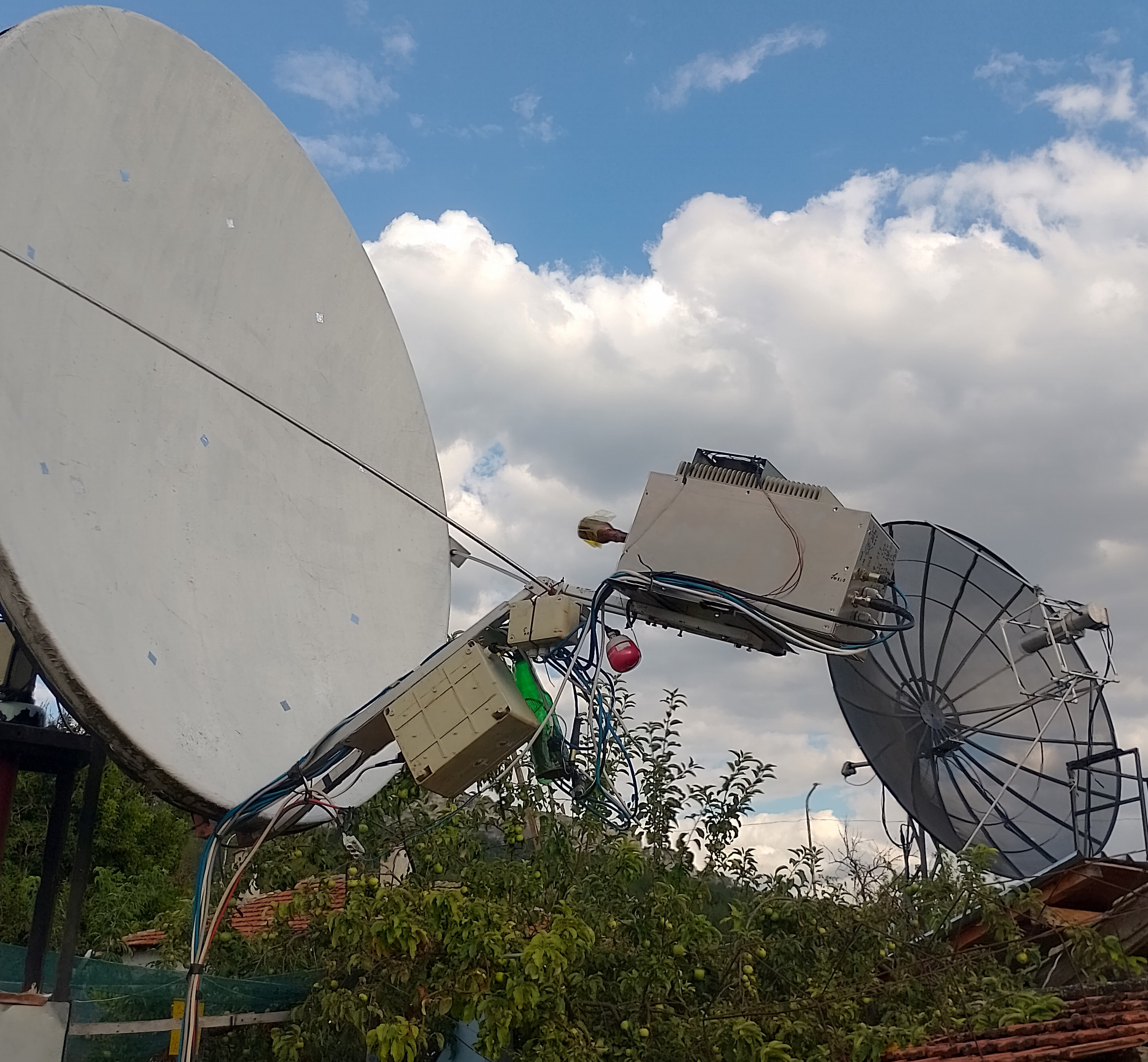 LZ4OC 10 GHz and Low Band Dishes
N9HF Dave
I recently got back on the moon on 432 MHz and I’m glad that I did. I’m still working on 432 WAS, and in July, I managed to work and confirm 2 more states, Colorado and Nevada, to bring my total to 40.
It’s getting kind of difficult to find the remaining 10 states, so I thought I would provide a list and perhaps someone out there can help. The last 10 states I need are: WA UT NM SD IA IL OH MD DE CT. I have been beating the bushes looking for these but no joy… so far!
NC1I Frank
It has been a busy summer limiting my activity but I did add a few initials and a couple of new countries.
On 70 cm I added initials with VK0DS (new DXCC) -13dB/-14dB and C37EME (new DXCC) -11dB/-18dB. The QSO with VK0DS was with the moon below 5-degrees elevation for both of us.
On 23 cm I added initials with C37EME (new DXCC) -13dB/12dB, F6KAR -04dB/+00dB, and EA5Y (-10dB/-08dB).
Thanks to Dave VK0DS (VK2JDS) and to the C37EME team for their efforts and excellent success!
NJ6D/ N7KU Chuck
August has been a busy month here for me in the US Southwest Arizona desert with 3 weekends of microwave adventure back-to-back. The first weekend of the ARRL EME contest August 15-16 was completed with 10 GHz operations at the home QTH in DM42lh and it proved to be rewarding and successful. The early moonrise in Arizona meant setting the alarm for 2 AM local time, turning the system on and brewing coffee in that order.
First and strongest in the log was Peter, OZ1LPR, followed by a near constant stream of completed QSOs. The highlight for me this time around was getting Nikolay UN6PD, into the log for the first time. Thank you! Another first time EME QSO was with Eric OE9ERC, who provided me with the 50 W DL2AM SSPA I currently use. I had several other first time QSOs as well. Many thanks!
I have made several improvements to my 1 m + 40 W 10 GHz system since my EME rover outing to MT, WY and UT including the addition of a DU3T LNA and more precise feed alignment to the dish. The DU3T LNA addition has resulted in a measured overall system noise figure of 0.85 dB. Under the assumption that my W1GHZ dual band feed had a slight bit of spillover I tweaked the feed pointing to minimize ambient noise when pointed up to cold sky. The idea was that the low level background thermal noise from the ground was a small contributor to the system performance. I was able to find a small dip in the measured cold sky + background level using my noise measurement setup with an SDRPlay and SDRAngel software. These system changes seem to have made a noticeable improvement in RX performance. In the end I recorded 38 QSOs over the weekend, 31 with NJ6D as the call and 7 with N7KU from the Rillito River Contest Club.
Future improvements in the works include upgrading to a 1.2 m offset dish, finding a location where I can operate through moonset and adding the ability to operate on 10.450 GHz for working Japan and other stations with similar allocations.
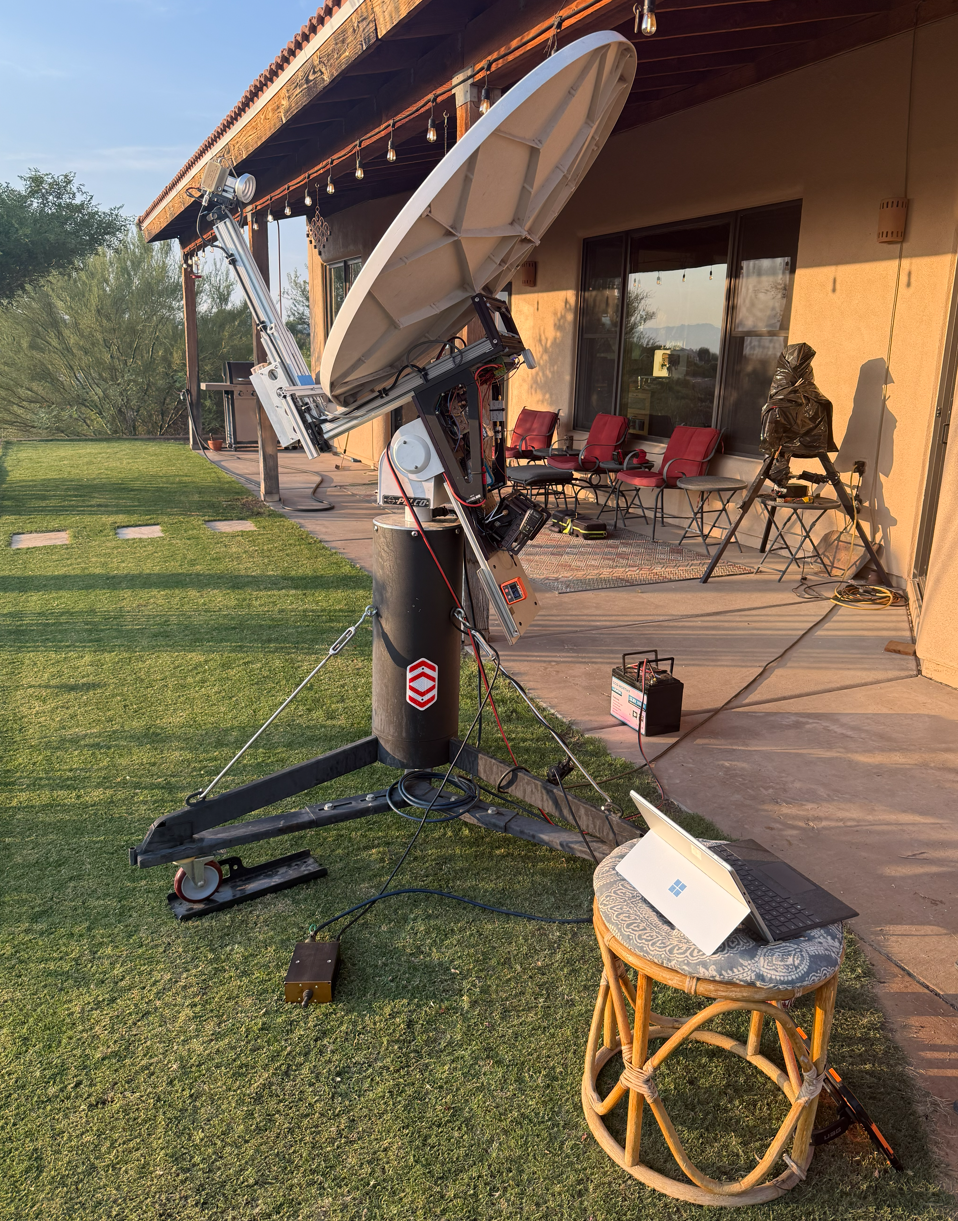 NJ6D at Elevation Limit of 70 degrees
OH3LWP Ari
I received a new DU3T 24 GHz waveguide input LNA and continued 24 GHz Y-factor measurements with the new LNA. Latest measurements are 10.5 dB sun to cold sky and 1.25 dB moon to cold sky Y-factor. Please let me know if you have a spare 24 GHz >10 W PA you could consider selling.
This year I had time to be active in both moon passes of the ARRL EME contest 1st weekend.
Nice activity especially on 3 cm and on 13 cm during the contest. I worked the following in the ARRL EME contest 2.3 GHz & Up 1st weekend (digital if not marked CW):
3 cm:
8/8/2025 VK7ZBX, OK1DFC, VK4WYM, OK2AQ, JA1WQF, IK6CAK, OZ1LPR CW, SP3XBO CW, LA4ANA, G8RWG, OZ1FF, W3SZ, OM4XA, YO8RHI, YO2LAM, ON5TA, SA6BUN, AC0RA, KM0T, LZ4OC, SV3AAF, IK0HWJ, PA0JOZ, SP6JLW
9/8/2025 IK3HAR, OE9ERC, G4HSK, IK3GHY, OH1LRY, F5JWF, DF5MO, OK1KIR CW, UN6PD, PA3DZL, IZ2DJP, PA3CSG, W3TI, IW2FZR, NJ6D, G4RFR, ON4CDU, PE1CKK, N1AV, KN0WS, VE4MA, DL6SH, W5LUA, WB6CWN
6 cm:
8/8/2025 UA3PTW
9/8/2025 OK1DFC, DL4DTU, SV3AAF, PE1CKK, YO8RHI, DF3RU, PA0HRK, G4BAO
13 cm:
8/8/2025 BA7NQ, KL6M CW, OE9ERC, OK1DFC, OK1USW, C37EME, G4RGK, DL1SUZ, SP9VFD, OH1LRY, PA3DZL, N1AV, ON5QT, DG5NFF, VE4MA, SV3AAF, WA3RGQ, W5LUA, WA6PY, G3LTF CW, G4CCH CW, VE6TA, KN2K, PA0PLY
9/8/2025 SP3XBO CW, IK3COJ
New inits and new DXCC worked in 17/7/2026 to 21/8/2026 time window are as below (digital if not marked CW):
New 23 cm inits:
07/08/2026 F6KAR, 09/08/2026 VE4SA, 11/08/2026 CT8/W6PQL (also new DXCC), EA5Y
New 13 cm inits:
08/08/2026 KL6M CW (also new DXCC), C37EME (also new DXCC), VE4MA, WA6PY CW
New 6 cm init:
09/08/2026 G4BAO, 11/08/2026 F2CT digital and CW (also new DXCC)
New 3 cm init:
19/07/2026 R2BOW (also new DXCC), 09/08/2026 WB6CWN, 14/08/2026 IT9CJC
OK1DFC Zdenek
Unfortunately, several projects came up at once, so I’ve been quite busy with QRL. I only got to the radio sporadically, and mainly when there was “something” new to work on. In the meantime, I tweaked the 2.4 m offset so it would work mainly on the upper MW bands. Many thanks to Miguel CT1BYM and Gerald OE2IGL for their many suggestions and insights on optimizing the antenna. After the ARRL MW contest, it looks like everything is now working as it should. I’m currently redesigning the boxing of the TRV for 24 and 47 GHz, since the focal point’s position has changed following the modifications and optimization.
In May, I made contact with the station CP7DX on the 432 MHz band; this was my #153 DXCC, and in August I made contact with VK0DS as my #154 DXCC.
In June, I managed to make several contacts on the 24 GHz band. Contacts with PA0PLY, IW2BNA (17 DXCC and #21 init), IZ2DJP (#22), OZ1LPR, VE4MA, and IZ0JNY (#23)
Also on the 13 cm band: ON5QT (#106JT), FP/EA8DBM (#107JT) and #65 DXCC.
I hope I’ll have more time in the fall and will move again to 47 GHz for more testing with my newly optimized antenna.
The First Part of the ARRL EME Contest
Based on last year’s experience, I planned the first part of the ARRL EME Contest’s Microwave Stage for the 13-cm and 3-cm bands, with the intention of also monitoring the 6-cm and 9-cm bands in case anyone appeared there. Before the contest, I spent about a week working on modifying the TRV mount at the focus of my 2.4-meter offset dish, trying to improve the setup.
So I set up both antennas to operate in parallel and went to take a nap. At 00:00 UT, I was on the bands, but activity was very low at first. So I did everything I could and waited for Europe to start waking up. There were two stations from VK; no one from Japan on 13 cm, and one station on 3 cm.
As the day gradually dawned, station activity began to increase, and as the sun rose so did the outside temperature. Around noon, the thermometers in the SSPA on both 3 cm and 13 cm were showing 55°C at full operation. By the afternoon and into the evening, the temperature had become unbearable; I had the ventilation running, and yet the temperature inside the container was still over 30°C. I was just waiting for something to break down from the heat. The sun and moon were passing close to each other, so the equipment at the focal point was taking quite a beating. The 3-cm TRV even gave out on Sunday afternoon, before the moon set, and the thermal protection shut off the PTT. The same happened with the 13-cm SSPA, which is mounted in a parabolic dish.
Overall, I have to say that activity on the 13-cm and 3-cm bands was very good. I also made several contacts on the 6-cm band. The 9-cm band was completely empty. In total, I managed to make 86 contacts across all three bands.
On the 3-cm band, I made 43 valid QSOs, including new call signs OH3LWP, VK4WYM, DF5MO (#150), and LA4ANA, which also counted as my 50th DXCC country.
To my surprise, on the 6-cm band, I made 9 valid QSOs, including one new call sign: PA0HRK (#62) JT.
On the 13-cm band, I made 34 valid QSOs, including 4 new call signs: DG5NNF, 4Z5LV, C37EME (also as a new DXCC country #66), and my first C3-OK QSO, ON4CDU #111 JT, using terrestrial equipment (see the images below).
Unfortunately, I have to note that CW traffic is declining significantly. I made a total of only 10 CW contacts; everything else was Q65 traffic. The second round awaits us on the first weekend in September. I’m curious to see what the activity will be like. From OK, I heard and worked OK2AQ, OK1USW, and OK1KIR on the bands. Let’s hope more will show up in September. Thanks to everyone for the QSOs, and see you in the second “round.”
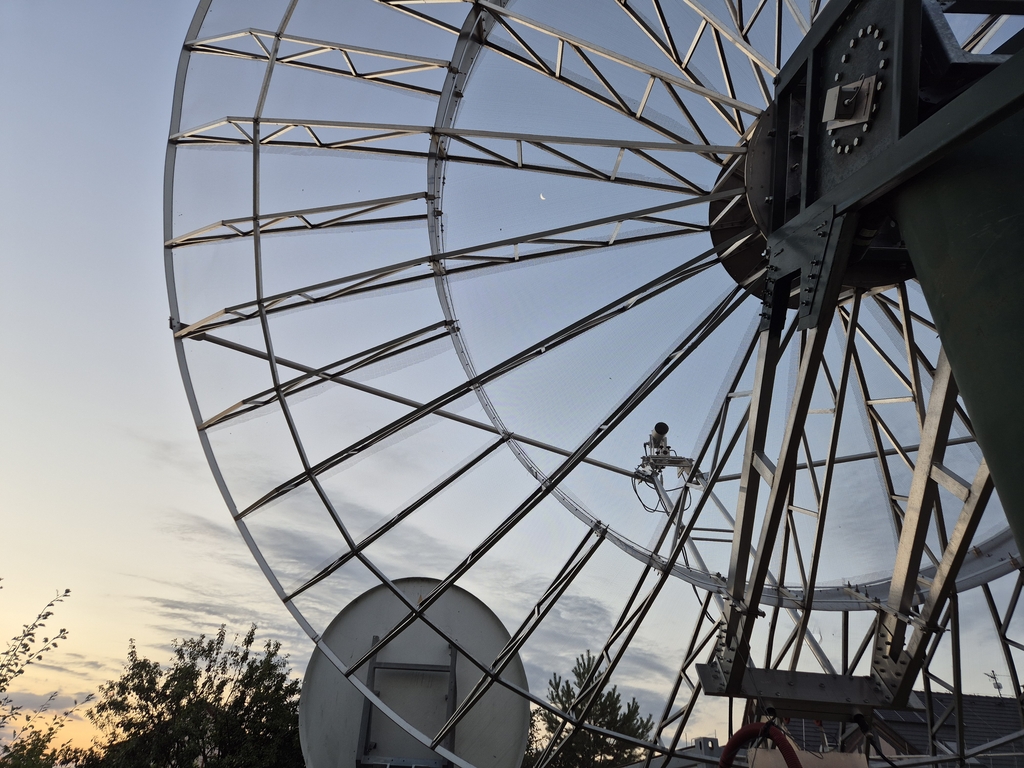 OK1DFC Dishes
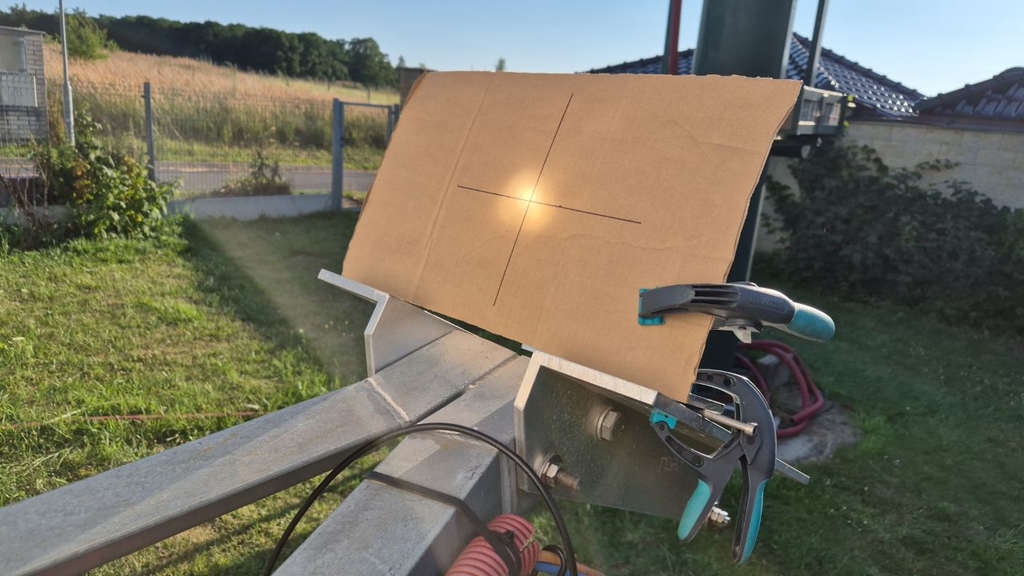 OK1DFC Sunspot after Focussing
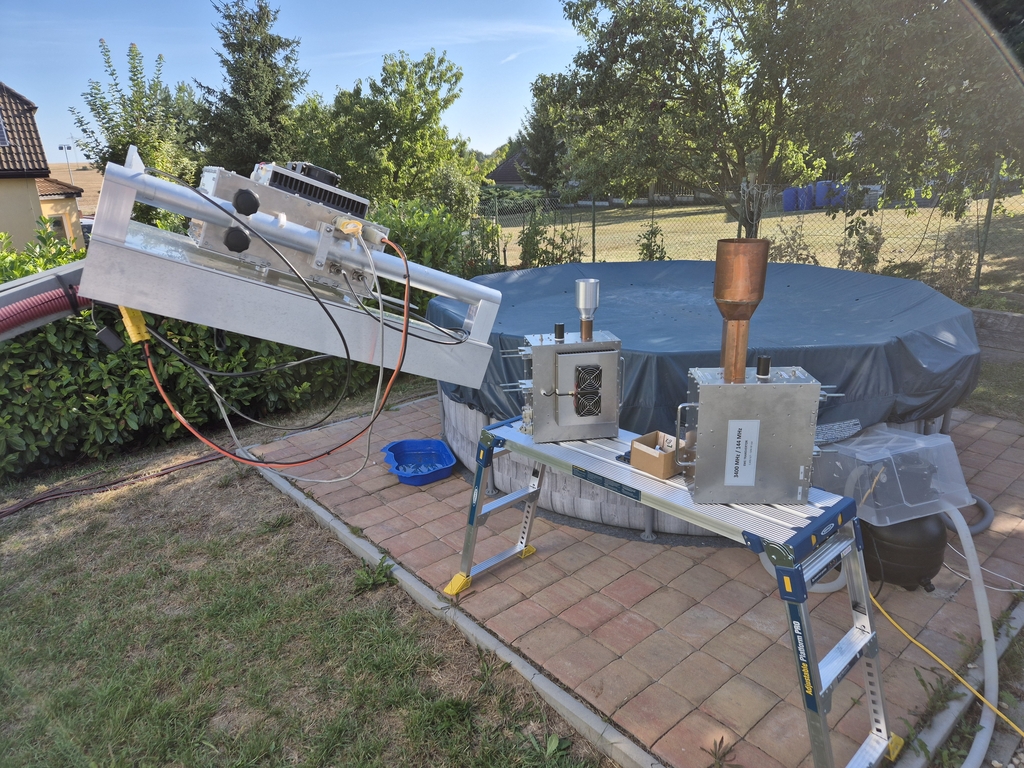 OK1DFC Transverters 9 and 6 on shelf 3 cm at Dish Focus
OK1KIR Vlada & Tonda
On Fri, August 7 we installed 23 cm for the Andorra expedition and with Q65-60C we QSOed F4BLE (-11/-11) as #686 and then C37EME (-13/-16) as #687 and digi DXCC #144. In the hot WX we omitted the C37 expedition on 70 cm, as we have confirmed Andorra on CW and digi in the past.
In the 1st part of MW ARRL EME Contest we installed 13cm and made on Sat, August 8 CW QSOs with KL6M (569/579), G4CCH (579/589) and G3LTF (579/589). With Q65-60C we further worked OK1DFC (+2/-1), OK1USW (-9/-7), OE9ERC (+3/+4; B+7! ) and we made new digi initials 4Z5LV (-16/-12) as #130, DG5NFF (-5/-1) as #131, C37EME (-19/-17) as #132, digi DXCC #64 and mixed DXCC #77, VE6TA (-2/-5) as #133 and DL1SUZ (-13/-14).
On Sun, August 9 we reinstalled 3 cm a bit later, but after Q65-60D QSO with OE9ERC (-3/-4) as #298 we made in a row from 08:15 to 08:57 with CW: SP3XBO (559/569), OZ1LPR (579/579), SP6JLW (579/579), ON5TA (559/579), OH3LWP (569/579) and OZ1FF (559/549). Later in the afternoon with CW we added OM4XA (O/O) as #163 and CW DXCC #47.
On 3 cm digi we worked with Q65-60D AC0RA (-11/-12), ON7FI (-18/-9) as #299, DF5MO (-16/-9) as #300, OK2AQ (-8/-4), N1AV (-10/-12), NJ6D (-13/-7), KM0T (-16/-8), W3SZ (-12/-6), ON4CDU (-12/-10), PA3CSG (-10/-6), G8RWG (-15/-12), G4RFR (+1/-4), WB6CWN (-14/-11) as #301, IZ2DJP (-12/-9), IK6CAK (-11/-11), LZ4OC (-11/-7), IK3HAR (-17/-14) and the last was N7KU (-16/-8) at NJ6D. Furthermore around 11:30 we decoded IT9CJC (-11) in his last transmission to OK2AQ, but afterwards he completely disappeared. Later with hundreds of Hz spreading LA4ANA decoded us (-22), but we were unable to discover his signal.
All the time the terribly hot WX was annoying, but the equipment placed in the dish focus survived daily sunshine w/o any failure.
OK2AQ Mirek
After a longer period when the moon was very low and EME activity was therefore low too, I was really looking forward to the ARRL Contest. If I wanted to participate in the first leg of the ARRL Contest on the 3 cm band, I knew I had to work Alex C37EME from Andorra on 23 cm on Friday. However, Alex began transmitting on 23 cm on Friday shortly before moonset, and with a strong pile-up on his frequency in which, understandably, the more powerful stations prevailed. I didn’t get a chance this time.
So, in very warm weather, I switched to 3 cm on Friday afternoon and went to get some sleep so that I’d be ready for Australia at 00:00 UTC. The VK window was relatively short, and especially on my end where I am obstructed by trees given the moon’s current orbit. As soon as I could, I made a QSO with Richard VK7ZBX from Hobart. VK4WYM however required a higher elevation and we didn’t have time for that. Unfortunately, Mike had some kind of problem during the second window.
After a few European contacts, I managed a cross-band QSO with Mitsuo JA1WQF. Then LA4ANA appeared with a 90 cm dish and 10 W. It was a challenge, but the QSO went well. When American stations started appearing later that morning, it was interesting to see how narrow their spread was compared to Europe’s. Overall, activity was very good and the weather was beautiful except for the temperatures. I had to keep not only the PA cool, but myself as well.
In total, I made 45 contest QSOs with the initials LA4ANA (-24,-19) DXCC 51, AC0RA (-12,-12), WB6CWN (-17,-16), and IT9CTC (-12,-11). One contact with SP6JLW was on CW (589,539). A week after the contest, I was still working with another QRP station, ON7FI (-17,-15) - 1.5 m dish, 10 W, mixed #195. I will be participating in the 3-cm band again in the next leg, and I hope that in addition to the stations I didn’t manage to work in the first leg, some new stations will show up. The online log is available at OK2AQ Log
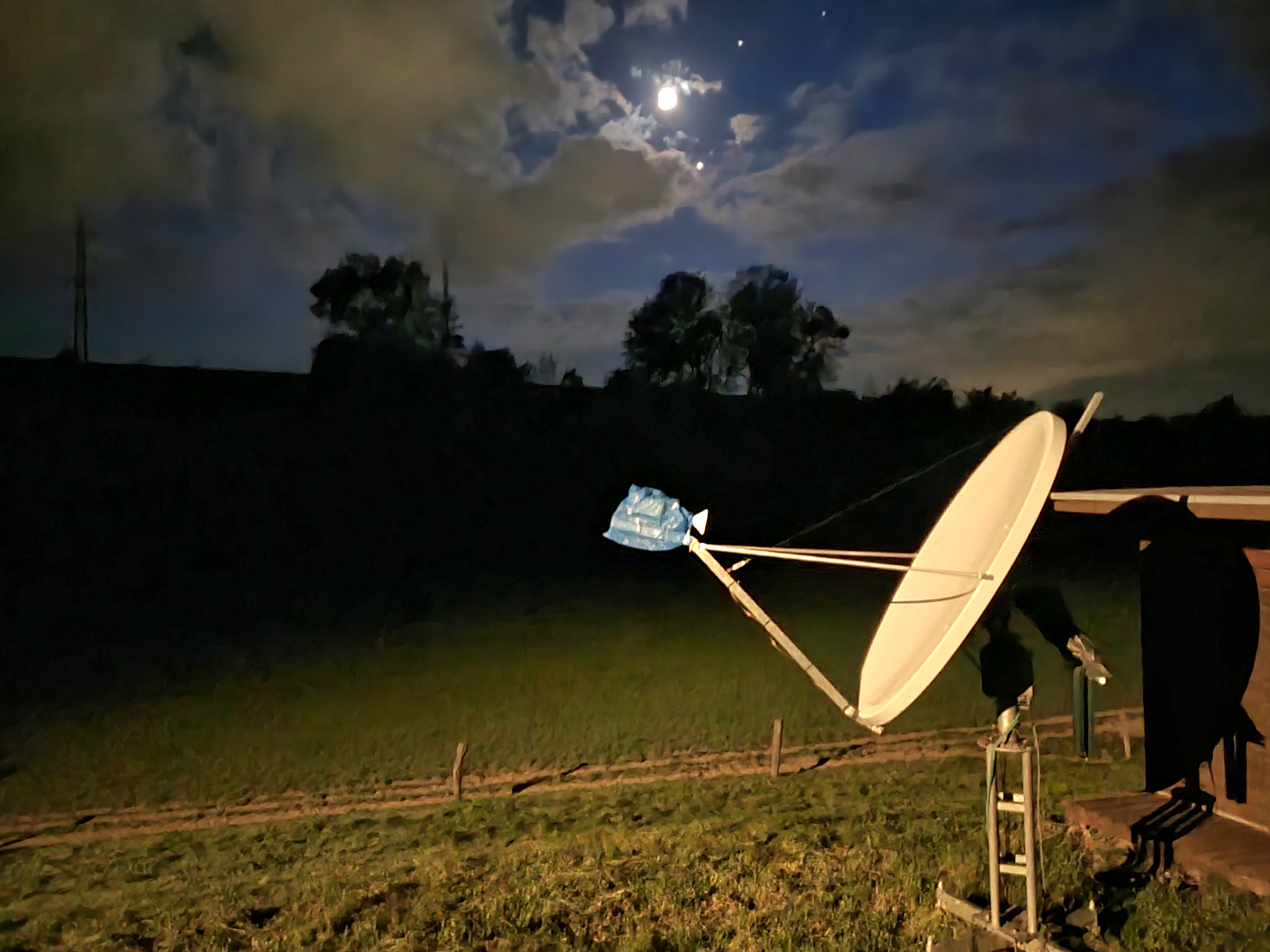 OK2AQ Parked dish and Waiting Moon
ON4CDU Hans
Here are my results of the first ARRL EME contest weekend. There was high participation on the 3 cm band.
3 cm (1.2 m Dish; Pout 30 Watts) I QSO’d:
8 Aug: OZ1LPR, OZ1FF, W3SZ,AC0RA, DL4DTU, ON5TA, OK2AQ, KM0T, NA1V, OM4XA, PA3CSG, LZ4OC, SA6BUN, NJ6D, OK1DFC
9 Aug: OH3LWP, PA3DZL, I6CAK, IW2FZR, G4RFR, YO2LAM, ON7FI, VE4MA, PE1CKK, OK1KIR, OE9ERC, DF5MO, F5JWF, W5LUA, DL6SH, WB6CNW
13 cm: On 9 Aug I pointed the antenna of my terrestrial 13 cm station towards the moon (1.0 m dish &, power output of 70 Watts). To my surprise, I worked three stations within half an hour: OK1DFC, G4CCH, & DG5NFF.
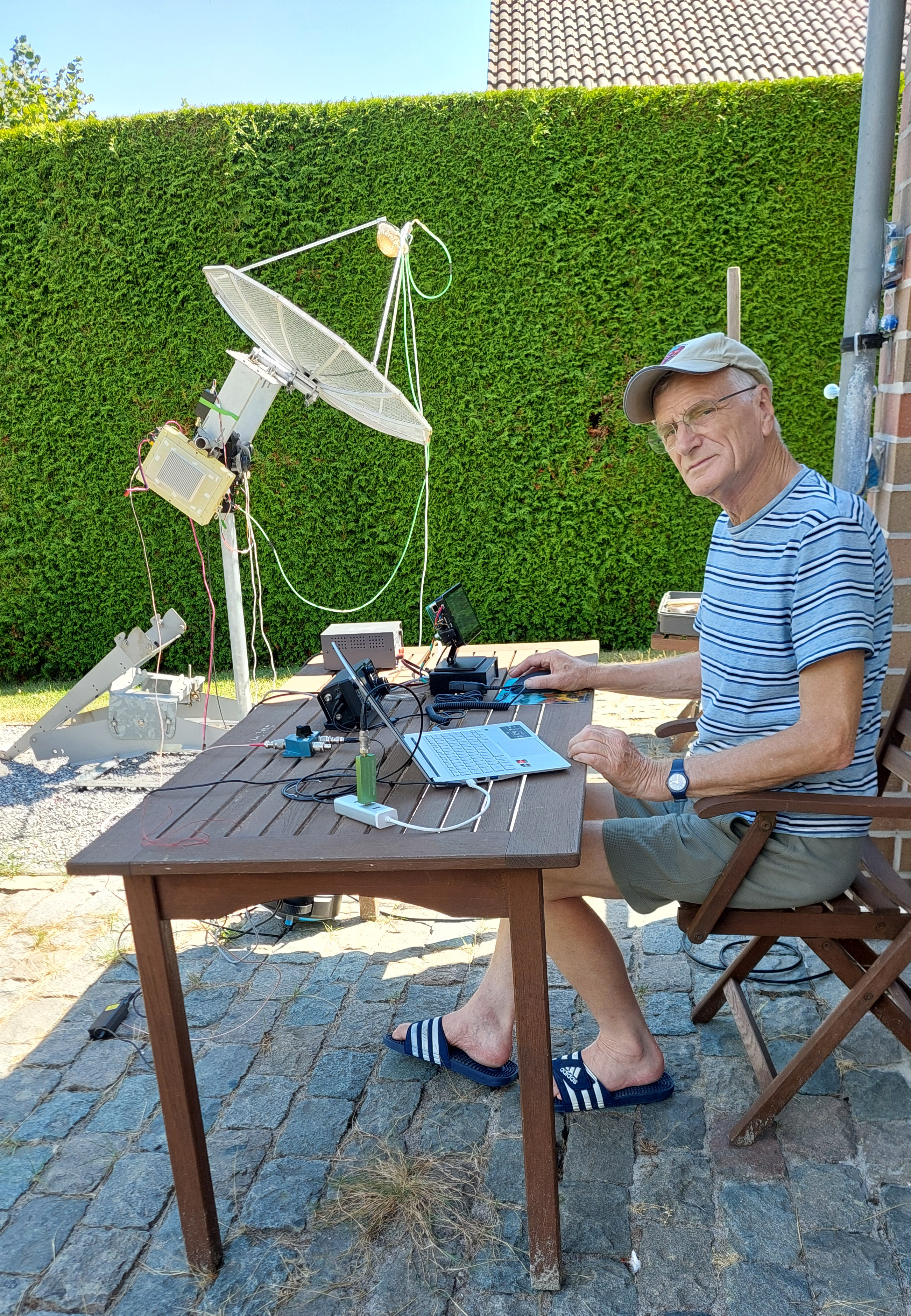 ON4CDU with 1.2 m Dish for 13 cm
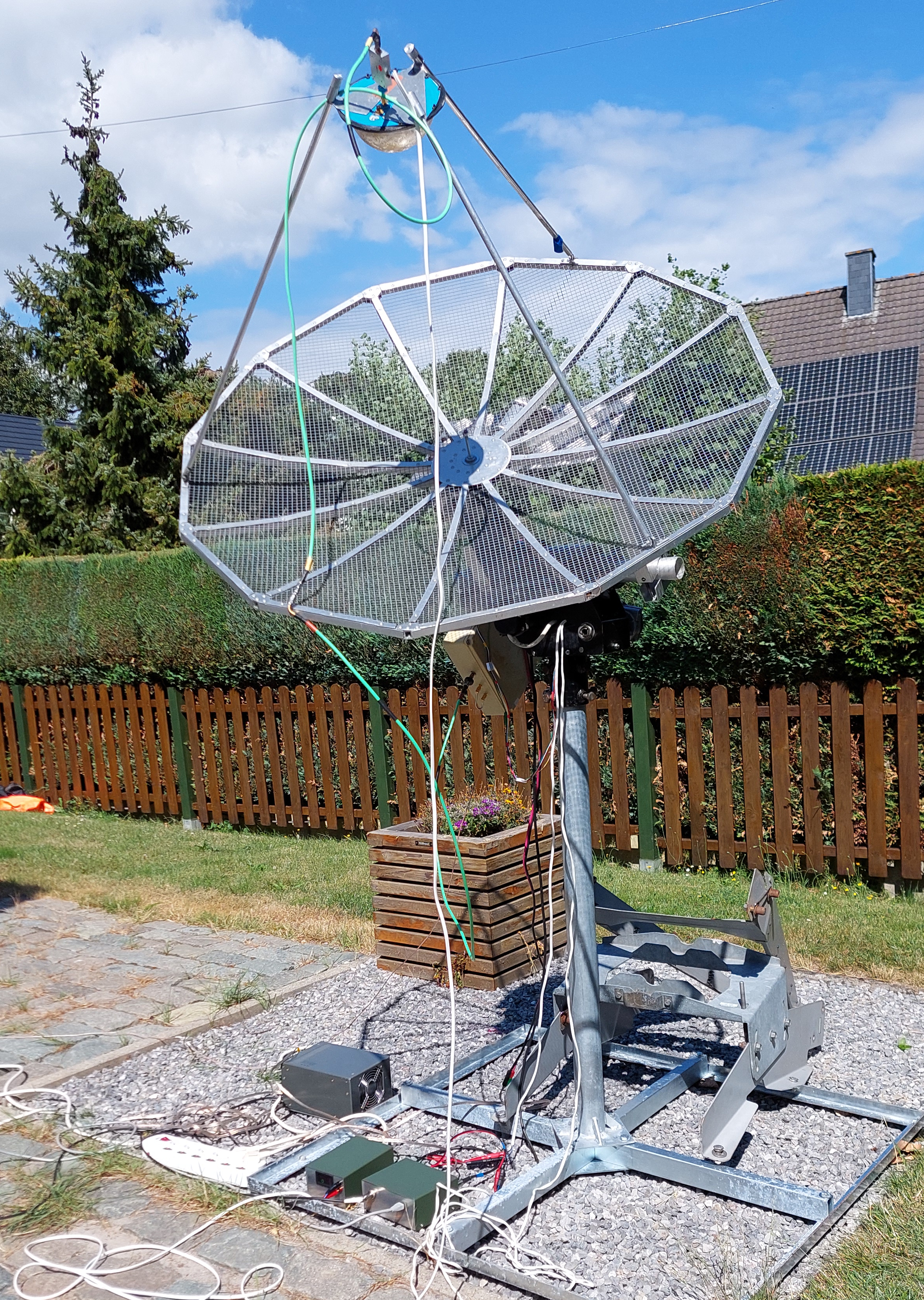 ON4CDU 1.0 m Dish for 13 cm
ON5TA Eric
Very nice activity and great fun on 10 GHz during the 1st leg of the ARRL contest! I made a total of 52 QSOs, including 7 in CW. Last year, I had 38 QSOs during the same leg, which shows the increasing popularity of the 3 cm band. I am using a 2.4 m offset dish and 35 Watts
I was very pleased to contact Frank WB6CWN # and Michel ON7FI, who had a very nice signal, running 10 W with a 1.5 m offset dish.
I was also most happy to receive last month the QSL card of John ZS6JON and have just found in the mailbox the long-awaited 10 GHz WAC Award. Thank you so much John! I am now assembling a 24 GHz station and hoping to make the first tests in a month or two.
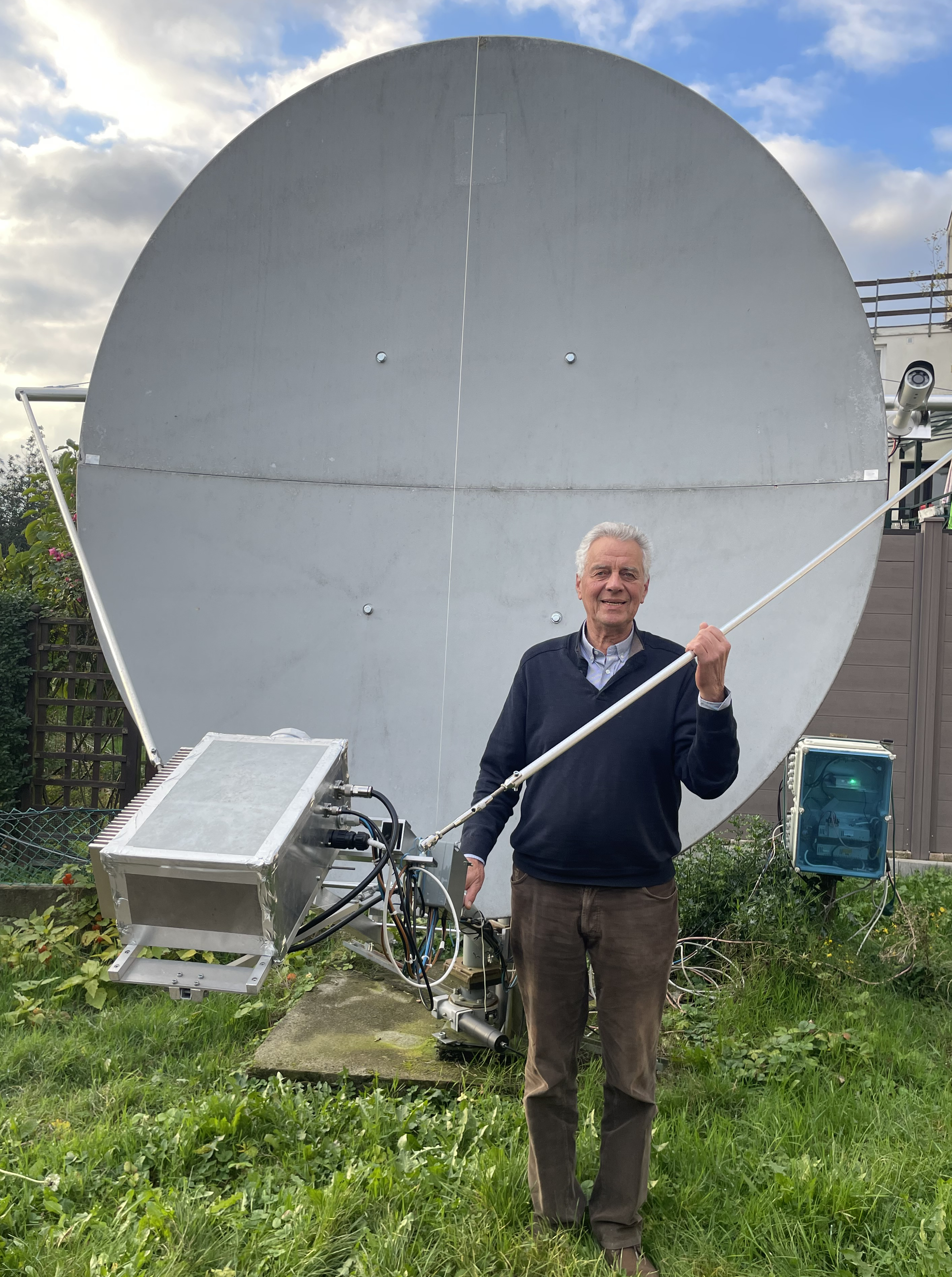 ON5TA 2.4 m EME dish
OZ1FF Kjeld
I participated in the 1st leg of the ARRL EME 2.3 GHz & Up contest in August 2026 on 10 GHz. I was QRV in both Moon passes but lost the last 4 hours of the second pass as the WG switch failed. The fault has been found. It was a short in a motor coil and a repair has been initiated so I expect to be QRV in the second leg in September and catch up on the missed and a lot of new contacts.
With a 2,4 m dish, 50 W and 0,6 dB NF LNA at the feed, I had 45 QSOs with the following stations:
JA1WQF, OK1DFC, ON5TA, OK2AQ, G8RWG, LA4ANA, IK3GHY, LZ4OC, OZ1LPR, YO2LAM, YO8RHI, G4HSK, OM4XA, IK6CAK, OH3LWP, W3SZ, DL4DTU, IK0HWJ, SP6JLW, AC0RA, KM0T, SV3AAF, DJ7FJ, SA6BUN, PA3CSG, G4YTL, SP3XBO, PA0JOZ, ON7FI, ON4CDU, NJ6D, N1AV, DF5M0, WB6CWN, IZ2DJP, IK3HAR, OE9ERC, PA3DZL, OH2DG, UN6PD, OH1LRY, F5JWF, OK1KIR, PE1CKK
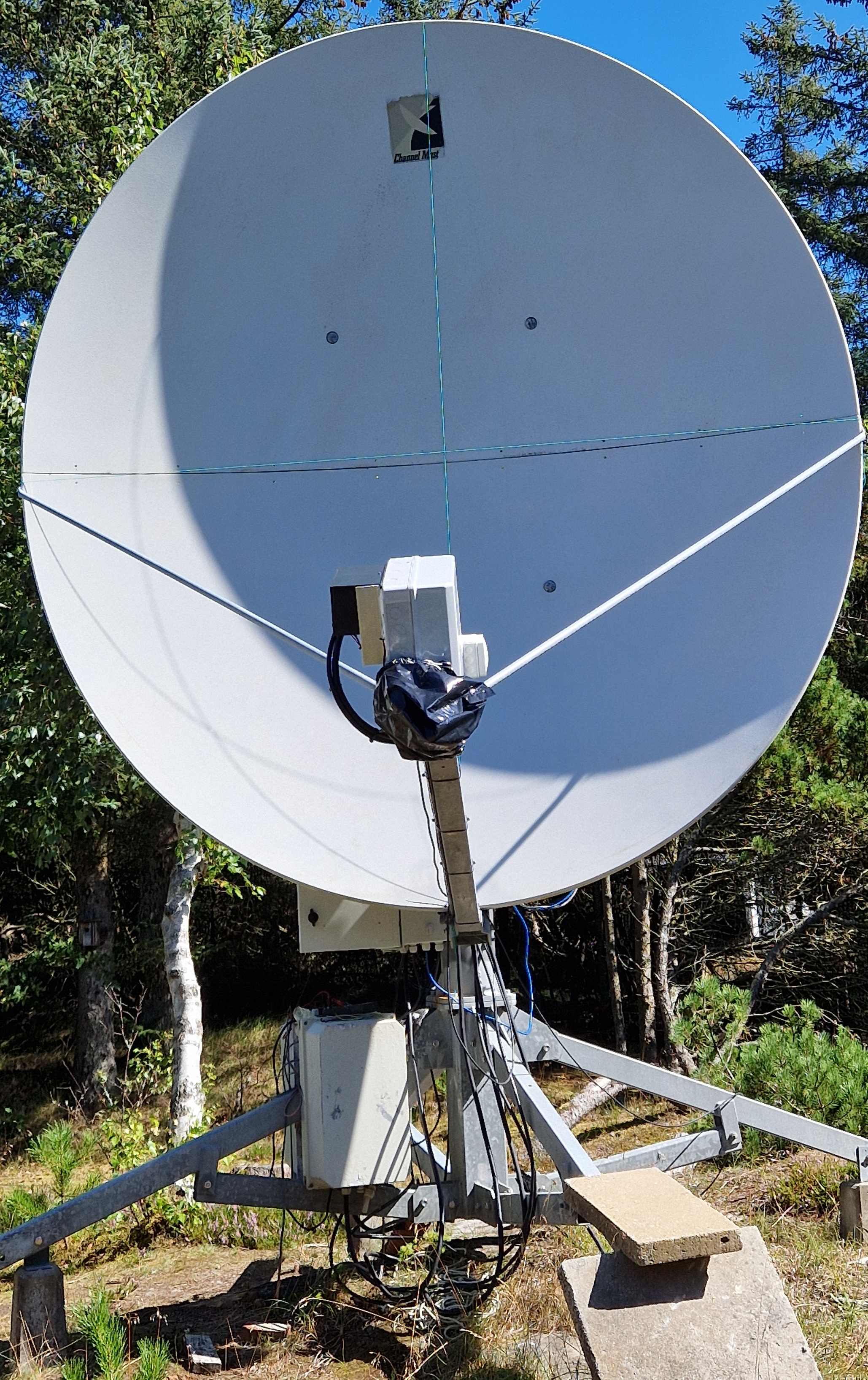 OZ1FF 2.4 m Dish
PA0HRK Harke
Those present at the EME 2026 conference at Tenerife know that I completed a 6 cm EME station this year. Refer to the Conference Proceedings if you like.
The basic features are an 1.5 m solar cooker dish and about 47 W at the feed (SM6FHZ, CP). It seems to work quite well. This weekend I found out the maximum elevation was too low so I eliminated any space left to accommodate the high moon position. I have a rather limited moon window so I must have missed quite a few others, but it was favourable that the moon pass was at daytime!
The first moon pass on Saturday was quiet and I only worked UA3PTW (-11/-14). G4BAO was also active but no contact was possible. We concluded that our stations were simply too small.
On Sunday there was much more activity and I worked (with send/received reports):
PE1CKK (-15,-17), OK1DFC (-12,-12), DL4DTU (-14,-16), IK0HWJ (-13,-16), OH3LWP (-12,-13), DF3RU (-11,-13..-16), G4BAO (-21,-23) and F2CT (-17,-15).
The QSO with John G4BAO was great fun. We decided to try again and just as I was writing to him on the HB9Q forum that it was not going to work, my transmitter became active. WSJT had a solid decode and decided to answer!
My first EME activity weekend was a really nice happening!
PA0PLY Jan
What should have been a nice ARRL contest weekend, turned out into a nightmare!
Just before the weekend my VK5DJ dish controller concluded I was living in Australia for an unclear reason. Fortunately it displays my antenna positions, thus I could run the dish in manual mode.
The VK5DJ controller uses a PIC in which the program and the settings are stored. Replacing the PIC by a spare one was even worse. This did not even show my antenna position at all. John VK5DJ sent several new software packages but all had the same effect. No antenna positions were indicated, thus it was unworkable.
Another misery popped up on my SDR-Console, not finding the RTL dongle again. (I found later that this happened after another Windows 11 update, grr. Now I have decided to purchase an Airspy-mini to replace the RTL dongle and cure this issue).
I decided to calm down my activities on 13 cm and just look for new #, rather than full operation. If you are used to a tracking system one can concentrate on other things, but manual control of a 3 m dish at 13 cm really needs attention.
I made following QSO’s: DG5NFF (-12/-12) #96, OE9ERC (-00/-08), PE1CKK (-16/-21), N1AV (-22/-25), ON5QT (-19/-23) #97, PH0V (-18/-20), KN2K (-17/-27) #98, DL1SUZ (-15/-14), OH3LWP (-08/-11), WA3RGQ (-15/-17)
After the contest I spent a lot of time getting my controller running again. Finally it turned out that my spare PIC was damaged, which caused the antenna positions not to be displayed. I programmed a new PIC and now it runs OK. Re-programming the original PIC works OK also now. John, VK5DJ was very helpful and sent the latest version software. This solves the park function as well. In the meanwhile I started a new project: a OE5JFL controller as a backup. I will then use the HH-12INC as well, to cope with minor elevation deviations when going from MR to MS.
After the contest I tried with Alex 4Z5LV (1.8 m-40 W). Initially we could not see each other at all. Then Alex discovered he was on the wrong frequency. After correction, I could see a faint signal and two decodes at -27 dB. Temperatures in my TX box rose from some 30 degrees to over 45 degrees, thus fearing damage, I stopped TX. Unfortunately he ran into some nearby buildings and we had to cease this session.
I will be active on 13 cm during the ARI contest and most likely also in the second leg of the ARRL contest.
PA2V Peter
Here is some info about what I have done and will do soon. First of all, I was lucky to work most of the expeditions this year on 70 cm. After working CP7DX from Bolivia, I was very happy to be able to get VK0DS in the log on July 17th. And on August 7th I made it with C37EME. The conditions during that Friday were challenging. When I started early that morning, my own echoes were loud. Shortly after C37EME started Faraday “woke up” and signals got worse. I made it with decent signal reports, but soon C37EME had to fight against the QRM. Furthermore during July I worked OM3TRN and BD8AIS for a new initial.
I am still trying to do a little EME with my 23 cm terrestrial setup and I worked PI9RD on July 11th. I am also working hard to get my new 3.7 m dish up and running. Preparations started and after the first leg of the ARRL contest we will take the current 432 MHz mast down. It will be replaced by a higher mast and the 3.7 m dish on an elevation system. This makes maintenance and feed change easy (I hope). 23 cm EME will be new to me, and I hope I will have the same fun with it as on all of the other bands I have been with EME.
During the summer months I also have been active with E propagation on 6 m. This year brought many openings to the west coast and I even had an incomplete QSO with VE6TA. And now we are back to EME again.
PA3DZL Jac
It was a great Andorra DXpedition in August. I worked them on all 4 bands 2 m, 70, 23 and 13 cm. Super job guys!
On 432 MHz I worked: C37EME #
On 1296 MHz I worked: EA8/RD4D # and C37EME # and DXCC #127
On 2320 MHz I worked: during the ARRL contest Q65 and CW:
DG5NFF #, OE9ERC, OK1DFC, OK1USW, 4Z5LV, SV3AAF, F1RJ, C37EME # and DXCC #62 also First ever made QSO from Andorra!, PE1CKK, SP9VFD, G4RGK, DL1SUZ, WA3RGQ, ON5QT, OH3LWP, N1AV, VE4MA, VE6TA and G3LTF.
On 10368 MHz I worked during the ARRL contest using Q65 and CW:
JA1WQF, OK1DFC, LA4ANA, OE9ERC, OZ1FF, ON5TA, LZ4OC, G8RWG, YO2LAM, OZ1LPR, DF5MO #, SP3XBO, IK3MAC, G4HSK, IK6CAK, OH1LRY, IZ2DJP, YO8RHI, PA3CSG, W3SZ, IK3GHY, IW2FZR, UN6PD, SP6JLW, OM4XA, SV3AAF, ACØRA, SA6BUN, G4RFR, KMØT, ON7FI #, OH3LWP, F5JWF, VE4MA, N1AV, ON4CDU, PE1CKK, W3TI, W5LUA, NJ6D, OK2AQ and KNØWS.
After the contest I worked: IT9CJC #, IK3HER, OK2AQ, DF5MO and VK7ZBX
On 24048 MHz I worked:
WA6PY # CW and OZ1LPR CW. In Q65: PAØBAT, PA7JB and PE1CKK. I had a partial with I6YPK and received Bruno with -14
I was also QRV on 2 m and made 15 QSOs and 6 initials.
PI9RD Jan (PA3FXB)
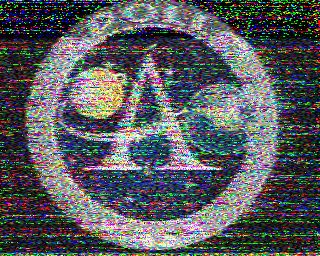
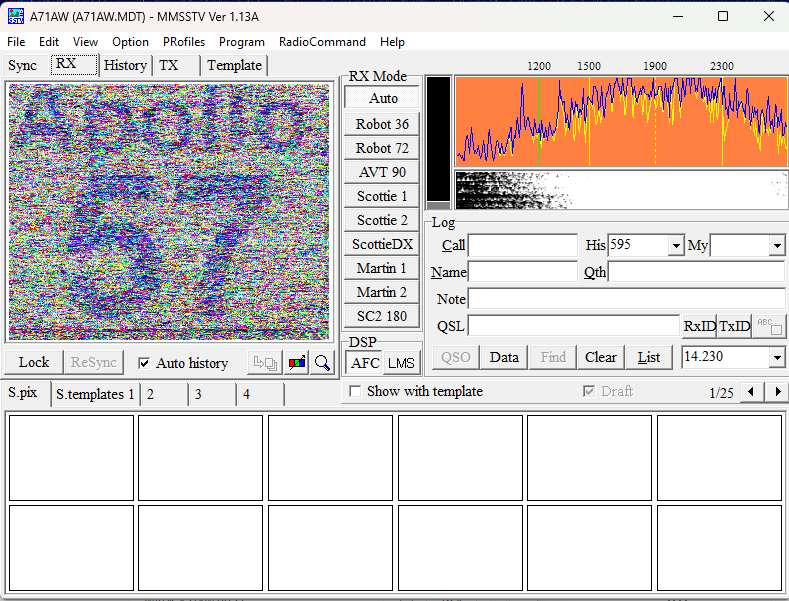
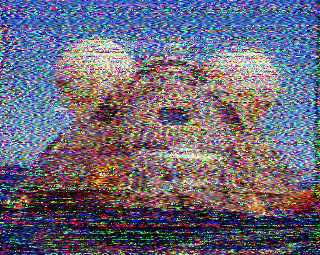
23 cm SSTV EME Moon landing party on July 18.
This year it’s 57 years ago that Neil Armstrong was the first man on the moon. To remember and to honour this historic moment we had an SSTV EME moon landing party on 23 cm at PI9RD. We started doing that when it was 50 years ago and because it’s so much fun we now do it every year.
We always try to find a date close to 20/21 July as that‘s the date when the first human ever set foot on the surface of the moon. This year we chose Saturday July 18. The moon was not very high in the sky that day and that limited the DX possibilities but despite that we found at least 10 stations who were receiving or trying to receive our images:
A71AW, F1PDX, G4CCH, GW4ZHI, HG5BMU, KB2SA, KD5CHG, ON5GS, PA3EXV and YU1DA.
Thanks all for joining the party!
The next 23 cm EME SSTV event will be somewhere in December. Then we will do the annual “end of the year” party.
Now some pictures to show what people saw from us:
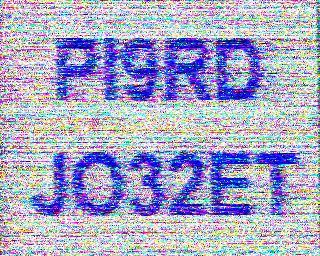 PI9RD RX by G4CCH 1
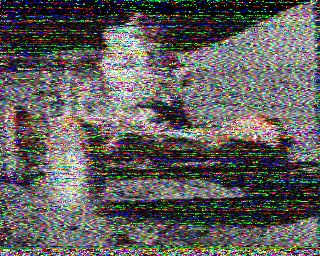 PI9RD RX by G4CCH 2
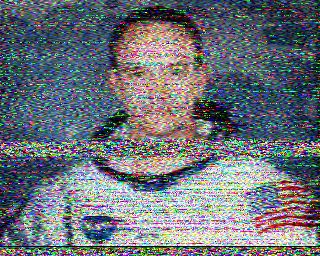 PI9RD RX by G4CCH 3
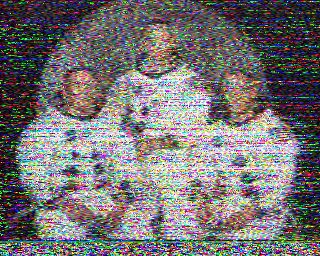 PI9RD RX by G4CCH 4
 PI9RD rx by G4CCH image 5
 PI9RD RX by A71AW
 PI9RD RX by ON5GS 1
 PI9RD RX by ON5GS 2
SP9VFD Raf
I had a great time on August 18-19 weekend on the 13 cm band in the ARRL EME contest. Lots of friends were QRV, some new callsigns also got added to the log.
I had a total of 28 QSOs (7 CW, 21 Q65) including expedition C37EME:
CW: SP6JLW, SP3XBO, KL6M, G4CCH, VE6TA, G3LTF, WA6PY
Q65: IK3COJ, VE6TA, N1AV, KN2K, OH1LRY, W5LUA, OK1USW, DL1SUZ, C37EME, SV3AAF, VE4MA, ON5QT,WA3RGQ, F1RJ, OH3LWP, G4RGK, PE1CKK, OK1DFC, PA3DZL, OE9ERC, DG5NFF
I am using a 6.4 m homemade dish, RA3AQ septum feed, 160 W at the feed, WA6PY LNA 0.3 dB NF, MKU 23 G4 Kuhne transverter, IC-9700, WinTrakPi N8CQ antenna controller.
I’m planning to be active again on 13 cm in September and I hope to work all the CW/Q65 stations I missed in August.
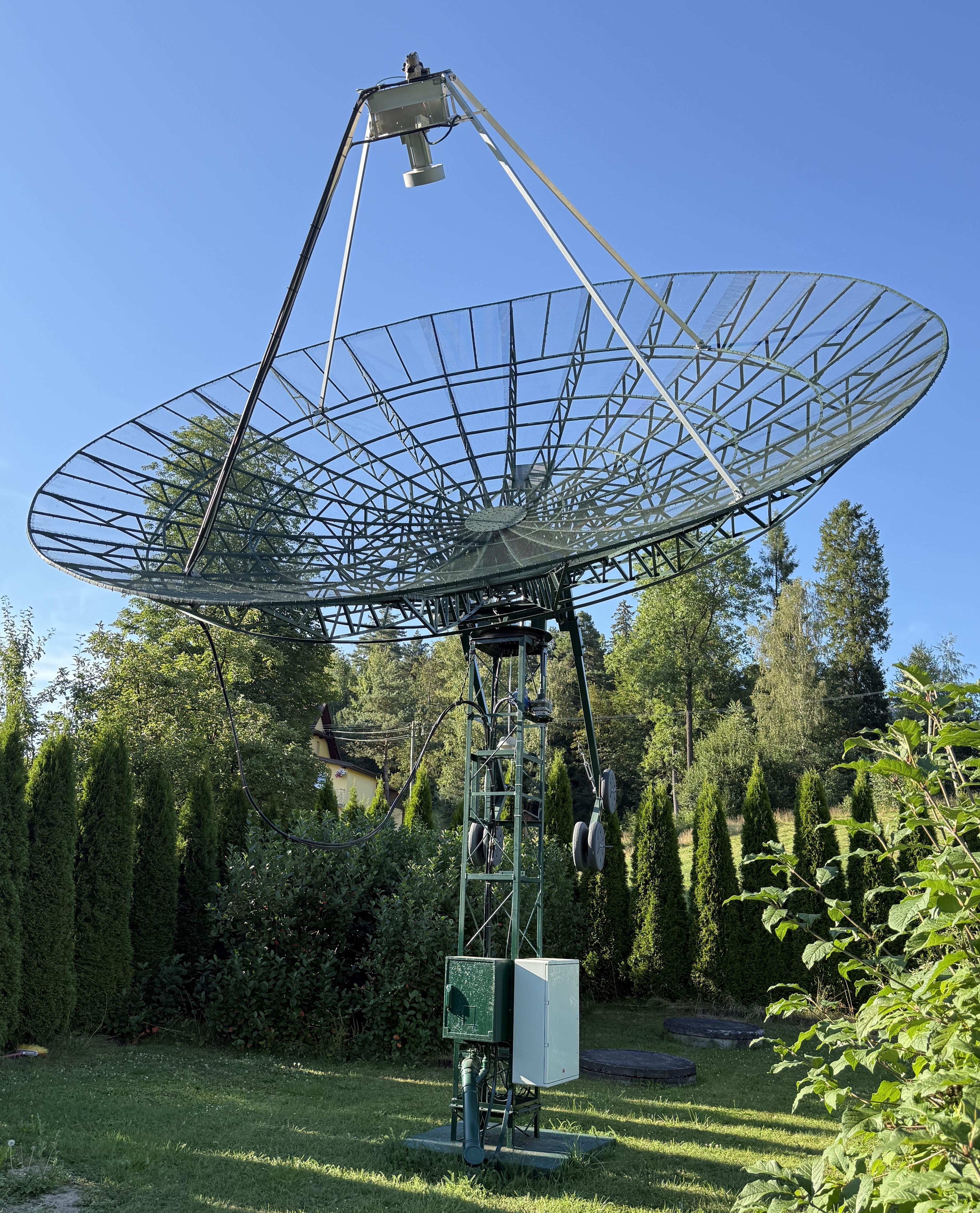 SP9VFD Dish
VA3MW Mike
My new 1296 MHz EME station hit the air this week, and the log filled in fast!
Built as a "throw money at it and get on the air" project, it combines a OK1DFC Septum from W2HRO, W2HRO SubLunar SL-1 controller, the SubLunar hardware kit with WinTrack on a Solar Cooker dish, an AG6EE PA amp and LNA (excellent design), a FLEX-8600 as the shack radio, and a Q5 1296 MHz transverter. I am still guessing that my RF output is about 300-400 watts right now with 4 watts drive. I am waiting for my 1296 MHz Bird Element from eBay to arrive.
I have 10 ft of LMR400 from the PA to the Feed. The PA is sitting in the case on the ground. I then run the 50 MHz IF to the FlexRadio about 40 (12 m) feet away.
An early snag came from an expensive 10 MHz GPSDO that was wiping out the Q5 transverter's receiver. Once I figured this out, I was able to copy stations without issue. As it turns out, the trouble was avoidable altogether: the Q5 comes with an optional high-stability oscillator, so there was no need for an external 10 MHz reference in the first place, and the FLEX-8600 has a GPSDO option built in besides.
Once I confirmed that moon signals were decodable, the first QSOs came fast. Day one alone brought contacts with OE9ERC in Austria, AA6I in California, G4CCH in England, N4BAA in Florida, and OK1VUM in Prague, all worked without drama. Two days in, my log already spans Canada, the US, and a good chunk of Europe: the Netherlands, Russia, Germany, Estonia, Belgium, Italy, the Czech Republic, Austria, and England, including VE4SA, of Winnipeg, at -19/-21 on Q65.
For a station only a couple of days on the air, that's a strong showing on 23 cm EME, and a good sign of things to come, but still more receiver tuning to do.
Many thanks for the Qs!
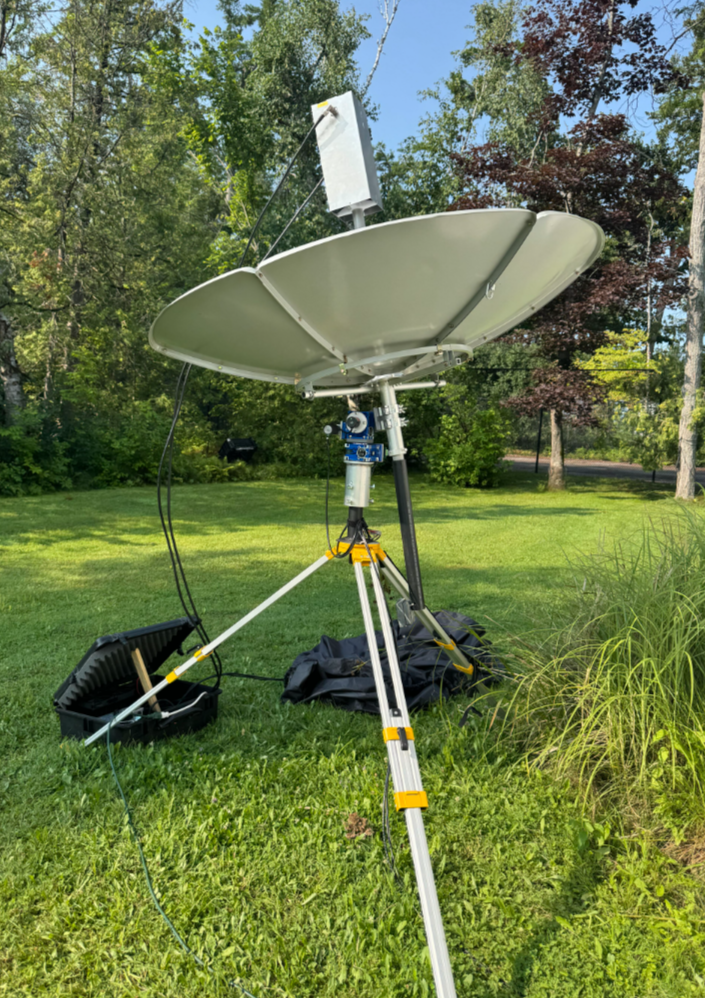 VA3MW Cooker Dish for 23 cm
VE4MA Barry
I operated on 13 cm on August 8th, the first day of the ARRL EME contest. Unfortunately I mis-calculated the moon rise and was QRV 1 hour later than was possible. I only worked 18 stations including 3 on CW with big signals. I had a power amplifier problem appear midway during my operation. I use 2 Spectrian amplifiers combined and one failed to operate DC wise… so my power was down 6 dB. I reconnected the one working PA so I was only down ~3 dB. Of course this limited my operating time further. I have no western window and can only go just a bit beyond Zenith. With the high declination there were still many EU stations at my AZ limit.
I had Digital QSOs with OE9ERC, OH3LWP, SP9VFD, PA3DZL, PA0BAT, DL1SUZ, PE1CKK, G4CCH, PA7JB (PA problem appeared), OK1DFC, N1AV, OK1USW, KN2K, OH3LWP (dup), OH1LRY, VE6TA, OK1KIR.
I had CW QSOs with G3LTF, KL6M & G4CCH (dup)
I missed many stations that I heard well including F1RJ, ON5QT and PA0PLY.
I was a little frustrated with operating using “hunt & peck” rather than parking on one frequency and calling CQ. There was a lot of time wasted waiting for QSOs to finish so that I could call. Later on 10 GHz I did start to call with a frequency offset during other QSOs and calling with a report. Signals were strong with most stations and I wonder if the use of 30 second periods may be appropriate
I was pleased that the efforts I made with preamps and filtering did work to prevent any noise from cellular telephone or Wi-Fi transmissions. When I had the dish on the horizon, the Wi-Fi signals were significant!
On Sunday August 9th I operated on 3 cm only and had 29 stations QSOed digitally. I saw many CW signals but did not manage to get back to them (sorry). Signals were very strong on 3 cm and I really think 30 second sequences would have helped a lot and perhaps calling CQ instead of “hunt and peck” would also have helped.
I QSOsed: OZ1LPR, PA3DZL, IK6CAK, ON5TA, IW2FZR, OE9ERC, NJ6D, G4RFR, PA3CSG OM4XA, KM0T, ON4CDU, YO2LAM, G8RWG, IK3GHY, PE1CKK, IK3HAR, IZ2DJP, OH3LWP, SA6BUN, OK2AQ, N1AV, AC0RA, LZ4OC, DL6SH, F5JWF, OK1DFC, KN0WS and DF5MO right at my elevation limit of 62 degrees. Missed were W5LUA, OK1KIR, W3SZ, PA3CSG, UN6PD, SP6JLW (CW) and many others I am sure!
I plan on operating on 6 cm and 24 GHz in the next ARRL contest weekend.
VE6TA Grant
I was on Aug 8/9 for the ARRL microwave leg, but 13 cm only as the WX was rainy as always this summer.
I worked the following:
on digital: PA3DZL, OE9ERC, F1RJ, #ON5QT, DL1SUZ, OH3LWP, OH1LRY, N1AV, OK1KIR, VE4MA, SP9VFD, #DG5NFF, KN2K, WA3RGQ, and G4RGK.
on CW: G3LTF, SP9VFD, G4CCH, OK1DFC, KL6M, SP3XBO, SP6JLW.
I heard WA6PY but somehow missed our annual CW QSO.
Conditions seemed quite good with strong signals especially on the first pass. The two new initials bring me to 134 stations worked on the band.
I hope to be on 3 or 6 cm next weekend if possible.
VK2CMP Mick
I worked on reducing my path loss on 432 Mhz (not to mention ground noise) by spending the morning standing on the top rung of an extension ladder tied to a tree in front of my 4x21X-pol array. I noticed when I was trying to decode W3TI that 2 of the Yagis were pointing straight into a tree that was touching the Yagi at MR. I needed a safety harness and pole chainsaw, not to mention a good hard-hat to reach the offending branches but we got there in the end. The strategy used was waiting for the chief gardener to be out for the day to reduce any unwanted interference. Newton’s 4th law was proved yet again in that branches are 10x bigger by the time they hit the ground.
On 70 cm I was very happy to work Dave VK0DS in Davis Station Antarctica for a new DXCC and Andrew W3TI for an Initial. I had a one way contact with C37EME unfortunately we had a small window and my elevation was 4 degrees so I was in my QRM.
I did try to have a listen on 13 cm in the ARRL contest weekend but nothing was heard as my moon down here seemed to be at very anti-social hours in the northern hemisphere. On day 2 I set my alarm early but was woken up even earlier by insanely bad WX and being a folding dish that wiped the day. I don’t have a PA (apart from a 20 w used for terrestrial work) yet but will listen for the next weekend.
VK7ZBX Richard
I have a great weekend for the 1st weekend of the ARRL EME contest for 13 cm and above. As I am only QRV on 10 GHz, that was where I was active. I have a 1.8 m dish with a 20 W SSPPA, a Kuhne G4 transverter & LNA and a WR75 waveguide switch with Shepherd’s crook feed. It was fantastic to see so much activity on 10 GHz and I believe much activity on the other bands. I missed working some new stations. I am always happy to try and make new friends on the moon.
I worked a total of 11 stations over the 2 days. Spreading was very favourable from VK to the EU. Sadly, I wasn't able to move my dish to a position for moon rise. Perhaps for the next contest weekend I can try to move it.
I worked OK1DFC, OK2AQ, OH3LWP, IK6CAK, OZ1LPR, GW3TKH, UN6PD, OM4XA, IK3HAR, YO8RHI and OE9ERC. I am doing OK with 33 DXCCs so far on 10 GHz but have a long long way to go to 100. I would love to work a few more guys over to the east.
I also copied the DL0SHF beacon very well at -06, I'm very appreciative of the efforts of Per and the DL0SHF team. [Ed Note: We are so fortunate to have the DL0SHF beacons, as they are a tremendous asset for our activities.]
I am working to become QRV on 23 cm with a 2.4 M PF dish and 200 W so look out for VK7 on that band.
W2LPL Les
I have been operating portable with a 1.5 m solar cooker dish on my roof deck overlooking the Atlantic Ocean from Long Beach Island, NJ. This is 6 miles (9.7 km) off the mainland with a clear 360 degrees moon shot from MR to MS. This is an amazing location compared to my suburban lot with all its trees and houses. I was hoping to leave it up during the winter for remote operation but I learned a hard lesson back in July.
A flash storm with crazy winds came through and even with 100 pounds (45 kg) of concrete blocks in addition to the 50 pound (23 kg) mount with the dish in the birdcage position, the whole setup was lifted straight up and over the 3 foot (1 m) railing (no damage to rail, deck) and it fell 30 feet (9 m) into my neighbour’s driveway. We got it out of there before my neighbour saw that it was just a few feet from their car. The rotor and feedhorn survived but everything else was a total loss, however 3 weeks later I was back on the air again.
I have now added a total of 250 pounds (113 kg) of weight and I tie the dish down when not in use. A solid dish is not a good idea in this environment, even if it's only 1.5 m and I need to go to a mesh dish! In terms of performance, using the 1.5 m dish with a 240 mm flare, S12 disk and 400 W at the feed I can work most other 1.5 m dishes. Alex C37EME heard me at -24, but sadly we couldn't complete. Call me if you hear me from FM29.
W5LUA Al
On August 7, I worked on 70 cm, C37EME for a new DXCC. On August 8, I spent the morning on 2304 with a blown second stage, however I did work WA3RGQ, OH3LWP, SP9VFD, OK1DFC, N1AV, OE9ERC, OH1LRY and DL1SUZ cross band 2304/2320.
On August 9, I sent most of the day on 3 cm working a total of 26 stations including PA3DZL, W3TI, OE9ERC, KM0T, AC0RA, OZ1LPR, SA6BUN, N1AV, OK2AQ, N7KU, NJ6D, PA3CSG, PE1CKK, ON5TA, IK6CAK, LZ4OC, F5JWF, IK3GHY, OK1DFC, IZ2DJP, OH3LWP, ON4CDU, DF5MO, IK3HAR, WB6CWN, and W3SZ. I then moved to 9 cm and worked KL6M on CW.
On August 14 and 15, I worked AC0RA in some new grids on 3 cm. On August 18, I put the 432 feed in and worked VK0DS for a new DXCC and also worked W3TI on August 19th on 432.
W5ZN Joel
New stations worked on 432 include IZ3ATX (new initial & grid), S56P (new initial), C37EME (new DXCC & Grid) and VK0DS (new DXCC & Grid.
W5ZN is available for the state of Arkansas and grid EM45dh most anytime.
DXpedition to Andorra Report
Team EA8DBM, ON5OO, ON6QS & ON7EQ
On the Way to the Pyrenees
On August 4th, our radio adventure kicked off. The team—consisting of ON5OO Jacques, ON6QS Gilbert, and ON7EQ Jean-Jacques—set course for the south. In the evening, we made a stopover to spend the night in Brive-la-Gaillarde for a warm meetup with Philippe (F6ETI). After visiting his impressive EME station, we enjoyed a bite to eat and a drink at the local market while sharing ideas about the upcoming activity.
Arrival and First QSOs on 432 MHz
The following day, August 5th around 4:00 PM, we reached our final destination in Andorra. We wasted no time and immediately set up our 432 MHz station on the platform next to the URA club shack, located at an altitude of 1,600 meters. Shortly after midnight, as soon as the moon rose above the mountain peaks, the first QSOs could be logged. Unfortunately, later on, in a more southerly direction, we were immediately confronted with very troublesome QRM, likely picked up by the backlobes of the antenna stack, as the level was highly variable and very sharp depending on the direction.
Relocating and Scaling Up the Antennas
To reduce this interference, we decided at dawn on August 6th to move the antennas 25 meters and position them directly in front of the club shack entrance, less than 10 meters from the equipment. Bridging that short distance with a 30-meter-long 7/8” CELLFLEX cable we had brought along was a bit of ‘overkill’ and quite a sight! At this location, we indeed suffered less from the original QRM, but new issues arose: intermittent in-band interference and noise with a striking comb pattern on the waterfall.
Around noon, Alex (EA8DBM) arrived as well. He set up his station at a QTH a few kilometers away, about 400 meters higher (2,000 m ASL), in the shade of a carport in a parking lot fitted with a series of solar panels. Unfortunately, someone in that parking lot drove into his STARLINK antenna, which he was using to access the Internet, forcing him to make do via a lower-quality Wi-Fi connection. In the beginning, everything went smoothly, but Alex later ran into heavy 'rattle' interference on 144 MHz towards the west, which made connections to the USA very difficult. The cause of this interference was the proximity of a main line feeding the solar panels and inverters into the power grid. Ultimately, his 2 m antennas had to be moved about 50 meters to work the last remaining stations.
Debugging and RX Handicap
On August 7th, we finally got a handle on our mysterious in-band interference. Using the spectrum display of the Icom IC-9700, we tracked down the culprit and were able to shut it down. We recognized the comb-shaped interference from previous activations as being caused by the dual DVI output of our own PC, despite many ferrite cores. A quickly written routine that automatically turned off both monitors during the 60-second RX sequences brought an immediate solution, meaning we could only work with the PC during the minute we were transmitting...
Still, the background noise on 432 MHz remained a massive challenge. Our sun noise fluctuated at best around 6 dB, whereas with the exact same setup we are used to 12 to 13 dB. This represented an effective handicap of 7 to 9 dB in reception, which resulted in a 'squelch' like effect on the signals — it was often ‘all or nothing’. Testing a spare preamplifier unfortunately brought no improvement, our RX chain was fine. We could just barely work stations with 20 dBd antenna gain and 500 W, and our own echoes were rarely observable (instead of the normal -17 peak to -22 dB average).
Pushing Forward on UHF and Pile-ups on HF
Despite the tough conditions, we kept plugging away on 432 MHz on Saturday August 8th and Sunday August 9th, from the early hours until the afternoon, calling stations individually instead of running ‘CQ’ when necessary to give WSJT-X a helping hand. This ultimately resulted in 53 QSOs (one of which was in CW).
During the weekend, we also did our part in the HF WAE-CW contest under the callsign C37N. Jacques (ON5OO) and Gilbert (ON6QS) successfully braved the heavy pile-ups, logging over 600 QSOs!
Typical Mountain Weather
The Pyrenean weather showed its most fickle side. While the mornings consistently started with bright sunshine, a severe storm broke out almost daily around 6:00 PM with strong winds, gales, pouring rain, lightning, and hail… Operating with a portable dish antenna under these extreme conditions would have been completely impossible. To be honest, we hadn't taken this into account when planning our activation, but fortunately, by the time the storm broke loose, the moon had already set below the horizon every time!
Results
Ultimately, this activation resulted in the following EME contacts:
• 144 MHz (2m): 116 QSOs
• 432 MHz (70cm): 53 QSOs
• 1296 MHz (23cm): 93 QSOs
• 2320 MHz (13cm): 13 QSOs
• Total: 275 QSOs!
Additionally, about ten QSOs were made on 2 m in tropo using the callsign C37NL.
After a family visit in France on the way back and arriving home on August 13th, the first ‘QSL direct’ was already waiting in the mailbox!
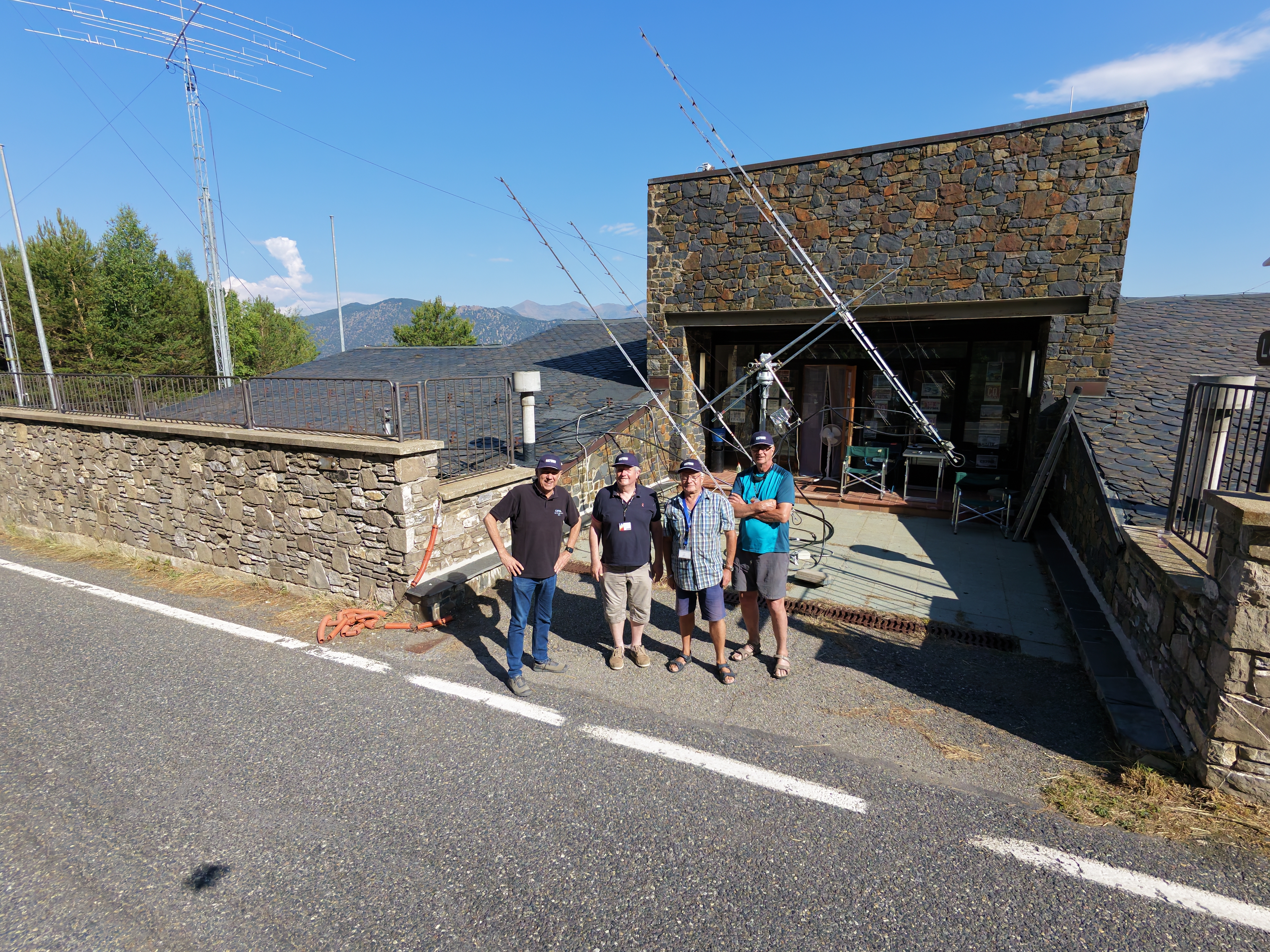 C37EME left to right C31US Joan, ON5OO Jack, ON7EQ Jean-Jacques, ON6QS Gilbert
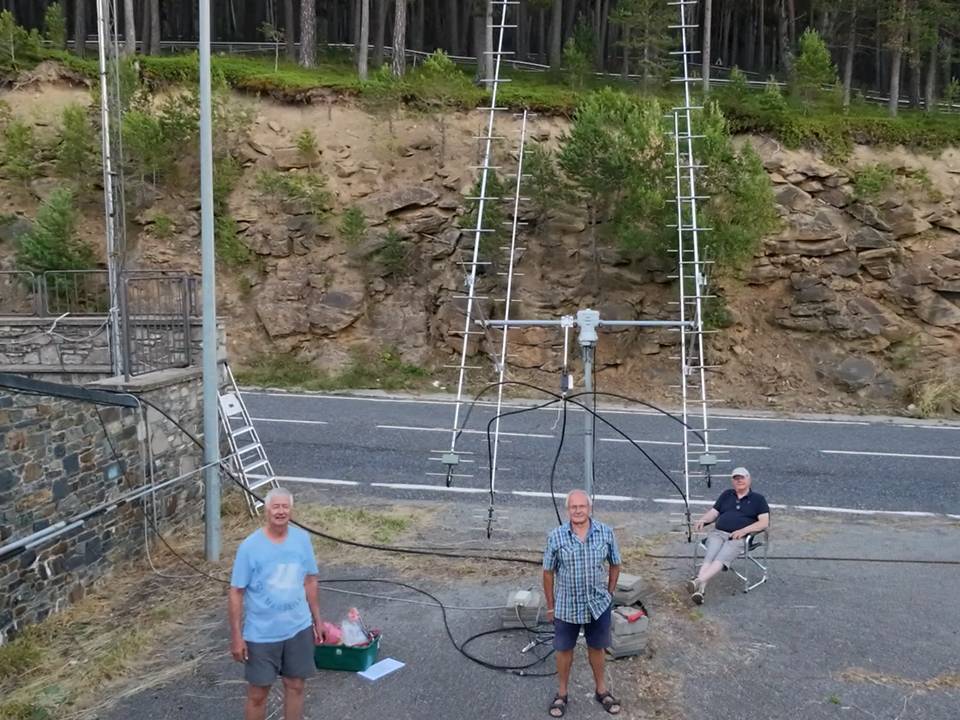 C37EME 432 Antenna
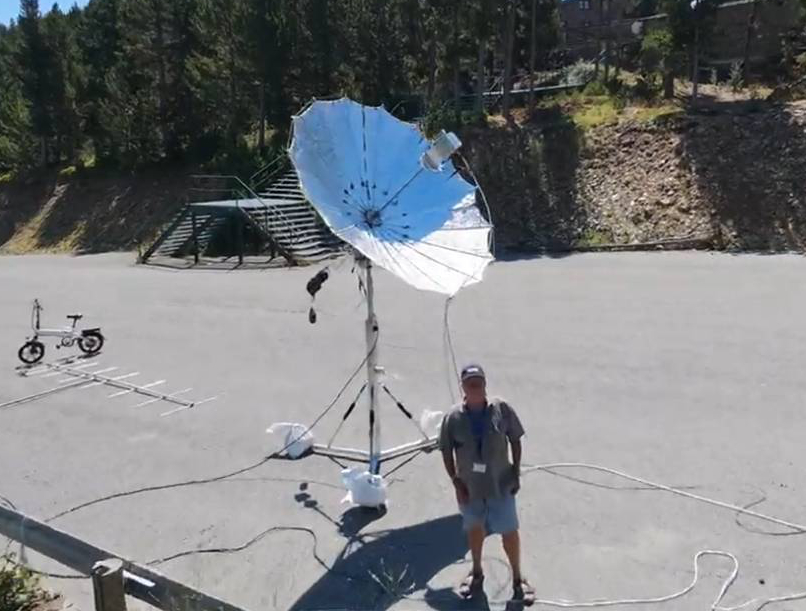 C37EME 1296 Antenna EA8DBM
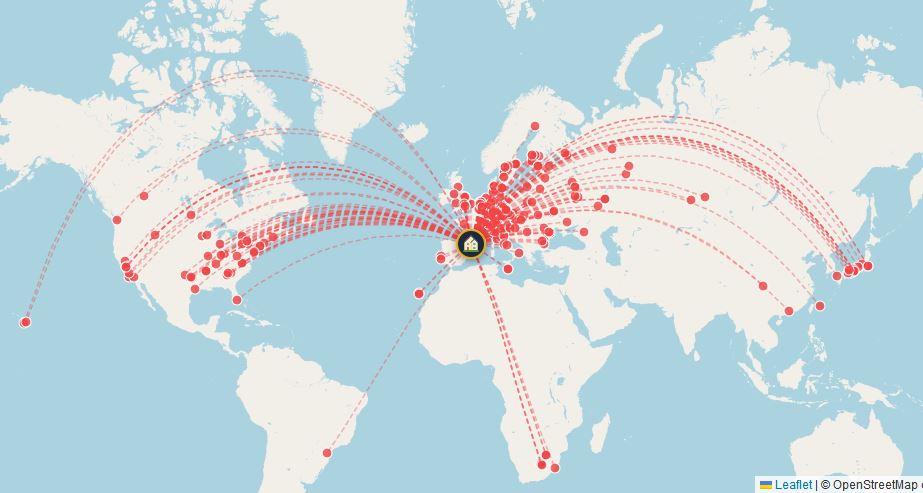 C37EME QSOs Mapped